
There’s a particular moment in many vitamin journeys when curiosity becomes momentum: the decision to begin a higher dose. That first stretch—often called the “loading phase”—can feel both promising and slightly alarming. You take more, you wait, you watch. And then you notice something curious: some people feel fine right away, while others feel oddly restless, even as their lab values appear to be moving. That common observation isn’t a contradiction; it’s a sign that the body’s chemistry is negotiating, not merely accepting. In this phase, safe high-dose vitamin D isn’t about bravado. It’s about pacing, context, and respect for physiology’s quieter rules.

What the “Loading Phase” Actually Means
The term “loading” can sound like a shortcut—an intentional sprint to saturate stores. In practice, the loading phase is a structured period where vitamin D intake is higher than maintenance dosing so that blood levels rise more quickly. This matters because vitamin D is fat-soluble, meaning it doesn’t behave like a water-soluble nutrient that you either flush out or replace in a straightforward cycle. Instead, it participates in a slow-moving endocrine choreography involving liver conversion and subsequent activation.
During loading, your body is essentially recalibrating its internal distribution network. Vitamin D moves through compartments, binds to transport proteins, and influences calcium regulation indirectly through downstream processes. Short sentences make it clearer: you’re building reserves. Long sentences remind you why: the reserves are not “just in one place,” and the timeline isn’t purely linear.
The Common Observation: “Is It Normal to Feel Something?”
Many people report subtle sensations during early high-dose vitamin D—fatigue shifts, mild nausea, increased thirst, or a general feeling of mental fog. Others notice no symptoms at all. This leads to a familiar worry: “Did I do something wrong?”
Here’s the deeper nuance: symptoms can arise from the body’s downstream calcium handling as vitamin D increases active signaling. If calcium rises too quickly, even in small increments, the body may respond with early, sometimes nonspecific signals. At the same time, some people feel changes simply because their baseline status was low, and their body is rebalancing metabolic signals. Fascination can be part of the story too. When you finally take action that seems to “connect,” it can feel like the body is speaking back—sometimes gently, sometimes with static.
Safety, however, demands you treat sensation as data, not as destiny. If symptoms are intense—especially vomiting, marked constipation, confusion, or persistent excessive thirst—pause the experiment and seek medical guidance promptly.
Why High-Dose Loading Appeals (And Why It Needs Boundaries)
Loading has an alluring premise: if deficiency can be corrected quickly, why not accelerate the correction? That idea is psychologically satisfying. It also mirrors a broader pattern of human fascination—turning uncertainty into a measurable plan. But vitamin D isn’t a simple “more equals better” equation; it’s a hormone-like nutrient with a regulatory ceiling.
Its appeal is understandable. Long winters, limited sunlight, and lifestyle constraints create a narrative of missing inputs. Then comes the thought: supplementation will restore the rhythm. Yet the body does not merely “restore”; it moderates. Vitamin D’s effects on calcium absorption and bone remodeling are powerful, and the endocrine system is built to prevent overshooting.
So the deeper reason loading needs boundaries is elegant: your goal is not to overwhelm the system. Your goal is to guide the system to a healthy equilibrium.
Pre-Loading Foundations: Labs, Baselines, and Context
Before loading begins, baseline knowledge helps prevent guesswork. The most relevant lab measure is usually 25-hydroxyvitamin D, often written as 25(OH)D. Calcium status matters as well—particularly if there are prior concerns, kidney vulnerability, or a history of calcium-related issues.
Some people also benefit from checking related markers such as parathyroid hormone (PTH), which can indicate how hard the body is working to maintain calcium balance. If PTH is elevated, the body may be signaling that vitamin D is insufficient. That doesn’t automatically justify high dosing, but it provides context.
Short truth: loading without baseline awareness is like sailing without a compass. Long truth: the “right dose” depends on starting point, body composition, absorption capacity, concurrent medications, and underlying physiology.
Choosing a Loading Strategy: Dose, Duration, and Logic
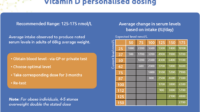
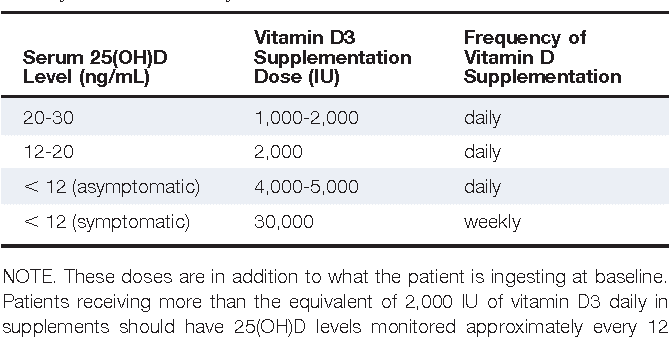
Loading is not one universal number. Strategies vary based on your starting 25(OH)D level, your tolerance, and your clinical picture. Some protocols use daily higher dosing for a limited window; others use weekly regimens. What matters is the logic: you aim for a controlled rise without pushing calcium regulatory systems into a corner.
Think of it as a temperature ramp in a kiln. Too slow, and nothing changes. Too fast, and cracks appear. In vitamin D, “cracks” can mean biochemical imbalance, not just discomfort. The safer strategy is typically time-limited and followed by maintenance dosing once targets are approached.
Keep a coherent schedule. Consistency reduces the temptation to “make up for missed doses,” which is how loading sometimes turns impulsive.
How to Take It: Timing, Food, and Absorption Levers
Because vitamin D is fat-soluble, taking it with a meal containing some fat can improve absorption. Many people do well with dosing alongside lunch or dinner rather than on an empty stomach. This isn’t superstition; it’s chemistry. Absorption processes respond to dietary context.
Some individuals prefer to take it at the same time daily to stabilize routines. Others follow their provider’s instructions. Either way, the body benefits from predictability. Short sentence: don’t “scatter” doses randomly. Long sentence: scattered dosing can complicate interpretation of symptoms and lab results.
Monitoring During Loading: The Safety Net You Actually Need
Monitoring isn’t over-cautious; it’s practical. Rechecking 25(OH)D after the loading period helps determine whether the dose worked as expected or overshot. Calcium can be rechecked depending on risk profile and symptoms.
Some people get excited at early signs—energy shifts, improved mood, less perceived ache. Those changes can be real. Yet labs prevent wishful thinking from taking the steering wheel.
Consider tracking: symptoms, intake schedule, and any supplements that might overlap (especially those containing calcium or additional vitamin D). If you’re stacking products, you may be loading without realizing it.
Who Should Be Extra Careful (Risk Groups and Red Flags)
Not everyone shares the same risk landscape. People with kidney disease, a history of kidney stones, granulomatous disorders, or certain endocrine conditions may need different approaches. Those taking specific medications—particularly agents that affect calcium balance—should coordinate carefully.
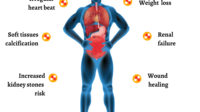
Red flags during high-dose exposure include persistent nausea, vomiting, constipation that doesn’t resolve, muscle weakness, excessive thirst, frequent urination, or confusion. These don’t always point directly to vitamin D, but they are urgent enough to warrant evaluation.
Safety here is not about fear. It’s about precision.
Transitioning Off Loading: From Momentum to Maintenance
Loading is temporary by design. Once your 25(OH)D reaches a safe, intended range, the strategy usually shifts to maintenance dosing. The transition matters because continued high intake can gradually move from “correction” into “accumulation.”
This is where many fascination stories become cautionary tales. People feel better and stay on the higher dose, not realizing that the body’s equilibrium has changed. Short sentence: stop the sprint. Long sentence: let the maintenance phase do the slow, steady work of keeping levels stable.
A Practical Loading Mindset: Calm, Measured, and Curious
The loading phase can be approached like a respectful experiment. Start with baselines. Use a coherent plan. Take it with food if recommended. Watch symptoms as signals. Recheck labs on schedule. Then transition thoughtfully.
And if you notice your body “talking” in subtle ways, don’t panic—but don’t ignore it either. Curiosity is human, but safety is human too. The most intelligent approach is both: fascination with improvement, and the discipline to ensure improvement doesn’t come at the cost of biochemical balance.