It’s a familiar pattern: someone begins a weight-loss drug, notices subtle shifts in energy, appetite, and even mood—and then wonders whether the body’s calcium circuitry is quietly joining the conversation. On the surface, weight loss seems like a purely metabolic story. Yet beneath the scale lies a hormonal choreography involving parathyroid hormone (PTH) and vitamin D, two unsung regulators that shape bone remodeling, calcium availability, and inflammatory tone. The fascination is understandable. The body seldom moves in straight lines, and calcium homeostasis is a master of indirect effects.
Why weight-loss drugs can appear to “pull” on calcium balance
Many weight-loss medications primarily target appetite, satiety signaling, gastric emptying, or insulin sensitivity. Still, the downstream consequences of weight reduction and altered nutrient handling can reverberate through endocrine systems. Calcium is not merely “stored” in bones; it’s a dynamic currency involved in muscle contraction, nerve signaling, and intracellular pathways.
When a person loses weight—especially rapidly—or changes dietary intake, the body may adjust how it absorbs minerals. Vitamin D and PTH sit at the center of this adaptation. In certain contexts, reduced intake, dietary changes, or altered gut physiology can influence vitamin D status. If vitamin D becomes functionally insufficient, calcium absorption from the intestine may fall, and PTH can rise to compensate.
Here’s the common observation: individuals on weight-loss therapy sometimes notice lab changes, fatigue patterns, or bone-related discomfort. The deeper reason for the “mystique” is that the signals driving fat loss also modulate the environment in which calcium homeostasis operates—sometimes directly, sometimes indirectly, often subtly.
Parathyroid hormone: the thermostat for calcium, not just a bone hormone
PTH is often reduced to a one-liner—raising blood calcium—but its role is more architectural. PTH senses low calcium through receptors on the parathyroid glands. When triggered, it orchestrates a coordinated response: it promotes calcium reabsorption in the kidneys, supports the activation of vitamin D, and influences bone turnover.
The most important nuance is timing and balance. PTH is designed to work in pulses, like a conductor cueing sections of an orchestra. Chronic dysregulation can alter the “tempo” of bone remodeling. That doesn’t automatically mean damage; however, it can shift remodeling toward a net loss of bone density in susceptible people.
So when weight-loss drugs create physiological stressors—nutritional reshaping, appetite changes, and possible shifts in vitamin D intake or absorption—PTH becomes a potential indicator of how well the body is maintaining mineral equilibrium.
Vitamin D: the bridge between sunlight, gut absorption, and PTH control
Vitamin D is frequently described as “helpful for bones,” but its governing function is more specific: it enables intestinal calcium absorption. When vitamin D levels are low, the gut’s efficiency for absorbing calcium declines. The body senses this reduced availability and compensates by increasing PTH.
This is why vitamin D is often the pivot point in calcium-related questions. In a state of low vitamin D, PTH rises, sometimes even before obvious symptoms appear. It’s a biochemical early-warning system—sometimes silent, sometimes felt.
Some individuals become fascinated by the vitamin D–PTH relationship because it provides a plausible narrative for lab fluctuations: calcium might be “normal” or borderline, yet PTH may reveal the compensatory tension. That tension can be a clue to a need for better vitamin D status, improved intake, or evaluation of absorption capacity.
How weight loss itself can influence vitamin D and mineral status
Weight loss is not only an energy deficit; it’s a biological rearrangement. As fat mass changes, so can vitamin D storage dynamics because vitamin D is fat-soluble. Some people experience shifts in serum vitamin D measurements during weight reduction. Others adjust diets—sometimes unintentionally—by lowering intake of dairy, fortified foods, or vitamin D–rich nutrients.
There is also the gut angle. Certain weight-loss therapies alter appetite and gastrointestinal flow. Even when absorption isn’t dramatically impaired, smaller changes in intake patterns and digestive efficiency can matter over months.
Long sentences often fit complicated physiology, but the takeaway can be simple: if vitamin D availability or calcium absorption changes, PTH may respond. That response can be protective—at first—or maladaptive if it persists.
Medication-driven mechanisms: indirect endocrine effects worth noticing
Weight-loss drugs vary widely. Some influence incretin signaling, appetite pathways, and insulin sensitivity. Others change gastric emptying or nutrient transit. Although they aren’t designed to target calcium metabolism, their ripple effects can involve stress hormones, inflammation markers, and changes in overall energy homeostasis.
Increased metabolic steadiness can improve glucose handling, which indirectly influences inflammation and sometimes renal function. Meanwhile, altered gastrointestinal signaling can influence nutrient absorption. These are the kinds of indirect pathways that make the topic so compelling: the medication initiates one process, and the body responds across seemingly unrelated systems.
When researchers and clinicians observe changes in PTH or vitamin D during weight-loss therapy, the question often becomes: is the result a benign adaptation, a nutritional mismatch, or a clue to an underlying issue such as low baseline vitamin D stores?
What clinicians typically monitor: calcium, PTH, vitamin D, and bone turnover clues
Monitoring usually focuses on a small constellation of markers. Calcium levels—total or ionized—are obvious. But PTH can be a more sensitive indicator of how the body is compensating. 25-hydroxyvitamin D is commonly used to estimate vitamin D status because it reflects longer-term availability.
Sometimes additional information is gathered through markers of bone turnover or kidney function. If calcium and vitamin D appear stable yet PTH is elevated, it suggests compensatory physiology—often pointing back to vitamin D availability, subtle absorption issues, or changes in diet.
Bone health is the long game. Repeated shifts toward higher PTH signaling over time can increase remodeling activity. The goal is not alarm—it’s interpretation. Lab patterns tell stories, and the story depends on context.
Symptoms people may attribute to weight loss—yet calcium pathways could contribute
People sometimes attribute fatigue, muscle aches, cramps, or “brain fog” to lifestyle shifts or medication adjustments. Those explanations may be correct. Still, calcium and vitamin D physiology can contribute to neuromuscular comfort and energy regulation.
Calcium supports nerve transmission and muscle contraction. Low functional calcium availability, even without overt hypocalcemia, can correspond to heightened neuromuscular irritability. Vitamin D also has immunomodulatory effects that may influence inflammation-related sensations.
Short sentences help summarize what many patients describe: “I feel different.” The deeper point is that endocrine systems are intertwined, and mineral balance can color the experience of fat loss.
Risk groups: who should pay closer attention during weight-loss therapy
Not everyone has the same mineral baseline. Individuals with limited sun exposure, darker skin pigmentation, malabsorptive conditions, chronic kidney disease, or restrictive diets can have higher risk of vitamin D deficiency. Postmenopausal people may have different bone remodeling dynamics. Those with a history of kidney stones often require tailored management.
Some patients have preexisting disorders affecting PTH secretion or vitamin D activation. Others simply have low vitamin D stores at baseline and discover it once labs are revisited. Weight-loss therapy then becomes the timing mechanism for detection.
In other words, the fascination isn’t that the medication “causes” PTH changes universally; it’s that it may unmask vulnerability that already existed.
Practical strategies: aligning vitamin D, calcium, and medication plans
Practical care usually begins with assessment rather than guessing. Checking vitamin D status, calcium, and PTH can reveal whether the body is compensating. If vitamin D is low, replenishment may be recommended, often with dosing adjusted to baseline levels and risk factors.
Calcium intake may also be reviewed. The aim is to support absorption and reduce unnecessary PTH elevation. However, supplementation should be individualized—especially in people prone to kidney stones or with kidney impairment.
Diet can help, but not always in a straightforward way. Fortified foods, adequate protein, and consistent nutrient timing can improve the odds. The deeper strategy is systems thinking: nutrition, medication effects, and endocrine feedback loops must be considered as one integrated plan.
When PTH stays elevated: deeper evaluation and the importance of context
If PTH remains persistently high despite acceptable vitamin D and calcium levels, the scenario invites deeper evaluation. Conditions like primary hyperparathyroidism, issues with vitamin D metabolism, or other endocrine disorders can enter the differential. Sometimes labs that look “almost normal” still represent meaningful physiology when patterns are tracked over time.
Bone health evaluation may be considered depending on age, risk profile, and duration of biochemical shifts. The body can compensate for a while. Over longer periods, compensation may become a cost.
This is where the story becomes less about weight loss and more about endocrine literacy—learning to read subtle signals before they become symptoms.
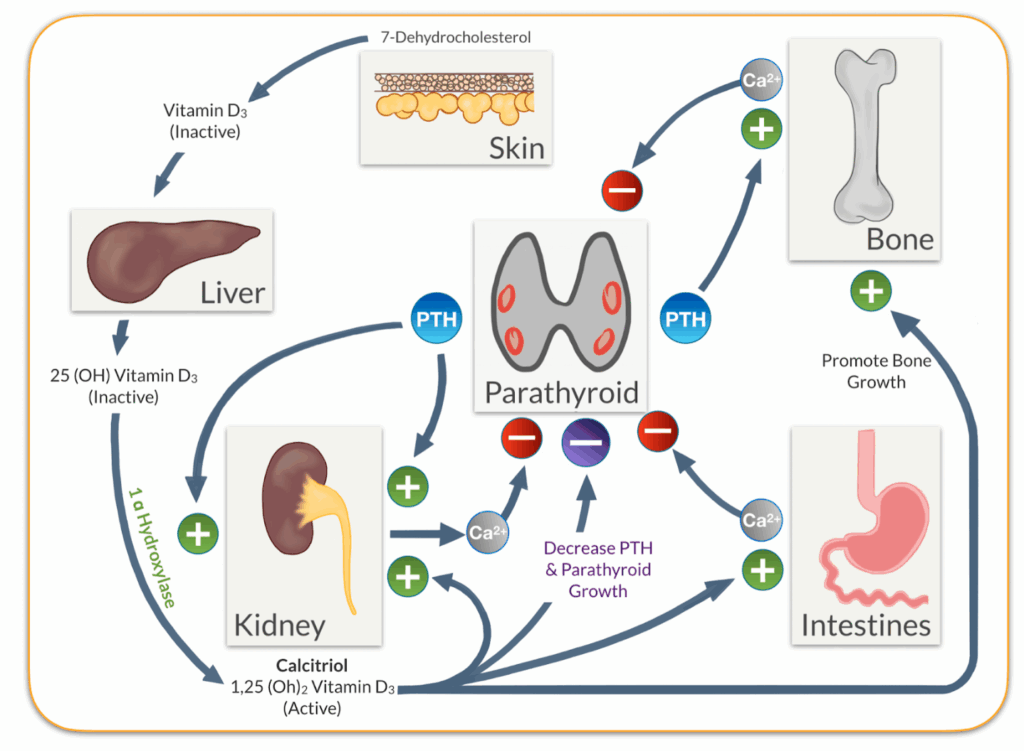
Image of the pathway: vitamin D’s activation and PTH’s response
Vitamin D supports calcium absorption in the gut. When calcium availability is insufficient, PTH increases to restore balance by influencing kidneys and bone remodeling.

A balanced conclusion: why this topic keeps drawing attention
Weight-loss drugs can change appetite, intake patterns, and metabolic signaling. Those shifts can influence vitamin D status and calcium absorption. When vitamin D availability wobbles, PTH may rise to stabilize serum calcium. The body, in its elegant conservatism, attempts equilibrium.
The deeper fascination is that the endocrine system doesn’t compartmentalize. Fat loss is a metabolic event, but mineral homeostasis is a parallel narrative running alongside it. Paying attention to PTH and vitamin D isn’t about fear; it’s about precision. With thoughtful monitoring and individualized nutritional strategies, weight-loss therapy can proceed while supporting the mineral foundations that keep nerves, muscles, and bones functioning smoothly.