Imagine your body as a sunlit harbor and vitamin D as the tide that keeps everything moving. Sometimes the weather is clear, sometimes it’s foggy. When sunlight is scarce, the “tide” can be engineered with supplements—most commonly vitamin D2 and vitamin D3. Yet the labels can feel like riddles, and the internet loves riddles. Myths sprout quickly: that D2 and D3 are interchangeable, that one is inherently superior in every situation, that the body treats them like identical coins. The truth is more nuanced, more interesting, and—like a well-told story—full of small plot twists.
Vitamin D at a glance: the biological bridge
Vitamin D is not a simple on/off switch. It’s more like a carefully forged bridge between sunlight and cellular function. First, your skin or food provides vitamin D (either D2 or D3). Then, in the liver, it’s converted into 25-hydroxyvitamin D—a circulating “report card” of vitamin D status. Finally, in the kidneys and other tissues, it becomes the active hormone form that coordinates calcium absorption, bone remodeling, immune signaling, and more.
Both D2 and D3 can contribute to that bridge. But they don’t necessarily travel with the same efficiency or longevity, the way two different kinds of aircraft might both reach the same destination while having different flight characteristics.
D3 vs D2: what the letters really mean
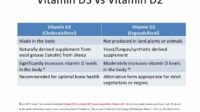
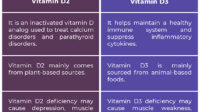
Vitamin D3 is cholecalciferol, typically associated with sun-derived pathways and animal sources. Vitamin D2 is ergocalciferol, traditionally linked to plant-derived compounds and certain fortified foods. Both are forms of vitamin D, but their molecular origins influence how they behave once inside the body.
Think of D3 and D2 as two dialects of the same language. They are understood, but some dialects carry expressions that land more precisely in certain contexts.

Myth: D2 and D3 are interchangeable
This myth is common because both forms can raise vitamin D blood levels. Yet interchangeability is not the same as equivalence. The body’s handling of D2 and D3 is shaped by differences in structure and metabolism, which can affect how long they remain effective.
Some people feel fine with either option. Others notice differences when levels are low or when maintenance requires consistent dosing. The practical takeaway is not that one is “bad” and the other is “good.” It’s that they may not perform identically as a long-term strategy.
In metaphor terms: both are capable oars, but they may pull the boat at different speeds and with different endurance across distance.
Misconception: “One dose works the same for everyone”
Even when two vitamin D forms are similar, the results in real life are rarely uniform. Baseline vitamin D status matters. Body composition matters. Liver function and kidney conversion capacity matter. Season, latitude, clothing habits, and outdoor time matter. So does absorption—vitamin D is fat-soluble, meaning a meal with dietary fat can influence uptake.
If D3 and D2 were shoes, the “best” pair would depend on the terrain and how your feet are shaped. The same size doesn’t magically fit every journey.
Fact: D3 is often associated with higher and longer-lasting blood levels
Research and clinical practice frequently point toward D3 having a more durable effect on circulating vitamin D status. In many scenarios, D3 tends to raise 25-hydroxyvitamin D more effectively and maintain it better over time. That doesn’t mean D2 can’t work—rather, D3 often behaves like a steady campfire that stays warm while D2 may resemble a spark that needs more frequent attention.
When choosing a supplement, the goal is not just to “take vitamin D,” but to sustain an adequate level—consistency turns out to be a quiet hero.
Myth: D2 is “natural” while D3 is “synthetic,” so one must be inferior
Labels like “natural” and “synthetic” are used loosely. What matters scientifically is the chemical form delivered to the body, not merely the branding narrative. Both D2 and D3 can be produced and standardized for supplementation. What you want is a product that reliably contains the labeled ingredient and an approach tailored to your needs.
In other words, don’t let vocabulary hijack the decision. Follow evidence and your own response.
Misconception: Plant-based always means D2 is the better choice
Vegetarians and vegans often choose D2 because it can align with dietary preferences. That’s valid. But it’s not automatically a guarantee of superior outcomes. If plant-based options are necessary, D2 may be a sensible path. Yet the dosage strategy and monitoring become more important—because your “map” may require recalibration to reach the same destination.
Consider it a route using a different highway: you can still arrive, but you might need different signage and timing.
What myths miss: individual absorption and dosing strategy
Absorption isn’t a small footnote—it’s a full chapter. Taking vitamin D with a meal that contains fat can improve uptake. People with certain gastrointestinal conditions, bariatric surgery history, or malabsorption risk may not respond predictably.
Then there’s dosing frequency. Some approaches use daily micro-dosing; others use larger intermittent doses. Whether D2 or D3 is used, the pattern influences how levels rise and fall. The “best” plan is often the one that aligns with your biology and lifestyle, not the one with the most confident internet caption.
Bone health: the storyline behind calcium and remodeling
Vitamin D’s most famous role is bone support. It helps regulate calcium absorption so bones can mineralize properly and remodeling can proceed with fewer missteps. When vitamin D is insufficient, bones can become fragile—not dramatically overnight, but as a slow erosion of structural confidence.
Bone health is like architecture exposed to weather. Vitamin D helps reinforce the framework; the specific form matters because longevity of adequate levels influences how consistently the body can “maintain the scaffolding.”
Immune signaling: a quieter, wider network
Vitamin D is also implicated in immune regulation. The concept is broader than “boost immunity.” It’s more like tuning a complex instrument so responses are calibrated rather than chaotic. Adequate vitamin D status may support appropriate inflammatory signaling and immune function.
Here again, consistency matters. If one form maintains levels better for you, it may offer an advantage for sustaining immune-related pathways.
How to choose: a practical decision framework
Begin with context: your baseline vitamin D status (ideally measured as 25-hydroxyvitamin D), your diet preferences, your sun exposure, and your tolerance for dosing frequency. Consider your goals—bone maintenance, correcting deficiency, or long-term support.
Then choose a supplement strategy that you can realistically maintain. The most elegant plan is the one that survives daily life: travel, schedule changes, and the occasional missed meal.
When uncertain, monitoring your levels after a reasonable interval can clarify which form and dose align with your physiology. This turns the myth-cycle into a personalized data story.
Final truth: the best vitamin D is the one that keeps you steady
D2 and D3 are both capable participants in the vitamin D saga. But myths simplify what is inherently complex. The most important facts are these: vitamin D supports bone health and broader cellular functions; your body’s response varies; absorption and dosing patterns influence outcomes; and D3 often shows a more enduring effect on circulating levels in many scenarios.
Choose with intention. Let evidence be the compass, not hearsay. In the end, vitamin D isn’t merely a supplement—it’s a sustaining rhythm. And the rhythm you maintain consistently is the one your body will learn to trust.