Vitamin D is often treated like a friendly, low-drama nutrient—something you take, feel a little better, and move on. Yet the body has a strict sense of balance, and too much vitamin D can tip that balance into biochemical chaos. The most common cause of vitamin D toxicity is not mystery disease or rare metabolic quirks; it’s overzealous supplementation. In other words, the problem usually begins with intention that outpaces evidence.
Why “More” Can Become Dangerous
Vitamin D is fat-soluble, meaning it doesn’t simply pass through the system the way water-soluble vitamins do. Instead, it can accumulate, gradually and quietly, in tissues. At first, the excess may produce subtle signals—more thirst, a feeling of fatigue, slight nausea. Then, as blood calcium rises and the kidneys get stressed, symptoms can intensify.
What makes this particularly treacherous is the slow timeline. People often don’t connect delayed effects to earlier supplement habits. A pattern of “I felt fine for weeks” can obscure the true driver of toxicity.
The Most Common Culprit: High-Dose Supplementation Without Guardrails
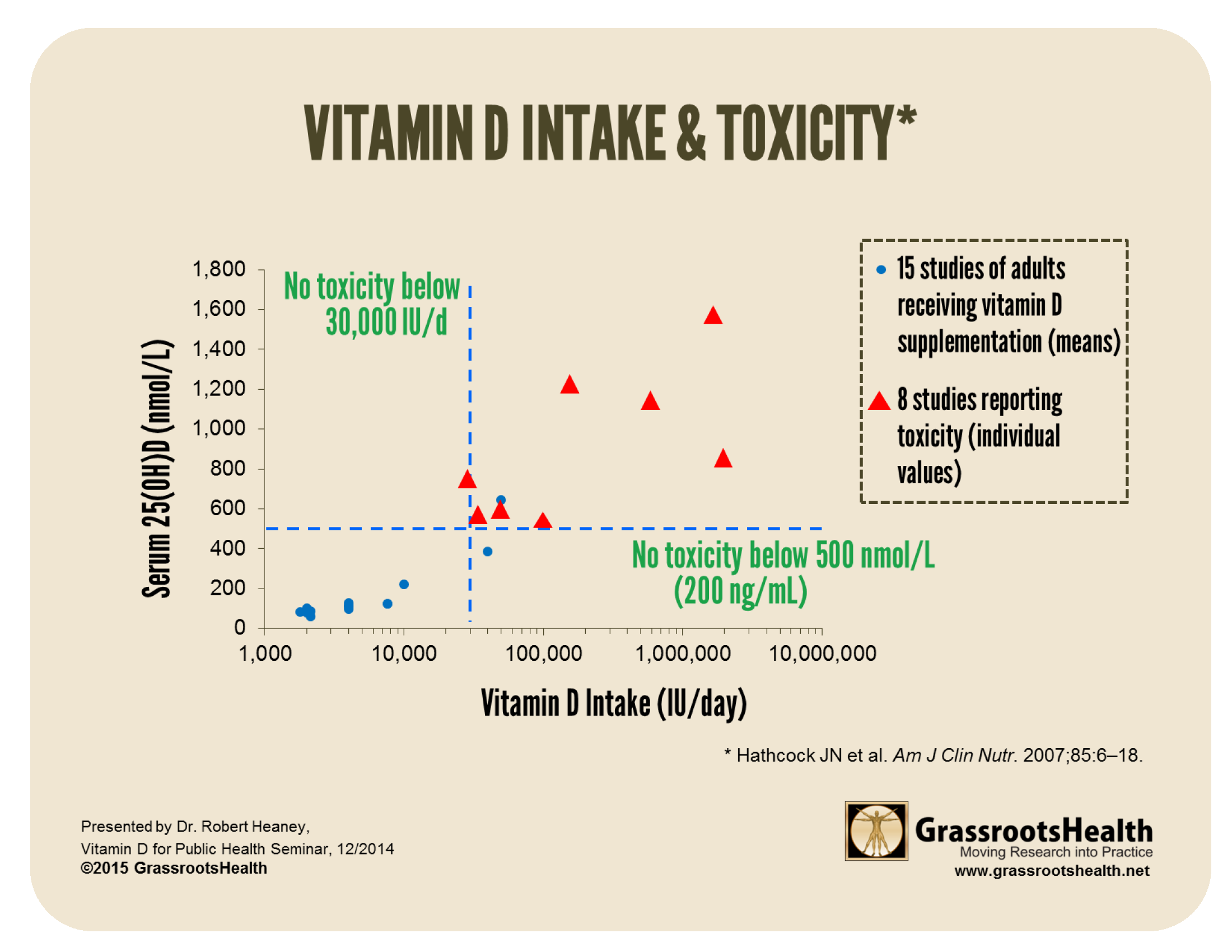
The most prevalent pathway to toxicity is simply taking large doses of vitamin D for extended periods without adequate monitoring. This can happen even when the goal is reasonable—bone health, immune support, “just in case” supplementation, or treatment of suspected deficiency.
Vitamin D toxicity is most strongly associated with elevated 25-hydroxyvitamin D levels. Those high levels can increase intestinal calcium absorption. When calcium overshoots the body’s ideal range, the resulting hypercalcemia can trigger a cascade: dehydration, gastrointestinal upset, neurocognitive symptoms, and renal impairment.
Think of vitamin D as a volume knob for calcium transport. Overturn it, and the body must compensate—often at a cost.
How Supplement Overreach Typically Happens
Overzealous supplementation rarely looks like an obvious overdose at the start. Instead, it occurs through everyday decisions that aggregate into risk. Common scenarios include stacking multiple products—capsules plus drops, “vitamin D3” plus multivitamins, or adding separate calcium and vitamin D regimens. The math can get messy, especially when labeling varies by international units (IU) and dose schedules.
Another pathway is treating maintenance doses as if they were safe “always-on” therapy when they were meant for a short correction phase. Some people also escalate dose when they do not immediately feel changes, mistaking the absence of quick benefits for persistent deficiency.
There’s also a behavioral trap: the internet can turn targeted medical dosing into a personal lifestyle. What started as a clinician-guided plan may evolve into self-directed persistence.
Not All Vitamin D Products Are Transparent in Practice
Even when labels exist, they don’t always reduce confusion. Drops may include an additional unit conversion layer; sprays may have inconsistent serving guidance; and “proprietary blends” can obscure how much active vitamin D is truly present.
People may also misinterpret “IU per serving” versus “IU per day,” especially when serving sizes are unusual (for example, half-droppers or multi-squeeze bottles). The result can be unintentional overconsumption.
The body does not care whether the dose was intentional or accidental. What matters is sustained elevation in vitamin D metabolites.
Understanding Toxicity Pathways: Calcium, Kidneys, and the Nervous System
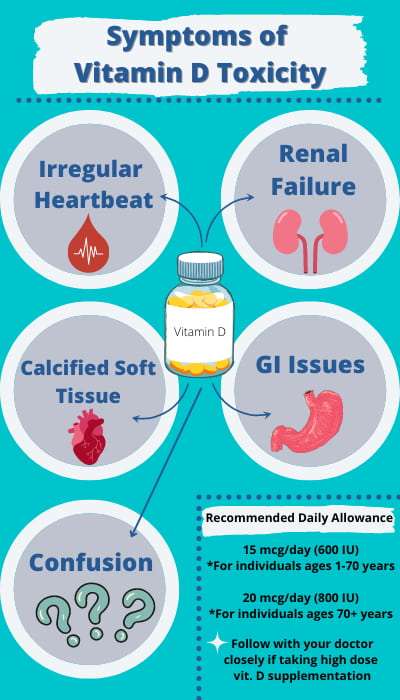
When vitamin D drives calcium upward, multiple organs feel the strain. The kidneys, tasked with managing calcium balance, can become vulnerable. Hypercalcemia can lead to dehydration and reduced renal function, which in turn can worsen electrolyte disturbances.
Gastrointestinal symptoms are also frequent—loss of appetite, nausea, constipation, abdominal discomfort. These can be mistaken for unrelated stomach issues. Neurologically, some individuals experience confusion, lethargy, or unusual mood shifts.
Long sentences aren’t always necessary to convey danger; sometimes it’s enough to say this: elevated calcium is not benign, and the toxicity is the downstream effect of oversupplied vitamin D.
Different Content Readers Will Expect: Quick-Check Guides
Many readers prefer practical “at a glance” materials. Quick-check guides often look like dose tables, symptom lists, and decision trees. These resources translate abstract biochemistry into everyday choices—what to verify on a bottle, when to pause, and how to prepare questions for a clinician.
A good quick-check also emphasizes the difference between deficiency risk and toxicity risk. People tend to fear low vitamin D. But the real safety problem comes from exceeding the body’s capacity over time.
Different Content Readers Will Expect: Narrative Symptom Journeys
Some readers connect more deeply with stories—how a regimen began, what symptoms appeared, and how the timeline shifted from “annoying” to “concerning.” Narrative accounts can reduce the shame factor that sometimes surrounds supplement errors. They also help readers recognize the pattern: a gradual onset, symptoms that look nonspecific, and a delayed link to supplementation.
These narratives are most effective when they include plausible decision points: stopping supplements, seeking labs, and understanding what changed afterward. Long, reflective sentences work well here—symptoms don’t always arrive in a neat sequence.
Different Content Readers Will Expect: Lab-Result Explanations
Another major content type involves explaining test markers in plain language. Readers may see discussions of 25-hydroxyvitamin D levels as the key screening metabolite. They may also encounter calcium measurements, kidney function indicators, and sometimes parathyroid hormone in interpretation.
The goal of this content isn’t to help readers self-diagnose. It’s to make conversations with clinicians more coherent. When people understand what the labs represent, they can advocate for responsible monitoring rather than guessing.
It also corrects a common misconception: that “feeling better” means the dosing is perfect. Biochemical safety is not the same as subjective improvement.
Risk Factors That Make Overdosing More Likely to Backfire
Some bodies are more sensitive, and certain conditions amplify risk. People with disorders affecting calcium handling, including certain endocrine or granulomatous conditions, may experience greater susceptibility to hypercalcemia when vitamin D is high. Others may have medication interactions that influence calcium levels or kidney function.
Dehydration can also worsen the situation. When fluid balance is low, calcium concentration effectively rises, making symptoms more likely and more severe.
The point isn’t to panic—it’s to understand why the same dose can be tolerable for one person and problematic for another.
Warning Signs: What Toxicity Can Feel Like
Toxicity often presents with non-specific complaints. Early signs can include nausea, constipation, appetite loss, and a general sense of fatigue. As hypercalcemia progresses, more dramatic symptoms may appear: excessive thirst, frequent urination, weakness, confusion, or cardiac palpitations in severe cases.
Because these symptoms overlap with many other conditions, readers should treat them as signals to investigate rather than as problems to “push through.” If supplementation is part of the background routine, that detail is clinically important.

Prevention: Building a Safer Supplement Strategy
The safest approach begins with intentional dosing and periodic verification. Many people benefit from measuring baseline vitamin D status before escalating intake. If supplementation is started, doses should follow evidence-based guidance rather than impulse. When higher doses are used—such as short-term correction—there should be a clear endpoint and a plan for reassessment.
Equally important is total intake accounting. Add up vitamin D from all sources: multivitamins, gummies, fortified foods, and dedicated supplements. If you’re taking multiple products, treat them like a single compound dose, not like independent, harmless items.
Finally, pay attention to hydration and kidney health. Healthy fluid balance supports renal calcium management, reducing the chance that borderline elevation becomes symptomatic.
When to Seek Medical Attention
If symptoms suggest hypercalcemia, or if labs show elevated calcium and high vitamin D metabolites, prompt clinical evaluation is critical. Severe toxicity can require urgent intervention. Even moderate cases warrant follow-up, because kidney strain and electrolyte imbalance can escalate quickly.
Bring a full supplement inventory to the appointment—brands, dosages, frequency, and duration. Short sentences can help you remember: “I took X IU daily for Y weeks,” “I also used Z multivitamin,” “My symptoms started around this time.” Clarity speeds care.
The Bottom Line: Overzealous Supplementation, Not Vitamin D Itself
Vitamin D is essential, but toxicity is a predictable consequence of excess. The most common cause is oversupplied dosing—often from well-meaning supplementation plans that were never designed to run indefinitely or never adjusted based on real-world blood levels.
When readers understand that vitamin D toxicity is usually preventable, the narrative shifts. Instead of fear, there’s empowerment: verify totals, respect timelines, and use lab testing as a safety compass. In that context, vitamin D becomes what it was meant to be—supportive, not hazardous.