There’s a curious, almost paradoxical idea embedded in modern immunology: a vitamin—best known for bone health—can also act like a molecular switch inside macrophages. These cells patrol tissues with an unblinking vigilance, engulfing microbes and coordinating broader immune responses. And yet, when vitamin D is present, macrophage behavior can change in ways that feel less like a tweak and more like a redesign. The common observation is straightforward: vitamin D is associated with stronger antimicrobial activity. The deeper fascination lies in why that association is so mechanistically plausible—down to the level of receptors, signaling pathways, and the cell’s willingness to deploy lethal tools.
Macrophages: The Immune System’s Immediate Responders
Macrophages are often described as “professional phagocytes,” but that phrase undersells their versatility. They don’t simply swallow pathogens; they judge them. They interpret danger cues and then decide how aggressively to respond. This decision-making is tightly coupled to molecular programs—gene transcription, membrane receptor activity, and intracellular microbicidal chemistry.
Under normal conditions, macrophages maintain a balance: they remove debris, keep inflammation proportional, and avoid needless collateral damage. During infection, that balance tilts. The cell shifts toward a more active phenotype—enhanced phagocytosis, heightened inflammatory signaling, and increased production of antimicrobial compounds.
Vitamin D enters this landscape as a modulator. It doesn’t replace macrophages; it instructs them. Instead of acting as a broad “immune booster,” it helps sculpt the macrophage response—guiding how strongly the cell arms itself against invading microbes.
The Vitamin D Connection: More Than a Nutrient
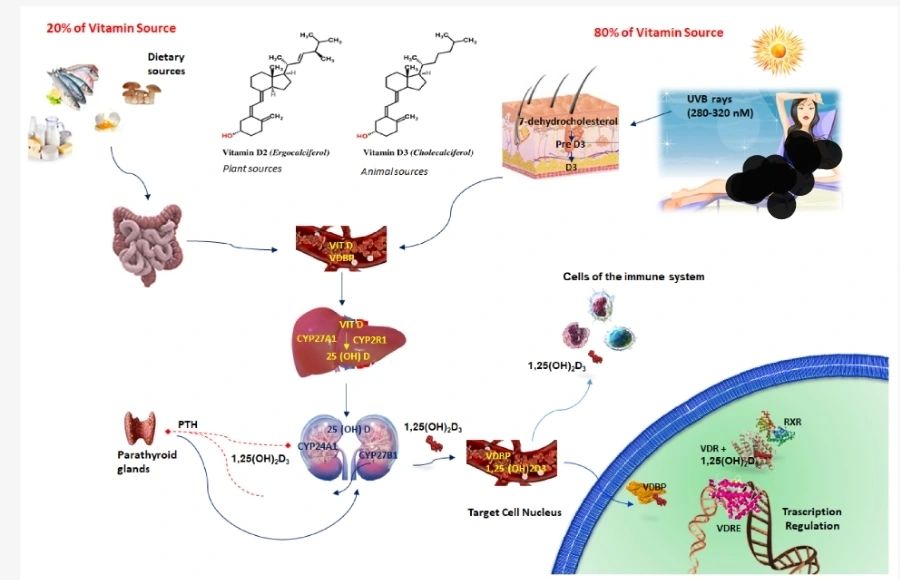
Vitamin D is often treated like a dietary variable. In immunology, it behaves more like a transcriptional governor. Once activated, vitamin D can influence gene expression in immune cells, including macrophages. That means the vitamin doesn’t merely affect short-term metabolism; it can recalibrate long-term cellular intent.
The fascination deepens here: macrophages can respond locally. Rather than relying entirely on distant endocrine signaling, they can integrate vitamin D cues in a context-sensitive manner. This makes the vitamin D–macrophage relationship especially compelling during infection, when macrophages are already processing inflammatory signals and microbial patterns.

Receptor-Level Effects: How Vitamin D “Tunes” Recognition
Macrophage killing begins before the first engulfment step. Recognition matters. Surface receptors and complement-related machinery help macrophages bind microbes efficiently, including pathogens coated with immune factors. One reason vitamin D is so intriguing is its ability to influence these recognition systems—effectively improving the cell’s ability to see and attach to microbial targets.
When macrophages express higher levels of relevant receptors, their contact with pathogens becomes more decisive. Binding is the gateway to internal processes: phagosome formation, maturation, and the orchestration of microbicidal pathways.
In practical terms, receptor tuning may translate into faster pathogen capture, more reliable phagolysosome formation, and a more coordinated “attack plan.” The immune system rarely succeeds by brute force alone. It succeeds through alignment—molecules working in the right order.

Intracellular Microbicidal Machinery: From Phagosome to Lethal Environment
Once a macrophage engulfs a pathogen, the drama moves inward. The pathogen is sealed into a phagosome, then transformed. Phagosomes mature into phagolysosomes—a compartment where antimicrobial mechanisms converge.
Vitamin D can shift this process toward lethality by enhancing the macrophage’s antimicrobial programming. This may involve improved generation or deployment of reactive species, changes in antimicrobial peptide expression, and the cell’s readiness to sustain the harsh chemical conditions required to neutralize microbes.
Here is the subtlety: killing is not a single mechanism. It’s a multi-step sequence, and vitamin D appears to favor the completion of that sequence. In other words, vitamin D helps make sure that the “attack” doesn’t stall halfway.
Innate Immune Activation: A Coordinated Alarm System
Antimicrobial activity is tightly interwoven with innate immune activation. Macrophages don’t operate in isolation; they recruit allies by releasing signals that shape surrounding immunity. When vitamin D encourages a more active innate program, the macrophage becomes more than a janitor—it becomes an alarm broadcaster.
Such signaling can influence how macrophages handle pathogens and how they calibrate inflammation. Too little activation can leave microbes unharmed. Too much activation can damage tissues. Vitamin D’s role is often described as balancing—an immune governor rather than an immune anarchist.
This balancing act may explain why some individuals experience better infection outcomes with adequate vitamin D status, while the same nutrient may not uniformly “supercharge” immunity in everyone. The effect depends on cellular context, baseline immune state, and the specific microbial threat.

Microbial Targets: Why Different Pathogens Expose Different Weaknesses
Pathogens are not uniform opponents. Bacteria, viruses, and fungi each present distinct molecular signatures. Macrophages respond using a layered arsenal—phagocytosis, receptor recognition, antimicrobial peptides, and signaling cascades.
Vitamin D’s influence may be especially valuable when the macrophage’s ability to recognize and internalize pathogens is limited. It may also enhance the internal killing steps that some microbes resist through survival strategies within hostile compartments.
That’s why vitamin D’s effects are often described as “broad but not identical.” It can strengthen general antimicrobial readiness, yet the magnitude of benefit may vary depending on pathogen type and immune context.
Inflammation Control: Killing Without Becoming the Disease
A profound reason macrophage-vitamins relationships attract attention is the risk of collateral harm. Effective antimicrobial action requires an aggressive intracellular environment, but inflammation can harm tissues. Macrophages must therefore kill while restraining excessity.
Vitamin D appears to participate in this restraint by shaping signaling networks that influence cytokine production and immune escalation. Think of it as a conductor who keeps the orchestra loud enough to drown out the invading noise, but disciplined enough to prevent a structural collapse.
This “harm-minimizing aggression” is one of the most biologically elegant features of vitamin D–macrophage interactions, suggesting the immune system benefits not only from stronger attack, but from better pacing.
Clinical Implications: Practical Curiosity and Responsible Interpretation
Because vitamin D is widely measured and often supplemented, its immunological role naturally becomes clinically attractive. Yet it’s essential to interpret the evidence with nuance. Vitamin D does not function like an antibiotic. It does not directly neutralize microbes in the way a drug might.
Instead, it influences host competence—the cell’s readiness and instruction set. That means outcomes depend on baseline deficiency, genetic and environmental factors, and the inflammatory context during infection. If vitamin D is low, restoring it may help macrophages operate more effectively. If vitamin D is already sufficient, the incremental impact may be smaller, or the response may reflect other limiting steps in the immune chain.
Still, the conceptual link is compelling: supplementing vitamin D may be most meaningful when it corrects an immune-sapping deficit rather than acting as an unconditional enhancement.
A Final Perspective: Why the Mechanism Feels So Captivating
The fascination with vitamin D and macrophages isn’t only scientific. It’s narrative. A molecule derived from sunlight—once thought of mainly as a nutrient—becomes a cellular instruction language. It modifies recognition machinery, supports intracellular microbicidal programs, and helps orchestrate inflammatory signals with a sense of restraint.
In that light, macrophages are not merely defenders; they are interpreters. Vitamin D supplies part of the script they read during infection. And when the script is complete, the cells don’t just respond—they execute. They engulf, process, and ultimately dismantle pathogens with an efficiency that feels less like coincidence and more like design.