People often notice that vitamin talk tends to cluster in two camps: the “sunshine” crowd who champion vitamin D, and the minerals-and-bones crowd who champion calcium. Yet, somewhere between these familiar characters is a quieter understudy—vitamin K2—that appears to influence what calcium ultimately becomes. The observation is simple: take D, support bones, feel better. The deeper fascination begins when calcium doesn’t only decide to sit politely in the skeleton. Sometimes it wanders. Sometimes it lodges elsewhere—inside vessels, within soft tissue—turning a useful mineral into an architect of stiffness. Vitamin K2’s role in calcium handling, especially in partnership with D, helps explain why some supplementation strategies feel like they “click,” while others seem strangely incomplete.
Calcium’s Two Destinies: Bone Building vs. Vascular Clogging
Calcium is not inherently good or bad. It is a molecule with options, and the body is the decision-maker. In an ideal scenario, calcium becomes a construction material for bones and teeth—stored in an ordered mineral matrix that resists brittle failure. But another scenario is possible: calcium can accumulate in soft tissues, including blood vessel walls. This phenomenon, often called calcification, is a hallmark of vascular aging and is linked with diminished arterial flexibility. Stiffer arteries raise systolic pressure and increase strain on the heart.
What makes this especially intriguing is that calcification is not always the result of “too much calcium” alone. It can be the consequence of biochemical misdirection—systems that normally keep mineralization where it belongs begin to falter. That is where vitamin K2 becomes relevant. It acts like a molecular editor, helping determine which proteins become “ready” to bind calcium for the right structural purpose.
Vitamin D: The Freight Train That Delivers Calcium
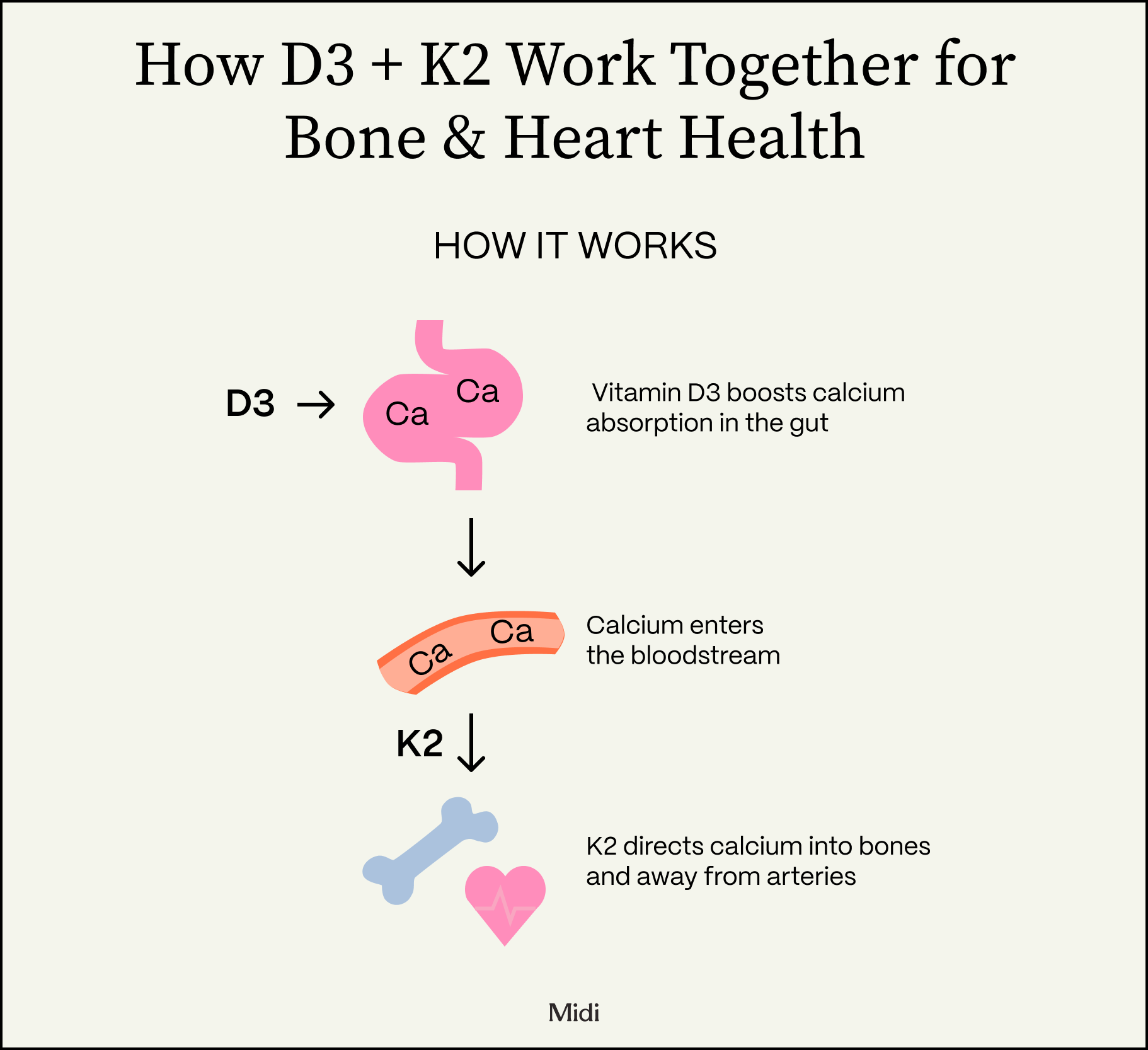
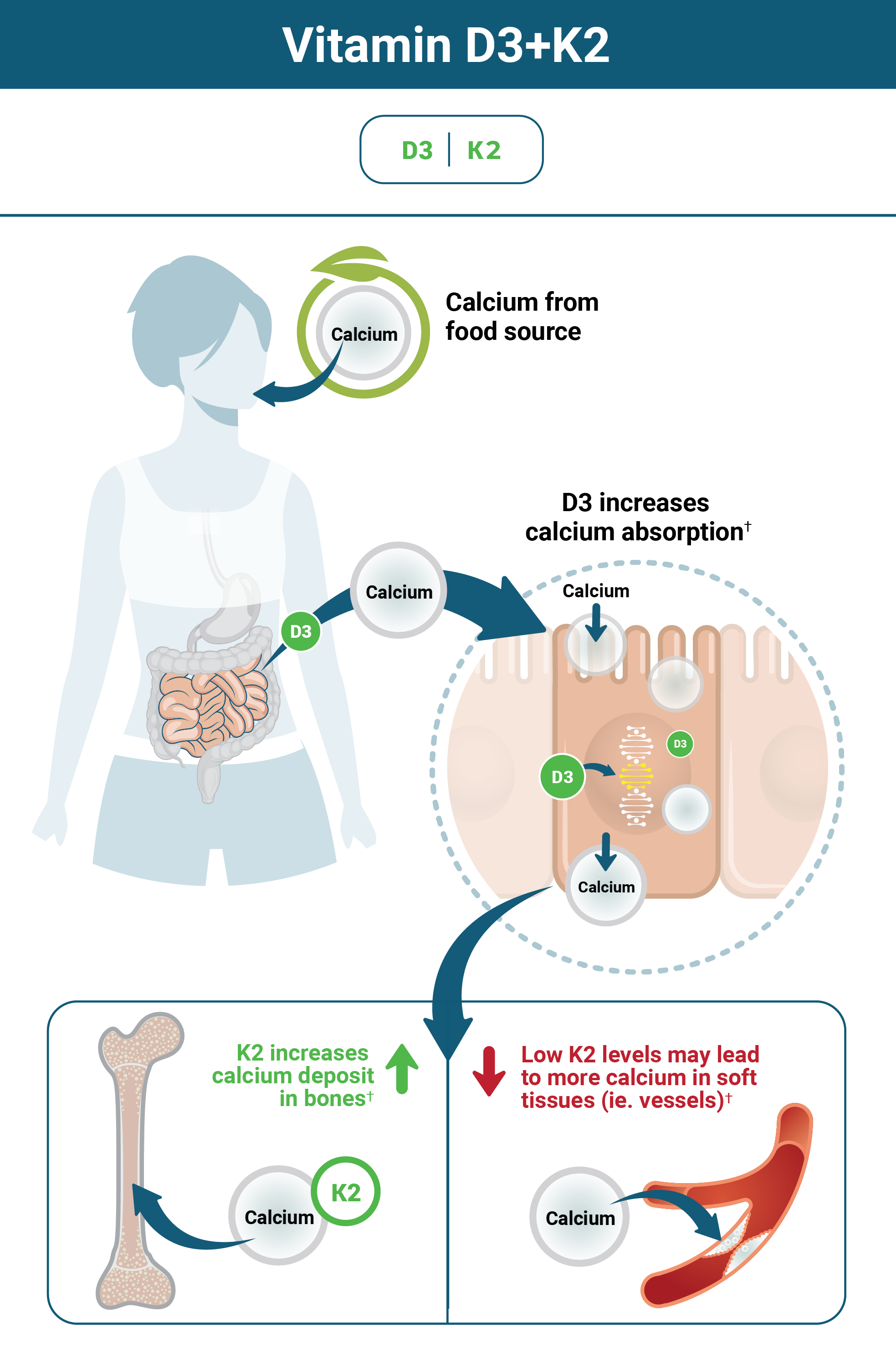
Vitamin D is often described as a gate-opener for calcium absorption. It supports intestinal uptake and influences how calcium and phosphate are used by the body. Think of vitamin D as the freight train that brings cargo into the system. When D levels are adequate, the body can absorb calcium more efficiently and maintain appropriate mineral availability.
However, adequate absorption does not automatically guarantee correct destination. The body must also regulate how calcium is deployed. Without sufficient biochemical guidance, an increased supply of calcium can become a tempting resource for inappropriate mineral deposition. In other words, vitamin D prepares the warehouse. Vitamin K2 helps decide where the packages are delivered.
Vitamin K2: The Postal Service That Directs Calcium Where It Belongs
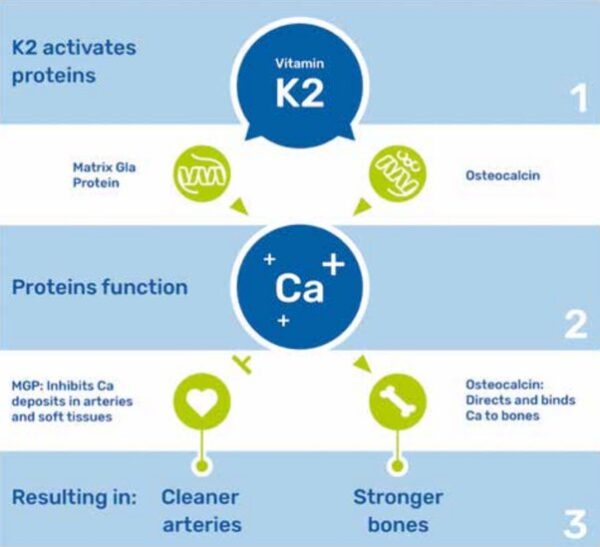
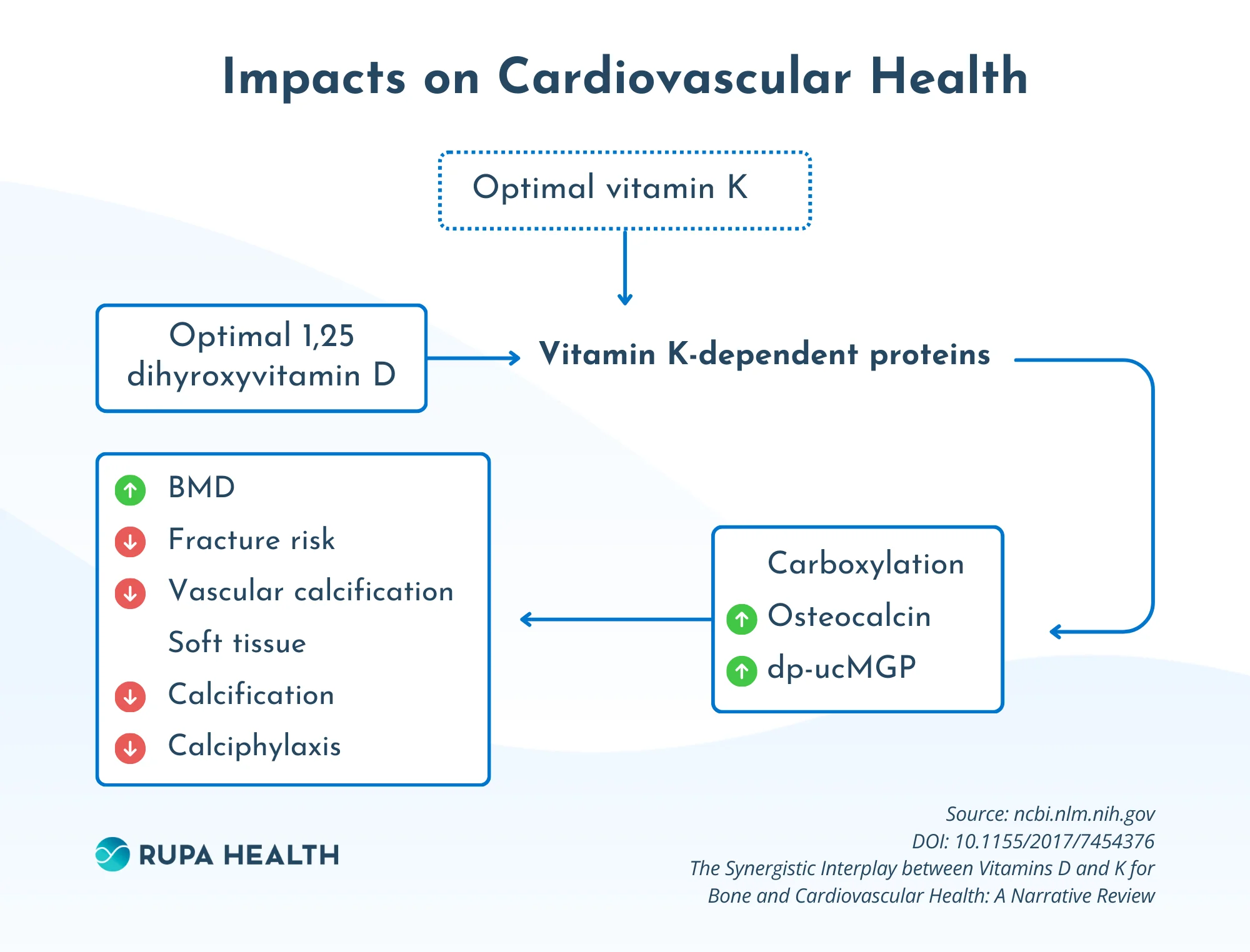
Vitamin K2 is best known for its role in activating proteins that govern mineralization. The most famous are osteocalcin and matrix Gla protein (MGP). When vitamin K is present in the right form, these proteins can undergo activation steps that allow them to bind calcium appropriately.
Osteocalcin is associated with bone mineralization. When properly activated, it helps coordinate calcium’s incorporation into the bone matrix. MGP, in contrast, is often discussed as an anti-calcification safeguard. It contributes to preventing calcium from settling in soft tissue environments where mineralization is not desired.
This “two-sided” function is part of the reason people become fascinated with the D-and-K2 pairing. Calcium regulation is not a single-door process. It’s more like an orchestration with conductors: one system helps deposit mineral in bone, and another helps restrain mineral in vessels.
Why the Pairing Works: A Coordinated Calcium Highway
When vitamin D is present, calcium absorption and utilization increase. When vitamin K2 is present, the activated calcium-handling proteins can better manage the mineral flow. The synergy is subtle but powerful: D can increase calcium availability, while K2 helps ensure that availability is translated into structured skeletal mineralization rather than ectopic calcification.
It can help to picture the physiology as a calcium highway with exit ramps. Vitamin D influences whether there are cars on the road. Vitamin K2 influences which exit ramps are open and which are blocked. Without the right signals, more cars may travel—but they may exit into undesirable neighborhoods.
Preventing Calcification: The Matrix Perspective
Soft tissues contain a scaffolding “matrix”—a network of proteins that normally maintains elasticity and function. Calcification involves mineral deposition into this matrix, often after regulatory mechanisms fail or become overwhelmed. Vitamin K2’s contribution is frequently framed through MGP activity, which supports the matrix’s anti-calcification posture.
But the deeper layer is how mineralization truly begins. Calcification is not random; it can be triggered by changes in local environment: oxidative stress, inflammation, altered cell signaling, and disrupted protein activation. Vitamin K2 addresses one critical molecular checkpoint—protein activation that influences whether calcification is restrained or permitted to progress.
So K2 is not a magic eraser for every calcified patch. Instead, it helps preserve the body’s capacity to regulate mineral fate before the system becomes chronically misaligned.
The “Low-Visibility” Problem: Many People Focus on Calcium but Miss the Control Knobs
It’s common for supplementation conversations to revolve around calcium and vitamin D. That’s understandable. Calcium is measurable, and vitamin D is widely discussed due to its lifestyle relevance. Yet calcification risk is not only about the quantity of calcium—it’s also about regulatory competence.
Vitamin K2 can be a control knob that remains overlooked. Some people take D and calcium without considering whether the protein activation pathway is adequately supported. Others consume foods low in K2, despite maintaining sufficient D via sunlight or supplements. The result can feel paradoxical: bones might improve while vascular concerns remain unchanged—or the reverse—depending on an individual’s baseline metabolism, diet, and inflammatory burden.
This is why the topic has an almost detective-like aura. The usual evidence—vitamin D status, calcium intake—doesn’t always predict calcification outcomes. The missing variable is often the regulatory system that tells calcium where to go.
Choosing K2 Forms: MK-7 vs. MK-4 and the Practical Implications
Vitamin K2 is not a single uniform substance. It exists in multiple forms (commonly referenced as menaquinones), and they can behave differently in the body. MK-7 is often discussed for longer circulation, which may align well with day-to-day dietary patterns. MK-4 is addressed more often in the context of shorter-term dynamics and certain tissue-specific behaviors.
From a practical standpoint, what matters is not branding—it’s compatibility. The “right” form depends on goals, dosing patterns, and how the body metabolizes K2. When pairing with vitamin D, the aim is to support the activation of mineral-regulating proteins consistently enough to influence long-term physiology.
When Caution Is Non-Negotiable: Medication Interactions
Vitamin K has a complicated relationship with anticoagulant medication, especially warfarin. Because warfarin interferes with vitamin K recycling, supplementing vitamin K2 without clinical guidance can alter blood-thinning stability. This is one of the most important “do not freestyle” zones in the topic.
If someone uses anticoagulants, discussing K2 with a clinician is essential. Even well-intentioned supplementation can be counterproductive if it disrupts therapeutic targets. Safety isn’t a footnote here; it’s the foundation for any plan aimed at calcium regulation.
Dietary Foundations: K2-Rich Foods and the Meaning of Consistency
Food-based K2 comes from certain animal and fermented sources. In practice, consistent intake may matter as much as absolute dose. The body tends to respond better to steady signaling than sporadic bursts, particularly when systems involve protein activation and matrix regulation.
Pairing diet with vitamin D—whether from sunlight, fortified foods, or supplementation—can create a more coherent biological narrative. When K2 intake is low, vitamin D’s calcium-boosting effects may not be matched by the mineral-direction signals that K2 provides.
In other words, the fascination with D plus K2 isn’t only biochemical. It’s behavioral too: the body thrives on patterns.
Putting It Together: A Systems View of Bone and Vessel Health
The most useful way to understand vitamin K2 with D and calcium is as a systems story. Vitamin D increases calcium availability. Calcium is a powerful substrate that must be placed correctly. Vitamin K2 activates protein “instruction labels” that guide mineralization into bone while contributing to resistance against calcification in soft tissue.
When the trio aligns—appropriate D status, adequate K2 activity, and sensible calcium intake—the body gains a better chance at mineral choreography. Without that alignment, the choreography can degrade into chaotic staging: calcium arriving without proper direction, minerals depositing without the intended architectural constraints.
So the next time someone asks, “Why does vitamin K2 matter when I’m already taking D and calcium?” the answer is not merely about adding another supplement. It’s about reinforcing the control circuitry that decides calcium’s destination—bone or vessel—and about respecting how physiology prefers harmony over imbalance.