Some measurements behave like strangers at a party—introduced, chatted with, and yet never quite revealing their deeper bond. BMI and vitamin D are not strangers, though. They are more like overlapping compass needles: one swings according to body composition, the other according to an invisible, sunlight-dependent metabolism. When vitamin D blood levels dip or rise, BMI often seems to echo the pattern. The relationship is not always linear, and it rarely offers a single, tidy cause. But it is undeniably intriguing—like a weather system where pressure changes in one region can foreshadow storms in another.
BMI: A Compass for Body Composition, Not a Full Map
BMI—body mass index—is a numerical shorthand derived from height and weight. It can quickly suggest whether someone carries more or less adiposity. Yet BMI is an imperfect cartographer. It does not directly measure body fat percentage, muscle mass distribution, or the metabolic temperament of tissue. Two people can share a BMI and have radically different body composition. Still, BMI remains clinically useful as a screening signal.
In the context of vitamin D, BMI becomes more than a number. Higher adiposity can act like an architectural feature: fat tissue may “store” vitamin D more readily, altering how much circulates in the bloodstream. Think of vitamin D as a traveler with a passport stamped by sunlight. When the “storage vault” is larger, the traveler may spend more time in holding than in circulation.
Vitamin D: A Hormone-Like Messenger with a Sunlit Origin
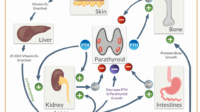
Vitamin D is unusual among nutrients. It behaves less like a simple vitamin and more like a precursor hormone. Skin synthesizes it after ultraviolet B exposure. From there, it undergoes processing in the body—first transformed in one organ pathway and then again elsewhere—until it becomes a biologically active messenger. Blood levels therefore reflect both environmental exposure and internal handling.
This is where the plot thickens. Vitamin D does not only depend on sunlight. It also depends on how the body “sequesters” and mobilizes it. If BMI influences adipose tissue dynamics, then it can indirectly shift vitamin D availability—even when sun exposure habits are similar.
Fat as a Vault: How BMI Can Influence Vitamin D Blood Levels
Adipose tissue can bind vitamin D with notable avidity. Imagine vitamin D as a pigment in a sponge. When the sponge is larger, it holds more of the color—sometimes with less of it visible on the surface. In blood tests, we measure what circulates, not what is stored. Higher BMI may correspond to greater vitamin D sequestration, leading to lower measured serum concentrations.
This pattern does not mean vitamin D “disappears.” Instead, it suggests a redistribution. Some individuals with higher BMI may need more supplementation to overcome the internal reservoir and achieve adequate blood levels.
Correlation vs. Causation: The Relationship Isn’t a Single-Lane Road
A correlation is a synchronized dance, not a contract of cause and effect. Research often finds associations between BMI and vitamin D levels, but the underlying mechanisms can be layered. For instance, lifestyle factors frequently travel alongside BMI: outdoor time, dietary patterns, and even clothing habits can shift vitamin D synthesis. Sleep patterns and physical activity can also influence metabolic processing.
So the relationship resembles a braided rope—multiple strands contributing at once. Higher BMI may reduce effective circulating vitamin D through fat sequestration, while simultaneously increasing the likelihood of lower sun exposure or different dietary intake. Untangling which strand pulls the hardest can be difficult, but the overall pattern remains clinically significant.
The Role of Baseline Habits: Sunlight, Clothing, and Dietary Intake
Consider vitamin D as a signal transmitted by sunlight. If someone spends less time outdoors—or if sunlight exposure is blocked by clothing, latitude, season, or skin pigmentation—vitamin D synthesis may fall. BMI often correlates with these variables, creating a contextual effect.
Diet adds another layer. Some people with higher BMI may consume fewer vitamin D–rich foods or fewer fortified products, though this varies widely. The result is that BMI can serve as a proxy for broader health behaviors, not just body composition.
The interesting twist is that even when exposure is accounted for, adipose sequestration can still matter. The body’s internal “vault” can be the silent moderator, shaping blood levels after the sunlight signal has already arrived.
Metabolic Cross-Talk: Inflammation, Insulin Resistance, and Vitamin D
Vitamin D participates in immune modulation and inflammatory signaling. Higher adiposity is often accompanied by low-grade chronic inflammation and metabolic changes such as insulin resistance. These biological shifts may influence how vitamin D is processed, utilized, or transported.
Picture vitamin D as a conductor in a small orchestra. If inflammation alters the musicians’ responsiveness, the conductor’s baton may not produce the same harmony as before. Even if blood levels look similar, tissue-level effects could differ. That means serum concentration is an important indicator, but not the entire story of biological impact.
Sex Differences and Biological Modulation
Vitamin D metabolism can show differences between men and women. Hormonal environments affect binding proteins, fat distribution, and possibly conversion pathways. Therefore, the BMI–vitamin D relationship may not look identical across sexes.
Men and women can experience the same sunlight yet display different circulating patterns due to how their bodies allocate, store, and mobilize vitamin D. This uniqueness can make the relationship feel personal, almost tailored—like two keys turning the same lock with subtly different motion.

Body Size Patterns Across Populations: Not All Curves Are Identical
Even when the direction of association is similar—often suggesting that higher BMI aligns with lower vitamin D—how strong the relationship appears can vary by age, ethnicity, baseline sunlight exposure, and even measurement methods. Some curves appear gentle; others sharpen at higher BMI ranges.
Seasonality can act like a dimmer switch. Winter months often reveal a steeper drop in vitamin D synthesis. In those settings, BMI-related differences may become more visible because the body has less incoming vitamin D to compensate for sequestration and metabolic alterations.

Clinical Implications: Why This Relationship Matters
From a practical standpoint, the BMI–vitamin D relationship influences screening and supplementation strategies. If higher BMI is linked with lower blood levels, clinicians may consider checking vitamin D more frequently in individuals at higher BMI, especially when symptoms suggest deficiency or when risk factors are present.
Supplementation decisions should be individualized. Some people may respond robustly to modest dosing, while others—particularly those with higher adiposity—may require more to reach and maintain adequate blood concentrations. The goal is not merely a lab value. It is the biological capability to support bone health, muscle function, and immune regulation.
Still, caution is essential. Vitamin D is fat-soluble, so excessive dosing can accumulate. Monitoring supports precision—turning guesswork into measured stewardship.
Special Contexts: Variations in Health States and Tissue-Specific Effects
Certain health conditions can complicate the narrative by altering metabolism, inflammatory signaling, and hormonal dynamics. In some contexts, vitamin D has been studied alongside BMI in relation to reproductive health outcomes and tissue characteristics. These patterns underscore that BMI and vitamin D interact within a broader biological landscape.
For example, uterine tissue characteristics and size categories have been examined in relation to BMI and vitamin D levels. These studies remind us that “relationship” can mean more than a single mechanism; it can also reflect how diverse tissues respond to nutritional and endocrine signals.

Closing Thoughts: A Coordinated System, Not a Mystery
The relationship between BMI and vitamin D blood levels is best understood as a coordinated system. BMI can influence vitamin D storage dynamics, while lifestyle and metabolic factors can reshape the vitamin’s journey from sunlight to blood to tissue response. The result is a pattern that frequently repeats—higher BMI aligning with lower serum vitamin D in many settings.
Yet the story remains nuanced. Correlation does not guarantee causation, individual physiology differs, and external factors can bend the curve. Still, the overall message is clear enough to be actionable: vitamin D status deserves attention, and BMI can be a meaningful clue in the diagnostic puzzle.
In the end, BMI is not simply a body-size label, and vitamin D is not merely a supplement target. Together, they reveal how environment, metabolism, and storage choreography converge—like two scales balancing in a carefully instrumented experiment.