Most people think vitamin D is the friendly, sunshine-adjacent supplement: quietly helpful, rarely troublesome. And for the vast majority, that’s true—when it’s taken within sensible ranges. Yet there’s a paradox that tends to hide in plain sight. The first sign of vitamin D overdose isn’t always dramatic. It rarely arrives with fireworks. More often, it sneaks in wearing the costume of something ordinary, like a minor “health hiccup” you dismiss for days. But the body is already whispering a warning. If you catch that whisper early, the story can end very differently.
The First Sign: Unsettling Thirst That Seems to Come Out of Nowhere
The first sign many people notice is an odd, persistent thirst—sometimes coupled with more frequent urination. It can feel like you’re simply dehydrated from busy days, salty snacks, or extra coffee. The problem is that vitamin D overdose can drive changes in calcium handling throughout the body. When calcium rises too high, the kidneys may respond by offloading the excess, and that process can pull fluid along for the ride.
So your body behaves like it’s trying to rebalance itself. You drink more. You pee more. You may feel draggy, even mildly foggy. Sometimes the thirst is accompanied by dry mouth or a “worn-out” sensation that you can’t quite pin to sleep or stress. Short sentences help here: this is not the kind of symptom that begs attention immediately. It’s precisely why it’s easy to ignore.
There’s a deeper reason this sign gets overlooked: thirst is socially normalized. People chalk it up to summer heat, dietary habits, or routine lifestyle drift. Meanwhile, inside, the biochemical landscape is shifting—slowly, but persistently.

Why Vitamin D Overdose Can Feel Like “Normal Life” Early On
Vitamin D is fat-soluble, meaning it doesn’t behave like a quick, water-soluble nutrient that’s rapidly flushed. Instead, it can accumulate in body tissues. That changes the timeline. Early symptoms can be mild because the body is initially attempting compensation—buffering calcium changes and maintaining equilibrium.
In practice, overdose often emerges from a pattern rather than a one-time mistake. Someone may take an over-the-counter dose, then add another product—multivitamins, gummies, fortified drinks—without realizing they’re stacking the same nutrient. Or they may take “extra” because their mood dips in winter, or because they’ve heard a catchy claim that higher vitamin D equals stronger immunity.
Here’s the fascination hidden in that behavior: vitamin D feels like a lever you can pull. People want a direct relationship between a supplement and a concrete outcome—energy, mood stability, fewer colds. The narrative is tempting, and it can become self-reinforcing. But biology doesn’t always cooperate with our optimism.
And when the body eventually can’t compensate, the symptoms stop being subtle.
How Excess Calcium Changes the Body’s Rhythm
Vitamin D overdose is largely a story about calcium imbalance. Vitamin D increases intestinal calcium absorption. If intake is excessive for long enough, blood calcium can rise. That hypercalcemia doesn’t just sit in a laboratory report—it changes how nerves, muscles, kidneys, and the digestive system behave.
Early on, calcium-related effects can manifest as:
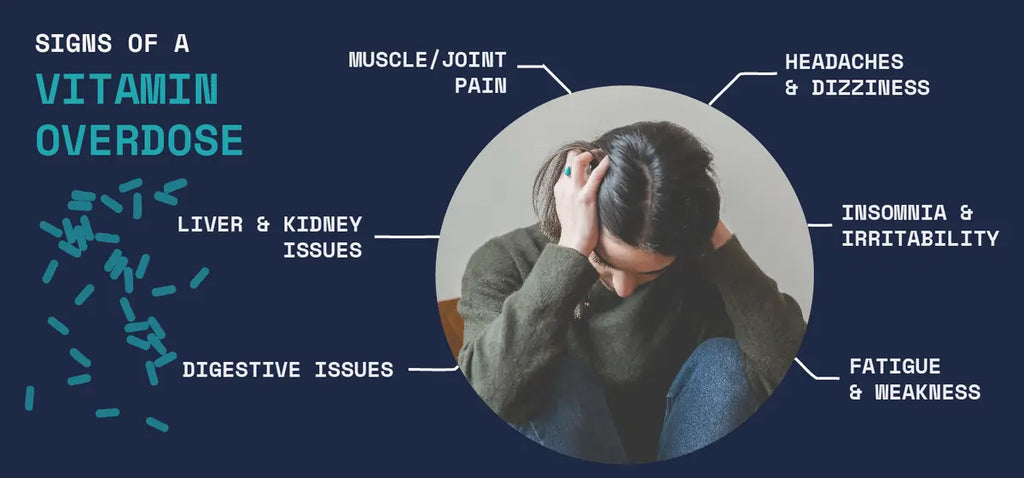
• thirst and frequent urination (renal attempts to restore balance)
• constipation or reduced appetite (digestive sluggishness)
• fatigue or unusual weakness (muscle and neurologic sensitivity)
• mild nausea (a downstream echo of calcium shifts)
Some people describe a “thick” feeling in the day, as though concentration has been slightly sanded down. Others notice that they crave water constantly. The details vary, but the theme is the same: the body is using fluid and metabolic resources to correct a chemical problem.
The Sneaky Culprit: Stacking Supplements Without Realizing It
Overdose doesn’t always come from reckless megadosing. Often, it’s a cumulative math problem disguised as wellness. A person might start with vitamin D drops. Then they buy a “bone support” formula. Then they add a winter multivitamin. Then a friend recommends a higher dose “just for a few months.” The doses blend into a quiet accumulation.
Another common contributor is the misreading of labels. Some products specify dosage in International Units (IU), while others communicate differently. Even when the numbers are present, they can be misinterpreted—especially when one supplement is taken daily and another is taken weekly.
Then there’s the medical-context twist: individuals with certain conditions or who take medications affecting calcium balance may be more vulnerable. That’s why “normal” lab targets matter. What seems like a moderate supplement can become excessive depending on the person’s baseline health and metabolism.
Symptoms That May Arrive After the Thirst: A Timeline of Worsening
The earliest sign often passes like a passing cloud: thirst, mild fatigue, slightly increased bathroom trips. But if vitamin D remains high—or if the dose isn’t adjusted—symptoms can intensify. Many people experience:
• persistent gastrointestinal discomfort (nausea, constipation, decreased appetite)
• dehydration-like feelings despite drinking (because the body is losing more water)
• muscle weakness or cramps (electrolyte and calcium interference)
• confusion, irritability, or lethargy in more serious cases
• heart rhythm changes in extreme situations
The timeline can feel unfair. You do something “healthy,” and then your body responds with disarray. That emotional dissonance leads people to keep taking the supplement—hoping it’s the right fix. But the body isn’t asking for more. It’s asking for less.
When to Treat This as Urgent: Red Flags Beyond “Mild”
If thirst is accompanied by severe weakness, significant confusion, vomiting, severe constipation, or signs of dehydration that don’t improve, it’s time to seek medical care promptly. Higher calcium can stress the kidneys and worsen fluid balance. Waiting “to see if it passes” can turn a manageable adjustment into a more complicated problem.
In clinical terms, vitamin D overdose is usually confirmed through laboratory evaluation—often including blood calcium and related markers. But you don’t need to be a lab expert to recognize the pattern: unusual thirst that persists, plus a sense that your body is out of sync.
Why People Become Fascinated With Vitamin D “More Is Better” Thinking
There’s a cultural magnetism around vitamin D. It’s tied to sunshine, vitality, and the promise of control during gloomy seasons. When people feel low, they search for a lever—something measurable, something purchasable. Vitamin D becomes that lever.
It’s also a nutrient with a lingering mystery: many people are low because of limited sun exposure. That reality makes the solution feel straightforward. Yet fascination can become a trap when it ignores dose boundaries. The human brain loves a simple causal narrative: “More supplement equals more benefit.” Biology rarely offers such clean arithmetic.
Think of it like tuning an instrument. A slight adjustment can improve harmony. But push the dial too far and the note distorts. Vitamin D overdose is that distortion—sometimes starting with a symptom you almost dismiss.
Prevention: How to Make Your Vitamin D Strategy More Intelligent
Prevention is mostly about intent. Instead of guessing, consider:
• checking total daily intake across all products
• choosing a dose aligned with your clinician’s guidance or reputable labeling ranges
• using lab tests when appropriate—especially if you’ve been supplementing for months
• avoiding “stacking” without understanding IU totals
• taking medications and health conditions seriously, not casually
If you suspect overdose—especially with persistent thirst—stopping high-dose vitamin D and getting professional advice is often the rational next step. Short answer: your body deserves the benefit of caution.
What to Do If You Suspect Overdose Right Now
If the first sign you’re seeing is that persistent thirst, don’t ignore it. Pause the self-experiment. Hydration is helpful, but it’s not a substitute for addressing the underlying issue. A clinician can evaluate symptoms and decide whether blood tests are necessary.
Also pay attention to context: recent product changes, dose increases, new supplements, or dietary shifts. The story of your intake matters. Overdose frequently comes from a chain of small decisions rather than one reckless moment. Untangling that chain helps you regain control quickly.
In the end, the first sign nobody talks about isn’t just a symptom—it’s a signal of a deeper imbalance. When you recognize it early, you’re not merely reacting. You’re responding thoughtfully to biology’s quiet alarm.