So you’ve received your vitamin D blood test results. Now comes the slightly mischievous question: what exactly do those numbers mean—and why does everyone seem to talk about them as if they’re a secret code? The challenge is real: labs often use different units, reference ranges can vary, and “normal” doesn’t always mean “optimal.” One small misread can lead to a cascade of unnecessary supplements—or, worse, missed intervention.
1) First, locate the key values on your report
Before you interpret anything, find the specific analyte labeled 25(OH) Vitamin D (also written as 25-hydroxyvitamin D). This is the form clinicians rely on because it reflects vitamin D status over a longer window than the shorter-lived variants.
Look for three common report components:
• Your result value (e.g., 18, 28, 45).
• Units (commonly ng/mL or nmol/L).
• Reference range (the lab’s “normal” band).
If you’re tempted to jump straight to conclusions, pause. Units matter. A number without units is like a map without a compass.
2) Understand the unit spell: ng/mL vs nmol/L
Most vitamin D discussions in everyday health chatter use ng/mL, but many lab systems present nmol/L. Confusion is common, and the conversion is straightforward:
ng/mL × 2.5 = nmol/L
nmol/L ÷ 2.5 = ng/mL
Example: a result of 30 ng/mL is roughly 75 nmol/L. If someone tells you you’re “low” but uses a different unit system, the conversation can become comically misaligned—like speaking two dialects of the same language.
3) Decode the usual categories—then question them wisely
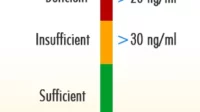
Many clinical practices classify vitamin D status in tiers. While cutoffs can differ between organizations and laboratories, you’ll often see categories similar to these (especially when results are in ng/mL):
• Deficiency: often < 20 ng/mL
• Insufficiency: often 20–29 ng/mL
• Sufficiency: often ≥ 30 ng/mL
• Potential excess: higher levels may prompt caution
Here’s the nuance: a “normal” range on the report doesn’t automatically mean your body is thriving. Some people require a higher target due to absorption issues, higher body mass, limited sun exposure, or medical conditions that alter vitamin D metabolism.
4) What does low vitamin D actually imply?
Low vitamin D can signal several possibilities: limited cutaneous synthesis (not enough sun), inadequate dietary intake, reduced absorption due to gastrointestinal conditions, certain medications, or altered metabolism. The downstream effects tend to cluster around calcium handling and bone health.
Vitamin D is heavily involved in regulating calcium and phosphorus. When vitamin D levels run low, the body may increase parathyroid hormone activity to maintain calcium—sometimes at the cost of bone density over time. That’s why persistent deficiency can be more than a lab curiosity.
Symptoms can be subtle. Fatigue. Muscle aches. Bone discomfort. Sometimes the body behaves normally for months, even while quietly adjusting to a deficit.
5) How to interpret high or borderline-high results
A higher vitamin D level may reflect supplementation, fortified foods, or—less commonly—excessive sun exposure (though sun exposure alone is unlikely to produce dangerous levels for most people). Still, very high results can raise concerns about hypercalcemia risk, especially if supplements are aggressive.
The key is context. A “high” number without supplementation history can be approached differently than a high number resulting from high-dose therapy. If your report includes calcium, kidney function markers, or notes about supplementation, those details help clinicians interpret the pattern.
Consider this: vitamin D behaves like a conductor. In excess, it can over-amplify the orchestra of calcium regulation.
6) Compare your result to your clinical story
Numbers don’t live in a vacuum. Consider these factors while interpreting your report:
• Sun exposure: seasonal changes, latitude, and clothing habits matter.
• Skin pigmentation: higher melanin can reduce vitamin D synthesis.
• Body weight: vitamin D can be sequestered in adipose tissue.
• Diet: fatty fish, fortified dairy, and eggs contribute, but may not be enough.
• GI health: celiac disease, inflammatory bowel disease, bariatric surgery, or fat malabsorption can impair absorption.
• Medications: certain anticonvulsants, glucocorticoids, and others can alter vitamin D metabolism.
Ask yourself: is the vitamin D level explaining the rest of your wellbeing—or is it merely a stray statistic?
7) Pair vitamin D with related markers (if included)
Your report may include or prompt complementary labs such as:
• Calcium (total and/or ionized in some settings)
• Phosphorus
• Parathyroid hormone (PTH)
• Alkaline phosphatase
• Creatinine / kidney function markers
These aren’t always ordered, but when available, they can turn a confusing picture into a coherent narrative. For instance, low vitamin D with elevated PTH often suggests secondary hyperparathyroidism due to vitamin D insufficiency. That’s an especially useful clue for determining whether supplementation is likely to help and how aggressively.
8) Understand what “optimal” might mean for you
Some people aim for a target around 30 ng/mL; others—particularly those with risk factors—may be advised to target a higher range. Optimal doesn’t have a single universal definition. It depends on bone health goals, comorbidities, and clinician judgment.
If you’ve been told you’re “fine,” but you also have persistent symptoms, risk factors, or history of deficiency, it’s worth discussing a personalized approach. Numbers can be correct and still insufficient for your circumstances.
9) Common reasons results don’t match expectations
Ever notice how vitamin D can feel unpredictable? Here are frequent plot twists:
• Timing of the test: if you started supplementation recently, levels may not have stabilized.
• Inconsistent dosing: missed doses can create a false sense of “unresponsiveness.”
• Absorption issues: taking vitamin D doesn’t guarantee absorption.
• Lab variation: different assays and lab practices can shift readings slightly.
• Fortified foods vs supplements: food-based intake may be variable and seasonal.
In other words, the lab result is a snapshot, not a biography.
10) Next steps: what to do after you read the report
After interpreting your vitamin D result, the next step is action planning. That often includes:
• Reviewing your risk factors with a clinician or qualified healthcare professional.
• Confirming the units and reference range so the conversation stays accurate.
• Discussing supplementation strategy (dose, form, frequency, and duration).
• Planning retesting (commonly after a few months, depending on your regimen and baseline level).
Be cautious with self-directed high-dose therapy. Vitamin D is fat-soluble; it can accumulate. A measured plan beats a dramatic one.
11) A supportive “sun + food” mindset (without the circus)
While supplements can help, you can also nudge levels through lifestyle. Sun exposure can stimulate vitamin D synthesis, though it varies by season, skin type, geography, and sunscreen habits.
Dietary sources matter too:
• Fatty fish (salmon, sardines, mackerel)
• Fortified dairy or plant alternatives
• Egg yolks
• Mushrooms exposed to UV (depending on type)
It’s not about chasing a sun-drenched fantasy. It’s about consistent, realistic inputs—like tuning an instrument gradually instead of blasting it into distortion.
12) When to seek urgent or near-urgent guidance
If your report shows very high vitamin D, abnormal calcium levels, significant symptoms (such as severe weakness, nausea, confusion, or dehydration), or kidney-related concerns, seek medical guidance promptly. High levels plus calcium abnormalities can signal metabolic stress that needs evaluation rather than guesswork.
Also seek guidance if you have conditions affecting absorption (malabsorptive disorders, bariatric surgery) or if you’re on long-term medications known to interfere with vitamin D metabolism.
13) Frequently asked questions that people forget to ask
“Should I take vitamin D every day or once a week?”
Often either can work, depending on the dose plan and tolerance. The “best” method is usually the one that improves adherence and aligns with clinician recommendations.
“Does vitamin D help with immunity?”
Vitamin D plays roles in immune regulation, but the relationship isn’t a simple on/off switch. It’s best viewed as part of broader health foundations.
“Can I interpret it without symptoms?”
Yes, and you should. Many people discover deficiency through testing even when they feel “fine.”
14) Final takeaway: treat the results like a story, not a score
Your vitamin D blood test results are a useful clue—but they’re not the entire plot. Interpret the value, confirm the units, consider your reference range, and connect the result to your medical context. The goal isn’t just to hit a number. It’s to support bone health, muscle function, and overall metabolic harmony.
If you want a visual reminder of how environment influences health routines, consider capturing moments from your campus and surroundings—because consistency in lifestyle, movement, and exposure patterns is part of the long game.