Vitamin D is often described as “immune-supportive,” a phrase that sounds reassuringly simple. Yet the body is rarely so obedient to our optimism. When people consider higher doses—especially during winter fatigue or after a lab result—an important question emerges: can too much vitamin D nudge the immune system in ways that become counterproductive, particularly for those with autoimmune tendencies? The fascination with high-dose vitamin D has its roots in compelling biology and hopeful anecdotes, but deeper mechanisms reveal a more nuanced story: the immune system is not a single lever; it is a symphony with conductors, feedback loops, and moments of dissonance.
Vitamin D and the Immune System: More Than a Single Switch
Vitamin D, converted into its active form, behaves like a hormonal regulator rather than a mere vitamin. It can influence the expression of genes involved in innate immunity, including the behavior of macrophages and the signaling cascades that follow infection. It also modulates adaptive immunity, affecting how T cells differentiate and how inflammatory responses scale up or down.
In many contexts, this is beneficial. Vitamin D supports a balanced immune tempo—strong enough to respond to pathogens, restrained enough to avoid unnecessary collateral damage. However, immune regulation is delicate. Even slight changes in the “tone” of signaling can matter. Higher intake may not simply amplify benefits; it can shift the balance toward unexpected outcomes depending on an individual’s baseline status, genetics, and the specific autoimmune pathway involved.
The Common Observation: “More Helps More”—Why It Persists
There is a widespread observation that nutrients often work in a dose-dependent manner. If vitamin D deficiency correlates with worse immune outcomes, it seems logical that higher doses might produce proportionally stronger protection. This thought pattern feels intuitive, especially when framed as “boosting immunity.”
But immunity isn’t only about strength. It is about calibration. Too much “support” can resemble overcorrecting a machine’s thermostat. Some immune cells may become more reactive; regulatory pathways may not expand at the same rate; and the threshold for inflammatory triggers may lower. People then notice patterns: some individuals feel better with higher vitamin D, while others experience no change or feel unwell in ways that don’t neatly fit the expectation of “more protection.”
Autoimmune Risk: How Excess Vitamin D Could Become a Double-Edged Sword
Autoimmune conditions arise when immune tolerance breaks—when the immune system treats “self” as “not-self.” Vitamin D plays roles in tolerance and inflammation, which means it can intersect with autoimmune biology. The key point is not that vitamin D automatically causes autoimmunity, but that higher doses can alter immune signaling patterns that might, in susceptible people, favor dysregulation.
One pathway involves T cell balance. Vitamin D can affect differentiation of T cell subtypes and the function of regulatory mechanisms that normally keep immune responses from drifting into self-targeting behavior. With moderate levels, the effect may tilt toward restraint. With excessive levels, however, the immune system might receive a confusing set of signals—stimulating certain responses while failing to proportionally strengthen the “brakes.”
Another consideration is that autoimmune risk is polygenic and context-dependent. Excess vitamin D could be a contributing factor rather than a primary cause. In real life, immune dysregulation often requires a convergence of influences—genetic susceptibility, infections or microbiome changes, hormonal factors, and environmental exposures. High-dose vitamin D may act like a force multiplier for pathways already primed to misfire.
Depth of Fascination: Why High-Dose Strategies Capture Attention
Despite these cautions, fascination persists. Two reasons often converge. First, vitamin D is measurable—blood tests convert uncertainty into numbers. When levels are low, supplementing can feel like regaining control. Second, vitamin D’s immune influence is biologically plausible, which makes the narrative compelling.
Yet the deeper reason is psychological as well as physiological. A deficiency diagnosis provides a clear story, and high-dose supplementation appears to be an empowered solution. People want closure—an end to the ambiguity of “am I doing enough?” But the immune system rarely offers closure on our timetable. It prefers iterative calibration, not blunt escalation.
What “Too Much” Means: Vitamin D Toxicity and Immune Indirect Effects
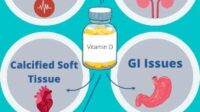
High-dose vitamin D can become unsafe primarily through toxicity, typically driven by elevated calcium levels (hypercalcemia) and disturbances in mineral metabolism. These changes can cause symptoms such as nausea, constipation, confusion, excessive thirst, and kidney strain. While toxicity is not the same as autoimmune activation, the downstream effects on the body’s inflammatory and homeostatic environment can indirectly influence immune behavior.
When calcium regulation becomes chaotic, immune cells may operate in a different biochemical landscape. Calcium is a core messenger in immune activation. So while the immediate danger is often framed as “bone and kidney health,” immune modulation can still be part of the collateral. In other words, high-dose vitamin D might not only adjust immune signaling directly; it can also alter the biochemical stage on which immune decisions are made.
Why Autoimmune Risk Isn’t Uniform: Genetics, Baseline Levels, and Timing
Not everyone responds the same. Baseline vitamin D status matters. Someone who is severely deficient may benefit from replenishment at therapeutic doses, especially under medical supervision. In contrast, someone with already adequate levels may experience diminishing returns or an elevated chance of overshooting the desired range.
Genetics also plays a role. Variations in vitamin D receptors and pathways can change how vitamin D influences gene expression in immune cells. Timing matters too. The immune system’s “seasonal” states—linked to infections, stress hormones, and shifting microbiome patterns—can change how vitamin D’s effects are perceived.
Autoimmune risk emerges from the interaction between these variables. This is why two people can take the same dose and experience different outcomes: one might simply normalize a deficiency, while the other might push immune regulation beyond their personal optimum.
Practical Safety: Aim for Correction, Not Escalation
A prudent approach is to use vitamin D to correct deficiency rather than treat it as an unlimited immune amplifier. Blood tests can guide targets. Many clinicians focus on establishing and maintaining a reasonable serum 25(OH)D range instead of chasing “the highest number.”
Short-term high-dose regimens are sometimes used medically, but they should be individualized. Re-testing after supplementation is not bureaucratic fussiness; it is a way to prevent overshooting. People with a history of kidney stones, sarcoidosis, hyperparathyroidism, or certain granulomatous disorders may require special caution because they can be more prone to calcium dysregulation.
Signs to Watch and When to Reassess
Because the consequences of excess can be subtle early on, it helps to monitor how the body responds. Symptoms such as persistent nausea, unusual fatigue, muscle weakness, frequent urination, or cognitive changes may warrant re-evaluation—especially if they coincide with high-dose supplementation.
Additionally, if autoimmune flares occur—new joint stiffness, rash recurrence, unusual gut symptoms, or unexplained inflammation—reassessing dose and timing is wise. Immune symptoms are complex, but when the timeline aligns with supplement escalation, it is reasonable to treat it as a potential clue rather than dismissing it as coincidence.
A Balanced Perspective: Vitamin D as a Supportive Ingredient, Not a Master Switch
Vitamin D can support immune function, and deficiency correction can be genuinely helpful. But immune enhancement is not a monotonic curve where more is always better. Too much can shift the immune equilibrium, contribute to metabolic instability, and potentially create a context where autoimmune-susceptible pathways become more likely to misbehave.
In the end, the safest fascination is the kind that asks better questions: not “Can it boost immunity?” but “What dose fits my biology?” The immune system responds to precision. Vitamin D is best treated as a careful regulator—one that deserves dosing discipline, not a heroic dose escalation.

Conclusion: The Question Behind the Question
High-dose vitamin D and autoimmune risk are linked less by a single dramatic mechanism and more by a constellation of balancing acts—gene regulation, immune cell signaling, mineral metabolism, and individual susceptibility. The common observation that “more helps more” is tempting, but the immune system does not reward naive linear thinking. It rewards measured correction, continuous feedback, and respect for biological thresholds.
If vitamin D is in the conversation, let it be a conversation with data and context—serum levels, symptoms, medical history, and dose strategy. That approach keeps the potential benefits while reducing the odds that immune regulation tips from support into instability.