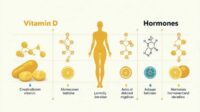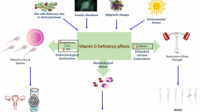
There’s a particular kind of quiet that settles in during postmenopausal years—the body still moves forward, but it does so with new biochemical weather. Among the most talked-about nutrients in this season is vitamin D, a fat-soluble compound with a surprisingly broad job description. It supports bones, modulates immune signaling, and participates in calcium homeostasis. Yet the question that matters most isn’t simply whether to take vitamin D. It’s how much—because the “right amount” can feel different when sunlight dwindles, hormones shift, and bone turnover changes its rhythm.
Vitamin D in the Postmenopausal Landscape: Why It Becomes Non‑Negotiable
Vitamin D is often framed as a bone nutrient, but that label is only half the story. For postmenopausal women, declining estrogen is linked to accelerated bone resorption. At the same time, the body’s ability to synthesize vitamin D in the skin may become less efficient with age. The result can be a double exposure: less vitamin D production plus increased need for calcium support. Vitamin D helps your intestines absorb calcium and supports a balanced dialogue between bone-building and bone-breaking cells.
When vitamin D status is low, calcium absorption can falter. That doesn’t always create immediate symptoms. Instead, it can sow slow-blooming risks—lower bone mineral density, higher likelihood of osteopenia or osteoporosis, and greater susceptibility to falls in some cases. Think of vitamin D as the quiet conductor keeping the calcium orchestra in tempo.
How Your Body Measures “Enough”: Blood Levels and the Idea of Targeting
The most practical way to estimate whether you need vitamin D supplementation is to consider blood testing—commonly measuring 25-hydroxyvitamin D, written as 25(OH)D. This is the marker that best reflects vitamin D stores. Different clinical perspectives exist on what constitutes “optimal,” but the underlying principle is the same: your target should align with bone health needs and overall risk.
Here’s the intriguing part: vitamin D’s impact depends on your baseline status. Two women can both be postmenopausal, both spend similar time indoors, and yet have different vitamin D levels because of genetics, body composition, skin pigmentation, latitude, seasonality, and dietary habits. Supplementation becomes more precise when you know where you start.
So, How Much Should a Postmenopausal Woman Take? The Common Ranges
General guidance often includes a baseline range of vitamin D supplementation for adults who may be low. Many recommendations place typical maintenance doses around 600–800 IU per day (15–20 micrograms). For some postmenopausal women—especially those with confirmed deficiency, minimal sun exposure, or low dietary intake—higher amounts are sometimes used temporarily or as a tailored plan.
In practical terms, clinicians may adjust dosing upward toward 1,000–2,000 IU daily for people who are deficient or at higher risk, while still monitoring levels. The goal is not to chase a number for its own sake. The goal is to reach a stable, functional vitamin D status that supports calcium absorption and bone integrity.
There is also an upper limit to consider. Vitamin D can become excessive, which is a different problem entirely. Too much vitamin D can increase calcium levels and potentially lead to complications. That’s why “more” isn’t automatically “better.” It’s “enough,” with restraint, that tends to win the long game.
Deficiency vs. Maintenance: Why the Answer Changes With Your Starting Point
If bloodwork reveals deficiency, the strategy often shifts from maintenance to repletion. Repletion aims to restore stores efficiently, then transition back to a maintenance dose. Maintenance strategies may look modest on paper, but they can be powerful over time—particularly when paired with calcium intake and weight-bearing movement.
One of the most overlooked aspects is timing. Vitamin D can be taken daily or weekly depending on preference and clinical guidance, but the dose must still fit within a safe overall plan. If vitamin D is absorbed alongside dietary fat, many people find it integrates more smoothly with meals.
Picture it like refilling a reservoir. A one-time drizzle can’t replace what’s been draining for months. But once the reservoir is full, steady topping-up is the safer, sustainable rhythm.
Dietary Sources: Not the Whole Solution, but a Helpful Ally
Food can contribute to vitamin D intake, though it’s rarely sufficient on its own for many postmenopausal women—especially in colder months or with limited sun exposure. Dietary sources include fatty fish (salmon, sardines), fortified dairy or plant milks, fortified yogurt, and certain egg yolks. Some mushrooms may contain vitamin D, depending on how they’re grown or treated.
Still, consider the practicality. Even a well-considered diet may not reliably reach recommended daily intake. That’s where supplementation often bridges the gap. The most elegant approach is usually a combo strategy: use food as the foundation, supplement as the finishing touch.
Sunlight: The Variable That Refuses to Behave
Sun exposure is often discussed as a natural route to vitamin D, but it’s famously unpredictable. Latitude, season, cloud cover, sunscreen habits, clothing coverage, and daily routines all affect how much UVB reaches your skin. Age adds another layer. Even when the sun is present, the body’s synthesis may not match younger levels.
Moreover, sunlight carries a tradeoff: too much increases skin cancer risk. That’s why relying on sun alone—especially for a nutrient with such high stakes for bone health—can feel like negotiating with uncertainty.
A shift in perspective can help: aim for safe sun exposure where appropriate, but treat it as a bonus rather than a primary plan.
Safety First: Upper Limits, Calcium, and the “Too Much” Problem
Vitamin D supplementation has guardrails. The risk of toxicity is uncommon at typical recommended doses, but it becomes relevant when dosing is excessive or prolonged without monitoring. Toxicity often involves elevated calcium levels, which can lead to nausea, constipation, confusion, excessive thirst, frequent urination, and, in severe cases, kidney complications.
If someone already has conditions that affect calcium regulation—such as certain parathyroid disorders, kidney disease, or granulomatous diseases—vitamin D supplementation may require extra clinical oversight. Medications can also matter. Some drugs influence vitamin D metabolism or calcium balance.
Think of vitamin D like a dimmer switch. You want enough light to see clearly, not so much that the room becomes harsh and unstable.
Pairing Vitamin D With Calcium and Lifestyle: A Synergistic Strategy
Vitamin D and calcium are partners. Vitamin D supports calcium absorption in the gut; calcium provides the structural materials for bone. Many postmenopausal women are advised to ensure adequate calcium intake—often through diet (dairy, leafy greens, fortified products) plus supplements if necessary. The exact calcium goal can vary by dietary habits and health status.
But supplements aren’t the whole story. Weight-bearing activity—walking, stair climbing, dancing—and resistance training help stimulate bone remodeling. Balance exercises reduce fall risk. Sleep and protein intake also play quiet supporting roles.
The most compelling angle is that supplementation can be a scaffold, not the entire building. When the lifestyle foundation is present, vitamin D has room to do what it does best.
Choosing a Supplement: Forms, Dosing Frequency, and Practical Considerations
Most vitamin D supplements come as vitamin D3 (cholecalciferol) or vitamin D2 (ergocalciferol). Many people prefer D3 because it often performs well in raising blood levels, though either may be used depending on availability and professional guidance. Look for products with clear labeling of IU and consider consistency—taking the supplement the same way each day often reduces dosing variability.
If dosing frequency is a concern, some choose daily microdoses; others prefer fewer weekly doses under guidance. Either pattern can work if the total weekly or monthly amount aligns with a safe plan.
When you incorporate vitamin D into daily life, choose a habit anchor—like taking it with breakfast or with a meal that includes some dietary fat. Small routines become persuasive over time.
A Curiosity to Keep: When to Recheck Levels and Reassess
After starting or changing supplementation, rechecking 25(OH)D levels is often a wise move—especially after a period of repletion or when higher doses are used. Reassessment confirms whether the chosen dose is effective and safe. It also helps refine the plan: perhaps the dose can be lowered, or maybe it needs slight adjustment.
In postmenopausal care, progress is rarely linear. Bone health is built through accumulation—months, sometimes years. Vitamin D dosing fits into that long timeline, so periodic measurement can prevent both under-treatment and unnecessary excess.
How to Think About Your “Amount”: A Personal Formula Rather Than a Single Number
The most trustworthy approach is individualized. Your dose depends on your baseline vitamin D level, dietary intake, sun exposure, body composition, health conditions, medication profile, and whether you’re in maintenance versus deficiency repletion. A “standard dose” can be a starting point, but your body’s data should steer the final decision.
If you’re wondering where to begin, consider this narrative: you’re not just taking a vitamin. You’re engineering a supportive environment for bone remodeling, immune resilience, and metabolic steadiness. Vitamin D is the lever. Blood tests are the dashboard. Lifestyle and calcium are the road.

In the end, the question “How much vitamin D should a postmenopausal woman take?” becomes less like a riddle and more like a map. Start with evidence, choose a dose that fits your situation, and revisit the plan as your needs evolve.