What if your menstrual cycle isn’t “random” at all—what if it’s simply signaling that something in the background is a little out of tune? Picture your body as a finely calibrated orchestra: hormones, endometrial timing, ovarian signaling. Now imagine vitamin D as one of the quiet conductors—present in the margins, yet capable of nudging the entire performance. The role of vitamin D in menstrual cycle regularity is not just a wellness rumor; it’s a biologically plausible story with real-world echoes.
Vitamin D: More Than a Sunlight Bonus
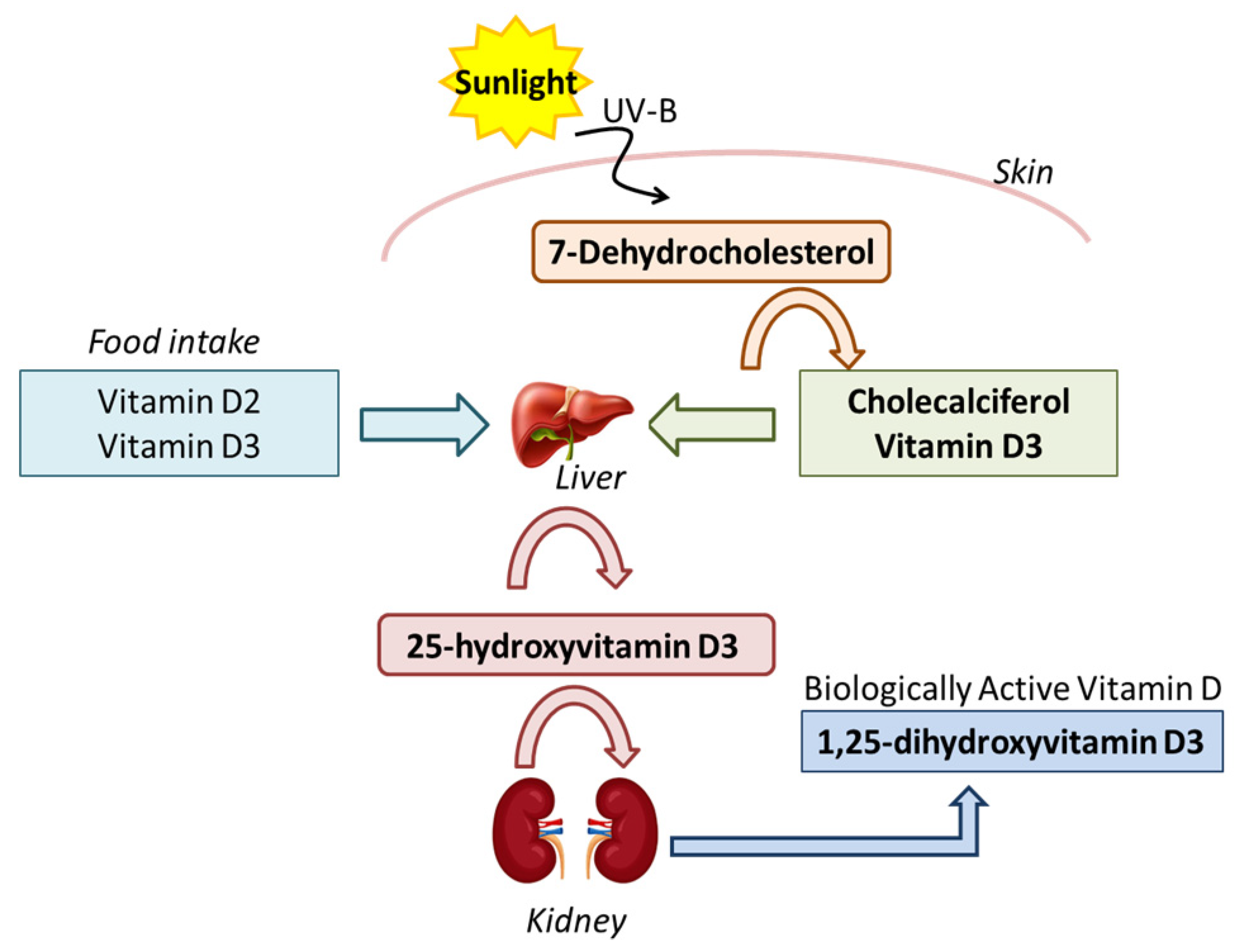
Vitamin D is often reduced to a simple label—“the sunlight vitamin.” But physiologically, it behaves more like a hormone precursor. Once converted into its active form, it can influence gene transcription, immune modulation, and cellular differentiation. That last phrase—cellular differentiation—matters because the menstrual cycle is, at its core, cellular remodeling. The endometrium must proliferate, prepare, and then either maintain or shed. If signaling pathways are impaired, timing can wobble. And when timing wobbles, cycle regularity can drift.
Consider a potential challenge: you may feel entirely fine, yet still live with a low-level deficiency. The body is surprisingly good at compensating—until it suddenly isn’t. That’s when irregular bleeding, prolonged cycles, or shorter-than-usual intervals appear like uninvited plot twists.
The Menstrual Cycle’s Timing Mechanism—and Where Vitamin D Fits
Regular cycles depend on synchronized communication among the hypothalamus, pituitary gland, ovaries, and uterus. The hypothalamus releases gonadotropin-releasing hormone (GnRH), the pituitary responds with follicle-stimulating hormone (FSH) and luteinizing hormone (LH), and the ovaries translate these signals into follicular development and ovulation. Ovulation, in turn, helps establish the luteal phase. The luteal phase’s length is particularly important for predictable menstruation.
Vitamin D receptors have been identified in various reproductive tissues. When vitamin D signaling is adequate, it may support the integrity of ovarian function and help maintain more stable hormonal signaling patterns. In contrast, suboptimal vitamin D levels could contribute to dysregulation—something like a metronome losing its steady click.
Short sentence: cycles need rhythm.
Long sentence: even mild disruptions in the endocrine network can accumulate, altering the probability of timely ovulation and thereby shifting cycle length.
From Deficiency to Irregularity: How Gaps Can Cascade
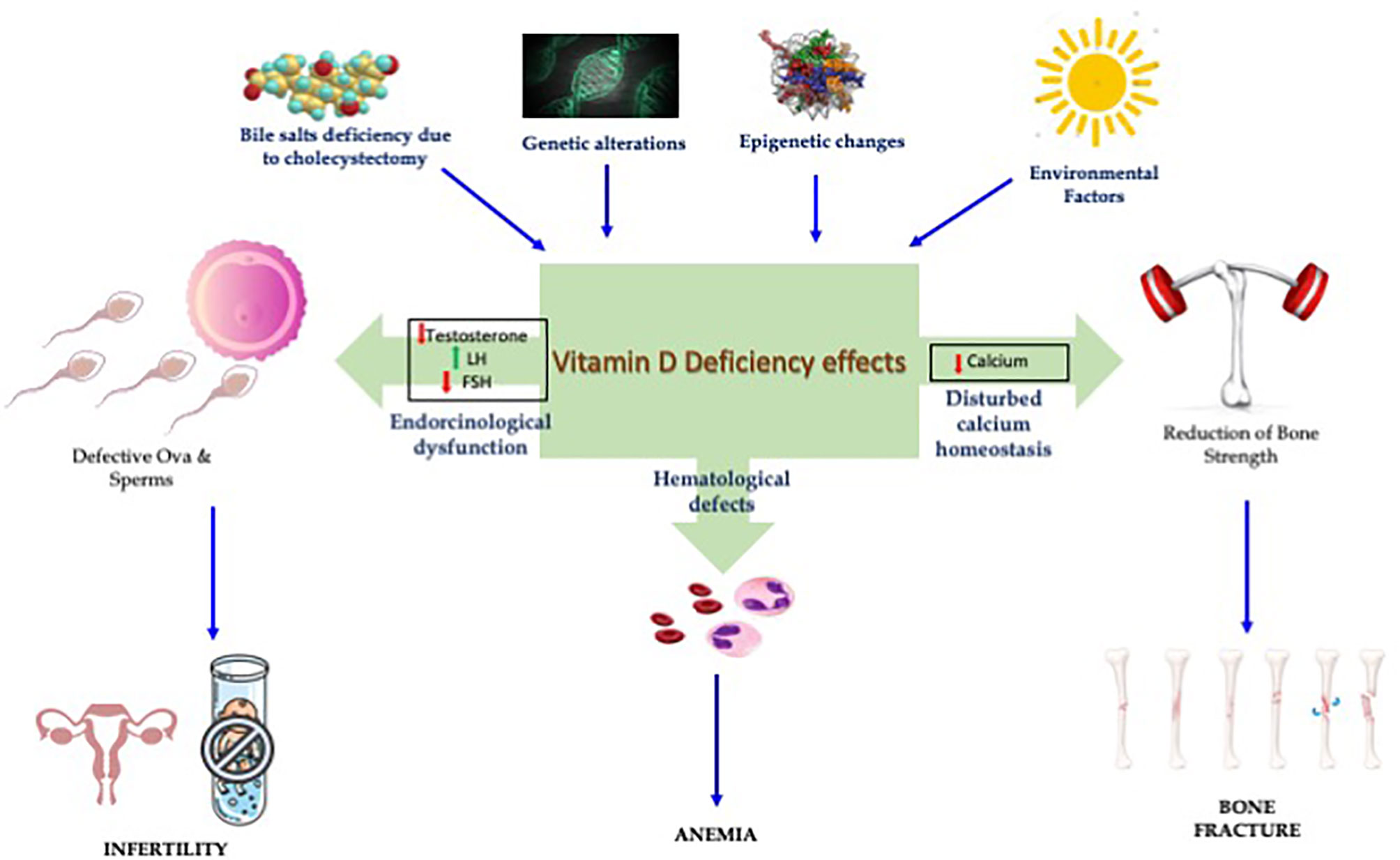
A deficiency can create a cascade rather than a single effect. Vitamin D plays roles in insulin sensitivity, inflammation control, and oxidative balance. Each of these influences reproductive physiology. For example, insulin dysregulation is strongly linked with ovulatory dysfunction, especially in metabolic conditions that often co-travel with irregular menses. Inflammation can also interfere with normal signaling between ovarian follicles and the endometrium.
So the challenge is not simply “low vitamin D.” The challenge is what low vitamin D often travels alongside: limited sun exposure, higher skin pigmentation, winter seasonality, darker indoor lifestyles, dietary patterns lacking fortified foods, and sometimes absorption issues. Those factors can stack, making deficiency more likely and effects more noticeable.
In other words, vitamin D may be a participant and a marker—sometimes both.
Vitamin D, Inflammation, and the Endometrium’s Mood
The endometrium is not a passive bystander. It is dynamic tissue responding to inflammatory cues and immune signaling. Chronic low-grade inflammation can alter implantation readiness and can affect how the endometrium responds to hormonal inputs. If the uterine environment becomes “noisier,” the timing and quality of shedding can shift.
Vitamin D is known for immunomodulatory behavior. It can influence cytokine production and immune cell activity, potentially smoothing inflammatory turbulence. When inflammation is reduced, hormonal instructions may land more accurately, which can support more consistent cycle patterns.
Playful question time: if your endometrium were a theater audience, would it perform better with a quiet backstage or with clattering equipment? Vitamin D may help quiet the background.
Ovulation: The Keystone for Predictable Bleeding
Cycle regularity depends heavily on whether ovulation occurs consistently. Without ovulation, the luteal phase can be shortened or irregular, leading to unpredictable bleeding. Even if bleeding occurs, it may not follow the same endocrine logic as a typical ovulatory cycle.
Research into reproductive endocrinology often emphasizes ovulatory timing because it correlates strongly with cycle length. Vitamin D may support ovarian follicle development and steroidogenesis—the production of estrogen and progesterone that orchestrate uterine changes. When those processes are stable, cycles are more likely to behave like clockwork rather than confetti.
Long sentence: when vitamin D is insufficient, the hormonal choreography that determines follicle maturity and ovulatory readiness can become less reliable, increasing the probability of an irregular timetable.
Common Clinical Patterns: PCOS, Heavy Menses, and Variability
Irregular menstrual cycles frequently appear in clinical contexts such as polycystic ovary syndrome (PCOS), thyroid disorders, and metabolic irregularities. Vitamin D deficiency is also reported in many individuals with PCOS, and the overlap between metabolic and reproductive pathways is well documented. While vitamin D is not a standalone cure for every cause of irregular menses, it may contribute to overall reproductive stability in some people.
There’s also the question of bleeding intensity—some individuals experience menorrhagia (heavy menstrual bleeding) alongside irregularity. If vitamin D influences inflammatory signaling, vascular function, or endometrial responsiveness, it could potentially affect how heavy or dysregulated the cycle becomes. In clinical conversation, this often becomes a “supporting factor” rather than a single-driver explanation.
Short sentence: biology rarely uses one lever at a time.
How Lifestyle Steers the Vitamin D Lever
Even with motivation, vitamin D status can remain unpredictable. Season, latitude, skin melanin concentration, clothing coverage, and outdoor habits all affect production. Diet can help, but it may not fully compensate for low sun exposure—especially when intake is inconsistent.
Indoor life is a modern pattern. So is sunscreen use that—while protective—can reduce cutaneous vitamin D synthesis if exposure is minimal. The practical challenge is finding a balanced strategy that supports health without relying entirely on chance. Supplementation may be appropriate for some, but it should ideally be informed by blood testing and individualized guidance.
Consider this scenario: you’re diligent, yet your cycle remains irregular. That doesn’t mean vitamin D is irrelevant—it may mean the issue isn’t addressed sufficiently, or the deficiency is one component of a broader endocrine tapestry.
Testing and Interpreting Vitamin D: Avoiding the Guesswork
Instead of guessing, testing clarifies the conversation. A common approach is measuring 25-hydroxyvitamin D, the standard indicator of vitamin D status. Interpretation depends on the lab’s reference range and the clinical context. Factors like body weight, malabsorption, kidney function, and medication use can alter how vitamin D behaves in the body.
It’s also useful to remember that a “normal” level doesn’t always eliminate irregular cycles caused by other factors. Conversely, a low level doesn’t automatically mean vitamin D is the sole driver. The most effective approach is integrative: evaluate vitamin D alongside menstrual history, signs of ovulatory dysfunction, metabolic markers, and relevant screenings.
Targeted Support: Supplementation, Dosing, and Safety
If vitamin D deficiency is present, replenishment can be considered. However, dosing is not one-size-fits-all. Higher doses are not inherently better; exceeding needs can lead to toxicity risks, especially over time. The safest path is usually stepwise: confirm status, choose an appropriate regimen, reassess after a period, and adjust based on response.
Long sentence: the goal is to optimize reproductive-supportive signaling while maintaining safe serum levels, rather than chasing a number without context.
Also, vitamin D doesn’t work in isolation. Pairing supplementation with adequate calcium intake, overall nutrition quality, and stable lifestyle habits can help the body express the benefits more reliably.
When to Seek Further Evaluation
Sometimes irregular cycles are a signal that deserves professional assessment. If cycles are consistently unpredictable, if bleeding is very heavy, if there are symptoms of anemia, or if there is suspected hormonal imbalance, evaluation becomes important. Fertility concerns also warrant timely discussion. Addressing underlying causes can clarify how much vitamin D can realistically influence the situation.
Short sentence: no symptom should be dismissed.
A Closing Thought: Regularity as a Signal, Not a Complaint
Cycle regularity isn’t merely an aesthetic preference—it’s a window into endocrine coordination. Vitamin D may help stabilize hormonal signaling, reduce inflammatory interference, support ovarian function, and thereby promote more predictable timing. Yet it’s best understood as part of a broader system: nutrition, sun exposure, metabolic health, immune tone, and reproductive physiology all intertwine.
So here’s one last playful question: if your cycle could talk, would it ask for more light, more stability, or a whole better-tuned routine? Vitamin D may be one of the answers—and it’s an answer worth testing, not guessing.