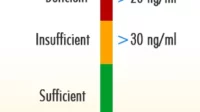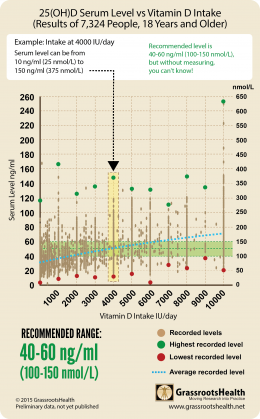
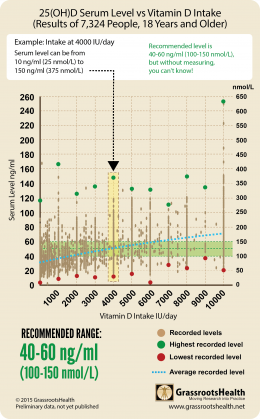
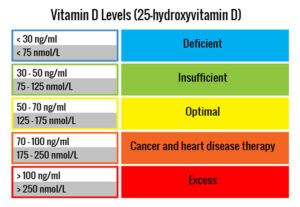
You’ve done the sensible thing. You tested. You found your vitamin D level hovering near 30 ng/mL—the number that many charts treat as a kind of finish line. And yet, nothing happens. No upward drift. No satisfying escape velocity. It’s as if your body has placed vitamin D on hold, waiting for the right conditions to unlock further change. The frustrating part isn’t that 30 ng/mL is “bad.” It’s that it feels like a ceiling you can’t pass, even when you keep doing “all the right things.” What if the real issue isn’t your dose—but your assumptions?
The 30 ng/mL Myth: One Number, Many Narratives
“30 ng/mL” is often portrayed as a universal target. But your physiology doesn’t live by a single metric. It lives by context: sun exposure patterns, skin pigmentation, body composition, seasonal rhythms, kidney conversion efficiency, and even how regularly you take your supplement.
Think of your vitamin D system as a relay team rather than a solitary hero. Vitamin D arrives. It’s metabolized. It’s transported. It’s converted into its active form. Finally, it’s used and recycled. If any runner in the relay is moving too slowly, your measured serum concentration may plateau—right where you keep checking.
The “stuck” sensation can also create a mental trap. You start to view the situation as stubborn biochemistry instead of a solvable pattern. That shift in perspective matters, because it turns your next step from “take more” into “understand what’s constraining the rise.”
Are You Measuring the Right Thing at the Right Time?
Vitamin D results depend heavily on timing. Some people test soon after starting supplements, while others test after months of consistency. The difference between those two moments can be the difference between “still climbing” and “stalled.”
Also, vitamin D is not a one-note molecule. The lab result often reflects 25-hydroxyvitamin D (25(OH)D), but what you care about biologically is downstream activity and tissue availability. Two people can share a similar serum reading while experiencing different metabolic realities.
If you suspect a plateau, it helps to ensure consistency: same lab, similar sampling conditions, and a clear timeline from supplementation changes. Serum vitamin D behaves like a slow-moving tide. Move the boat at the wrong moment and you’ll blame the ocean.
Absorption: The Silent Bottleneck Nobody Talks About
Many people take vitamin D as if swallowing a capsule automatically guarantees absorption. But absorption is a choreography. Vitamin D is fat-soluble, and without adequate dietary fat—or with a gut environment that doesn’t cooperate—your intake can become underutilized.
Common scenarios contribute to poor uptake: taking vitamin D on an empty stomach, having low-fat meals, or having conditions that impair digestion and bile flow. Even the formulation matters. Some versions dissolve more efficiently, and some are packaged for better bioavailability.
Here’s the curious part: you might feel like you’re “staying consistent,” yet your absorption might be inconsistent. A single week of different eating habits can alter how much vitamin D actually enters circulation.
Body Composition and Sequestration: Vitamin D Can Get “Stored Away”
Adipose tissue is not just passive storage. Vitamin D can become sequestered in fat, effectively reducing the fraction circulating in serum. In practical terms: you may take vitamin D, but your blood level refuses to rise at the speed you expect.
This is one reason some individuals hover around 30 ng/mL even with ongoing supplementation. Their body treats vitamin D like a resource that needs to be deposited before it can be distributed elsewhere.
It’s not punishment—it’s logistics. If your tissues are “warehousing” vitamin D, your serum might appear stuck until the warehouse reaches balance and redistribution begins.
Compliance Isn’t a Binary: Consistency Beats Intensity
People often use “I’m taking it” as a yes-or-no claim. But the body responds to a rhythm. Missed days, irregular timing, and sporadic use can prevent a meaningful upward trend. Vitamin D doesn’t respond like caffeine; it responds like infrastructure.
Consider the difference between adding small, dependable energy to the system versus repeatedly draining it. If you want to push above 30, your best ally is predictable intake—taken with a meal that contains enough dietary fat, on a schedule you can actually sustain.
Even the time of day can matter indirectly. Pairing vitamin D with the largest meal may improve absorption. Small tactical changes can create a surprisingly large strategic outcome.
Sunlight: The Variable You Might Be Ignoring
Indoor living, sunscreen habits, seasonal shifts, cloud cover, and latitude all influence vitamin D synthesis. If you’re supplementing during months when sunlight is minimal, your baseline may differ drastically from summer months.
What appears to be a plateau may actually be the point where supplementation replaces sunlight rather than pushes beyond it. In that case, the “stuck” level is the equilibrium between intake and the body’s ongoing use.
Try asking a different question: Are you trying to outpace your equilibrium, or are you only replacing what you’re losing? That reframing tends to reveal the leverage points.
Metabolism and Genetic Diversity: The Conversion Landscape
After absorption, vitamin D undergoes metabolic conversions. Some people convert vitamin D more efficiently than others. Variants in the enzymes involved can influence how quickly levels rise and how high they eventually go.
Additionally, factors affecting liver and kidney function can alter vitamin D processing. If conversion is sluggish, serum might stall even when intake is steady.
This is one reason a plateau near 30 can persist: your intake may be fine, but the downstream machinery may be operating at a particular tempo. Instead of assuming “more is always better,” it’s smarter to investigate the rate-limiting steps.
Magnesium, Vitamin K2, and Co-Factors: The Support Team
Vitamin D doesn’t work alone. It interacts with minerals and cofactors that influence activation and utilization—especially magnesium and vitamin K2. If these are insufficient, your body may treat vitamin D as present but poorly utilized.
Think of vitamin D as a key. The door won’t open smoothly if the hinges are rusty or the lock is missing components. The result can be a serum level that feels “adequate” yet doesn’t progress beyond a certain point.
Addressing the support ecosystem—under guidance if you have medical conditions—often turns a stalled climb into a steady ascent.
Vitamin D Strategy: How to Push Higher (Without Guessing Blind)
If your level is consistently around 30 ng/mL, the next move shouldn’t be impulsive escalation. It should be deliberate strategy. A sensible approach usually involves adjusting dose thoughtfully, improving absorption habits, and rechecking after enough time for the change to express itself.
Many people respond better when they pair dose adjustments with practical improvements: taking vitamin D with a meal containing fat, using a formulation with better bioavailability, and maintaining magnesium sufficiency where appropriate.
Then comes the most overlooked step: monitoring trends rather than snapshots. When you raise intake, you’re not just chasing a number—you’re assessing whether the system can climb past its current equilibrium. If nothing changes over a reasonable window, the bottleneck is likely elsewhere (absorption, sequestration, conversion, or co-factors).
Here’s a subtle promise you can hold onto: the plateau is rarely permanent. Usually it’s informational. It’s your body communicating, “Something about my environment is limiting the upward trajectory.” Once you change the conditions, the level often follows.
When to Get Curious: Signs You Should Investigate Deeper
Sometimes vitamin D stagnation signals a broader issue. If you have symptoms that suggest calcium imbalance, bone density concerns, digestive disorders, kidney or liver issues, or if you’re taking medications that affect vitamin D metabolism, it becomes important to consult a clinician.
Similarly, if you’ve been consistent for months and levels refuse to budge, deeper evaluation can be worthwhile. The goal isn’t panic. It’s clarity. Curiosity is how you convert frustration into a plan.
The Payoff: Why Going Beyond 30 Can Feel Like Relief
Pushing higher isn’t only about chasing “optimal” labels. Many people notice that better-maintained vitamin D status correlates with more stable energy, fewer seasonal swings, and improved overall wellbeing—though individual experiences vary.
More importantly, moving beyond 30 often changes the psychological experience. The plateau stops being a haunting question and becomes a handled variable. You stop wondering whether vitamin D is working and start operating from evidence.
And that’s the real transformation: a shift from waiting for luck to cultivating conditions. When your strategy aligns with how vitamin D is absorbed, processed, and used, the numbers stop feeling like a locked door. They start behaving like a pathway.