Men often think osteoporosis is a “women’s issue,” something whispered about in geriatric clinics and highlighted on late-night TV. But bones don’t discriminate by gender. Osteoporosis is a silent skeletal disorder—progressive, frequently asymptomatic, and devastating once fractures arrive. Vitamin D and calcium sit at the center of this story, not as magic bullets, but as biochemical prerequisites for bone integrity. When levels are off, the scaffolding of the skeleton becomes porous, and the “invisible” disease starts to show itself in pain, posture changes, and fractures that steal independence.
Osteoporosis in Men: Why the Misconception Persists
Osteoporosis develops when bone resorption chronically outpaces bone formation. In men, this can be slower to be recognized, partly because early symptoms are subtle and because men are less likely to get routine bone-density screening. Yet the disease is real and, in many cases, under-treated. Risk can rise with age, and also with lifestyle factors such as low physical activity, inadequate dietary calcium, smoking, excessive alcohol, and certain medications.
Some men also have an “inflammation gradient” driven by chronic illness. Inflammatory cytokines can influence bone remodeling, nudging the body toward net bone loss. Others face endocrine shifts—low testosterone, thyroid dysfunction, or vitamin D insufficiency. The result: bones lose mineral density and structural resilience, even if height remains unchanged at first.
Calcium: The Bone’s Mineral Backbone
Calcium is the structural cornerstone of bone. It combines with phosphate to form hydroxyapatite crystals—tiny building blocks that give bone its hardness. Think of calcium as the mortar in a brick wall: without it, even sturdy “bricks” can’t maintain firmness.
Most men don’t need to calculate chemistry to benefit from calcium. They need consistency. Dietary calcium supports ongoing mineralization, while supplements can help fill gaps when food intake falls short.
Dietary sources are abundant: dairy products, fortified plant milks, yogurt, cheese, and calcium-set tofu. Non-dairy options also include leafy greens (though oxalate content can affect absorption), canned fish with bones, and fortified juices. When intake is insufficient, the body may borrow calcium from the skeleton—an efficient short-term fix that’s disastrous long-term.

Vitamin D: The Gatekeeper for Calcium Absorption
Vitamin D acts like a gatekeeper and logistical coordinator. Without it, the gut absorbs calcium less efficiently. Vitamin D helps regulate intestinal calcium transport and also supports bone mineralization by influencing osteoblast activity. In practical terms, you can consume calcium but still struggle to “use” it fully if vitamin D levels are low.
Vitamin D is obtained from sunlight exposure, diet, and supplements. However, sunlight isn’t always predictable. Latitude, seasonal changes, skin pigmentation, sunscreen habits, indoor work, and clothing coverage can limit vitamin D synthesis. Even in sunny climates, many men drift into insufficiency because lifestyle outweighs geography.
Vitamin D insufficiency can be silent. A man may feel fine while biochemical signals quietly decline. Over time, reduced calcium absorption contributes to secondary hyperparathyroidism—where parathyroid hormone increases to maintain blood calcium, but at the expense of bone mineral density.
How Calcium and Vitamin D Work Together (Synergy, Not Substitution)
Calcium and vitamin D aren’t competitors; they’re collaborators. Calcium supplies the raw mineral material. Vitamin D ensures the material is absorbed and integrated where it belongs. Picture a delivery system: calcium is the shipment, and vitamin D is the customs clearance that allows it to pass into the bloodstream and then into bone.
When either element is missing, the entire process becomes inefficient. Low vitamin D undermines calcium intake, while low calcium can render vitamin D less effective. This is why clinicians often recommend a combined strategy—food first, then supplements when necessary, and periodic reassessment through lab testing.
Signs and Risk Factors: When to Take Action
Osteoporosis risk is not a single switch; it’s a gradient. Men with advanced age, low body weight, family history of fractures, smoking, chronic heavy alcohol use, or a history of falls warrant closer attention. Some medications accelerate bone loss—long-term corticosteroids are notorious, and certain anti-seizure drugs and androgen deprivation therapies can also contribute.
Other risk signals include limited mobility, chronic kidney disease, malabsorption disorders, and inadequate dietary intake. If a man has experienced a fragility fracture—especially of the hip, spine, or wrist—that’s not just an injury; it’s a clinical alarm.
Choosing Supplements: What Types Exist and Why It Matters
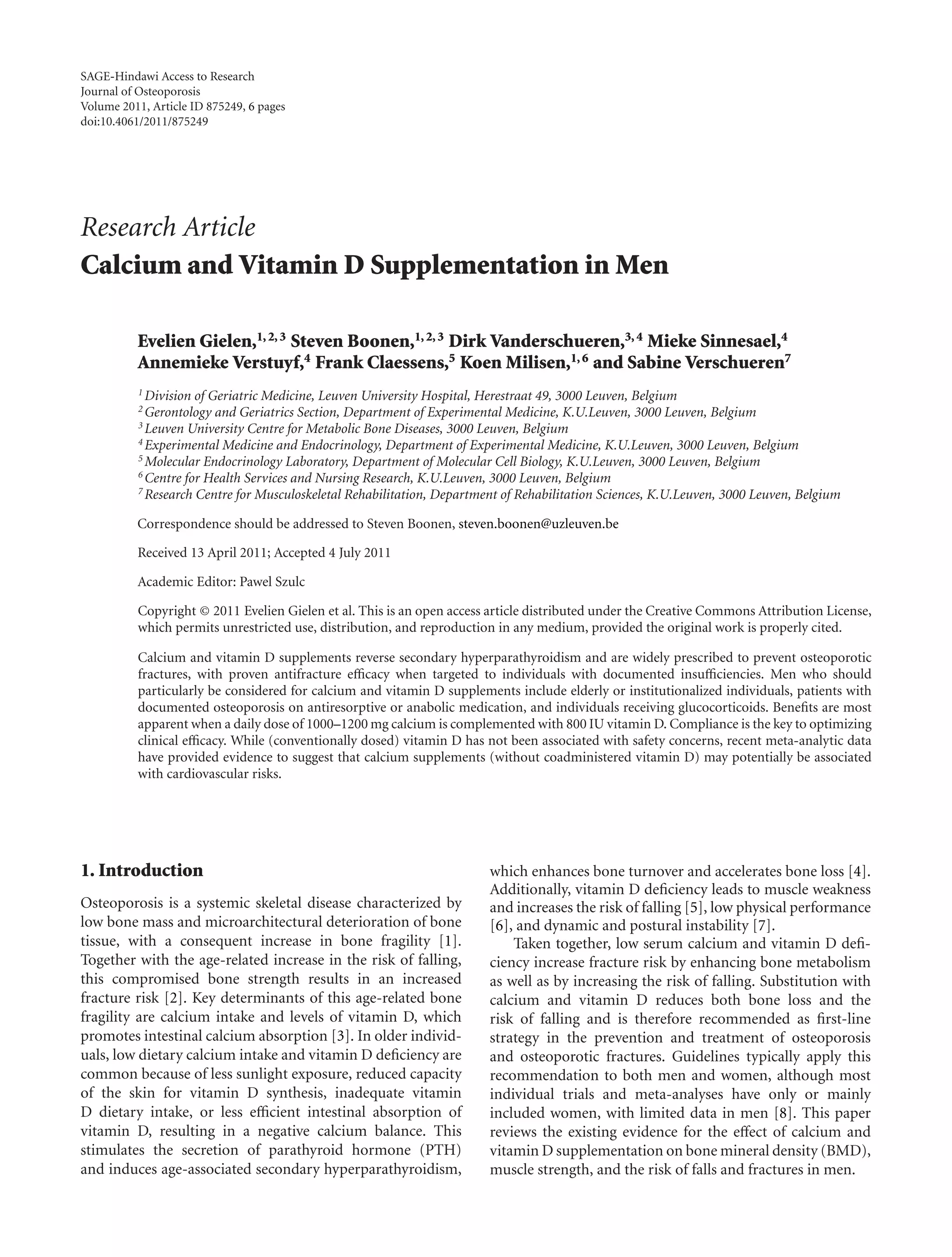
Not all calcium supplements are identical. Common forms include calcium carbonate and calcium citrate. Calcium carbonate is often recommended with meals because it requires stomach acid for optimal absorption. Calcium citrate is frequently better tolerated and may be preferable for men with reduced stomach acid, as seen with older age or certain medications.
Vitamin D comes in forms such as cholecalciferol (vitamin D3) and ergocalciferol (vitamin D2). Many products use D3 because it’s often favored for maintaining serum 25-hydroxyvitamin D levels more effectively. Still, the “best” option is less about marketing and more about suitability, dosing, and consistency.
Some supplements combine calcium, vitamin D3, magnesium, and other minerals. These can be helpful for coverage, but they can also introduce variables—extra ingredients, higher pill counts, or dosing that’s not individualized. Men should consider their baseline diet, lab results, and overall supplement regimen.
Dosage and Safety: Finding the Balance
Because osteoporosis is gradual, supplement decisions should be deliberate rather than impulsive. Calcium targets are often expressed in daily intake goals. Food contributes substantially, so “supplement total” shouldn’t blindly stack on top of already adequate diets.
Safety matters. Too much calcium from supplements may increase risk of kidney stones in susceptible individuals, and high total intake can create gastrointestinal discomfort. Vitamin D, too, should be dosed carefully; excessive vitamin D can lead to hypercalcemia and related symptoms.
The safest approach is a loop: estimate dietary intake, check vitamin D status with blood tests, then choose a supplement plan that fills the gap. Long-term adherence improves when a regimen is tolerable and aligned with real life—meals, routines, and realistic pill schedules.
Beyond Nutrients: The Lifestyle Components That Lock In Bone Strength
Even perfect nutrition can’t outshine physics. Weight-bearing and resistance exercises stimulate bone remodeling and improve muscle strength, which reduces fall risk. Activities such as brisk walking, stair climbing, and resistance training provide mechanical stress signals that encourage bone formation.
Falls are a major fracture pathway. Balance training, vision optimization, appropriate footwear, and home hazard adjustments can be as consequential as any supplement. Sleep quality also deserves attention—chronic sleep deprivation can influence hormonal balance and inflammatory pathways, indirectly affecting bone health.
Monitoring Progress: How Men Track Improvement
Bone density changes slowly. That’s why monitoring should be structured. Clinicians may use bone mineral density testing (often via DEXA scans) to determine baseline status and follow-up intervals. Blood tests can also measure vitamin D levels, calcium balance, and sometimes markers of bone turnover.
It’s not just about numbers, though. Functional milestones—reduced falls, improved grip strength, and stable mobility—often matter more than a single lab value. When nutrition and lifestyle align, men can experience a steadier trajectory: fewer “unexpected” fractures, improved confidence, and a body that holds its ground.
A Practical Roadmap: What a Man Can Do This Week
Start with awareness. Estimate daily calcium intake from food. Add vitamin D considerations based on sunlight exposure and any history of low levels. Then choose a supplement strategy that targets the specific gap rather than duplicating everything.
Make it operational: take calcium with the right timing (often with meals if using carbonate), and take vitamin D in a way that matches your routine. Pair supplementation with resistance training and balance work. If risk factors are present—age, medications, family history, prior fragility fracture—consider discussing bone-density screening and lab testing.
Osteoporosis may be common in men than many realize, but it’s not inevitable. Calcium and vitamin D are foundational, and when supported by strength, movement, and smart monitoring, they help men keep the skeleton’s architecture resilient—one consistent day at a time.