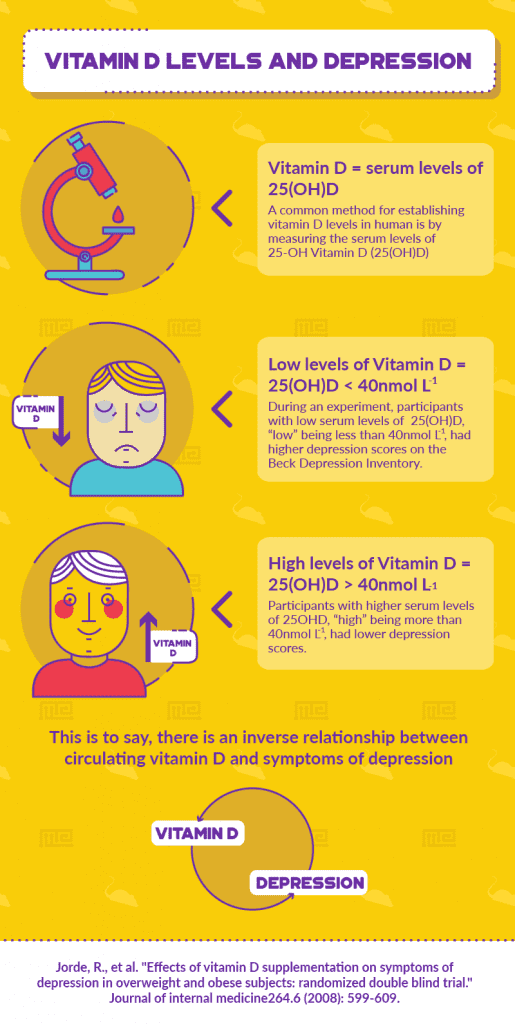
Imagine vitamin D as a quiet stage manager, moving behind the curtains of your biology. It does not announce itself with drama, yet it helps ensure the lights fall correctly on mood, cognition, and stress response. And in the understudied corners of mental health research, one connection keeps resurfacing: the vitamin D–anxiety link. Not a headline-ready slogan—more like a faint chord in the background of daily life, suddenly audible when deficiency enters the room.
A Link Written in Subtle Chemistry
Anxiety rarely arrives as a single event. It creeps in through the body’s feedback loops: the hormonal tremor, the heightened vigilance, the mental “monitoring” that never powers down. Vitamin D enters this story as a fat-soluble signaling molecule with far-reaching influences. It functions through receptors distributed in multiple tissues, including areas relevant to immune regulation and nervous system activity.
When vitamin D levels run low, several processes may tilt toward a more reactive state. Immune signaling can become less balanced; inflammatory cascades may gain momentum. At the same time, the brain’s stress circuitry may become more sensitive to ordinary triggers—like a smoke detector that becomes too eager to beep.
Think of the body as an orchestra. Anxiety is not only the violins; it is the whole ensemble responding to threat cues. Vitamin D may help conduct the “volume” of immune and neural signals. When the conductor is absent or underprepared, the music can become jagged—full of discordant notes that feel like worry.
The Stress Response: When the Body Grasps for Control
Acute anxiety is often adaptive. It primes you to react. But chronic anxiety behaves differently—like a thermostat stuck on “too hot.” Vitamin D may be involved in maintaining the equilibrium of the hypothalamic-pituitary-adrenal (HPA) axis, a central stress pathway that orchestrates cortisol dynamics and downstream nervous system effects.
In deficiency states, the “threat dial” may not return to baseline as efficiently. The result can be prolonged symptoms such as persistent unease, irritability, and difficulty disengaging from rumination. Sometimes the feeling is not even fear—it is a heightened tension, a low-grade static in the mind.
Vitamin D’s potential role here is intriguing because it suggests that anxiety is not only a psychological phenomenon. It may be partly a somatic narrative, where biochemical context shapes emotional weather.
Inflammation and the Anxiety Ecosystem
Inflammation has become a major theme across mind-body discussions, and vitamin D sits near the center of that conversation. Immune cells communicate with the brain through cytokines—molecules that can influence mood, behavior, and the perceived salience of stressors.
Consider inflammation as background noise in a room. Your brain filters sound to maintain focus. If vitamin D helps regulate immune signaling, then deficiency may raise the noise floor. The mind then spends extra cognitive energy deciding whether something is wrong, even when life appears ordinary.
Some people describe anxiety as a “pressure system.” They cannot always point to a specific threat, yet they feel the barometer drop. Inflammatory signaling could be one of the atmospheric changes behind that sensation.
Serotonin, GABA, and the Neurochemical Theater
Anxiety is often framed through neurochemistry—particularly neurotransmitters involved in inhibitory control and mood stabilization. Vitamin D appears to intersect with pathways relevant to serotonin signaling and gamma-aminobutyric acid (GABA), the brain’s calming neurotransmitter.
GABA is like a dimmer switch. It helps reduce excessive neural firing, preventing the mind from becoming trapped in a high-alert mode. If vitamin D supports the functioning of inhibitory systems, then lower levels could correspond to reduced “braking.” The brain continues to accelerate even when it should slow.
Serotonin, meanwhile, is less a single chemical and more a mood landscape—its availability, receptor sensitivity, and downstream circuitry all contribute to how safe or threatened you feel internally. Vitamin D’s relationship to these systems makes the vitamin D–anxiety link feel less like coincidence and more like architecture.
Who Might Be at Risk for Vitamin D–Related Anxiety?
Deficiency is not distributed evenly. Factors such as limited sun exposure, darker skin pigmentation, winter seasons at higher latitudes, indoor lifestyles, and certain dietary patterns can reduce vitamin D synthesis. Some people also have malabsorption issues or take medications that influence vitamin D metabolism.
Beyond biology, lifestyle rhythm matters. High academic load, shift work, chronic sleep disruption, and sustained psychosocial stress can all contribute to anxiety. If vitamin D status is also low, the stress load may land on a body already operating with less biochemical support.
In some populations—such as individuals with autoimmune conditions or those experiencing health-related worry—anxiety can become entangled with immune complexity. This makes the vitamin D–anxiety link especially compelling: it suggests a bridge between bodily regulation and emotional stability.
Signs That Suggest a Possible Deficiency Context
Not every low vitamin D state announces itself dramatically. Some symptoms are vague, which is exactly why they are easy to overlook. Fatigue, low mood, muscle aches, and decreased resilience to stress can appear in the background.
Anxiety symptoms can coexist with these signs. The combination is not proof of deficiency, but it is a reason to consider context rather than treating anxiety as an isolated phenomenon. The mind may be anxious partly because the body is under-resourced.
Lab testing—guided by clinical assessment—can clarify whether vitamin D is part of the puzzle. When deficiency is corrected, some individuals report psychological improvement. Others notice better energy or sleep quality. Even when the change is subtle, it can feel like the fog lifts a fraction.
Supplementation: Promise, Precision, and Caution
Vitamin D supplementation is often discussed as a straightforward fix, but biology rarely behaves like a vending machine. The body’s response depends on baseline levels, dosage, absorption, and individual health factors.
If a deficiency is confirmed, supplementation may help restore vitamin D to a range that supports normal signaling. This can, in turn, influence stress response, immune balance, and neurochemical regulation—areas relevant to anxiety.
Yet it is important to avoid guesswork. Excess vitamin D can cause complications, including hypercalcemia. So the most responsible approach is individualized: testing, appropriate dosing, and follow-up when needed.
In the larger mental health conversation, vitamin D is best understood as a supporting actor, not the sole protagonist. It may help create conditions where anxiety treatments—therapy, lifestyle changes, and sometimes medication—work more effectively.
Beyond Supplements: Sunlight, Food, and Lifestyle Synergy
While supplements can help correct deficiency, sunlight and diet often play foundational roles. Sunlight exposure supports vitamin D synthesis in the skin, though factors like season, latitude, skin tone, and sunscreen use influence results. Food sources—such as fatty fish, fortified dairy or plant milks, egg yolks, and fortified products—can contribute to maintenance.
But the unique appeal of this story is that it ties anxiety to everyday choices without reducing anxiety to “self-control.” Gentle outdoor movement, consistent sleep schedules, and stress-buffering routines can synergize with improved vitamin D status.
In other words: you are not only changing a number on a lab report. You are reshaping the environment in which the nervous system tries to stay regulated.
How to Think About It: An Elegant Metaphor
Picture anxiety as an orchestra member who never stops playing the same sharp note. Treatment often teaches how to mute the discordant performance—through cognitive reframing, behavioral practice, or pharmacologic support. Vitamin D, however, may function like the tuning system behind the stage. When the tuning improves, every instrument can cooperate more harmoniously.
This metaphor matters because it reduces blame. It implies that anxiety might not reflect personal failure. It can reflect missing biochemical “settings” that make calm harder to access.
Closing Thoughts: A Forgotten Lever Worth Exploring
The vitamin D–anxiety link is not a magic wand. It is a lever—sometimes overlooked—that may shift the balance between threat sensitivity and emotional steadiness. When vitamin D levels are low, the nervous system may interpret life through a darker lens. When levels are restored, some people find a smoother emotional gradient.
If anxiety feels persistent and if other possible deficiency-context clues are present, it can be reasonable to discuss vitamin D evaluation with a healthcare professional. The goal is not to chase a single cause. The goal is to widen the map.
And sometimes, widening the map is the first act of relief.