Every wellness conversation eventually circles back to vitamin D, yet many people discover a puzzling fork in the road: Total Vitamin D versus Free Vitamin D. On paper, both sound like measurements of the same nutrient. In practice, they can reveal remarkably different biological narratives. And that difference is not merely academic—it can influence clinical interpretation, supplement decisions, and how confidently a healthcare team can map symptoms to biology.
Why does this topic feel oddly fascinating? Perhaps because it sits at the crossroads of chemistry and physiology. The “same” vitamin can behave like two different travelers depending on whether it’s traveling in transit bound to proteins—or circulating in an unmoored, readily interactive form. Once you notice that distinction, the lab results begin to read less like numbers and more like a story with chapters.
What “Total Vitamin D” Really Measures
Total Vitamin D is the lab estimate of the overall vitamin D status in your bloodstream. Most commonly, it aggregates the major circulating forms—especially 25-hydroxyvitamin D (often abbreviated as 25(OH)D), which is considered the main storage and circulation reservoir. Depending on the laboratory methodology, “total” may include related metabolites and account for how vitamin D is present overall in the blood.
Think of total vitamin D as an inventory count. It tells you how much of vitamin D is available in the circulation pool, largely reflecting longer-term vitamin D stores. This is why total vitamin D testing is so frequently used in routine care. The body tends to change total vitamin D more gradually—sun exposure, dietary intake, and supplementation all contribute, but they do so across time.
Clinicians like total vitamin D because it offers a broad, stable snapshot. Still, a snapshot can be misleading if the “content” is plentiful but not equally usable.
Understanding “Free Vitamin D” and Why It’s Different
Free Vitamin D refers to the small fraction of vitamin D that circulates without being tightly bound to transport proteins. In the bloodstream, vitamin D metabolites typically hitch a ride with binding molecules, most notably vitamin D–binding protein (DBP), and to a lesser extent albumin. Free vitamin D is the portion not sequestered, able to interact more directly with cellular mechanisms.
In other words, free vitamin D is closer to the idea of “biological availability.” Not just how much vitamin D you have, but how much may be able to participate in cellular signaling and regulation. That nuance is why free vitamin D testing can feel like peering behind the curtain.
Free vitamin D levels can shift even when total levels look similar. The transport system, protein availability, binding affinity, and individual metabolism can all influence how much vitamin D remains accessible.
Total vs Free: The Core Distinction in One Image of the Body
Imagine vitamin D as travelers at a station. Total vitamin D tells you how many travelers arrived. Free vitamin D tells you how many are actually boarding the train immediately. The bound travelers may eventually become available, but the timing and readiness can differ.
Below is a visual metaphor that often helps people understand the conceptual split:

The point isn’t that one test is “better” in a universal sense. It’s that each measures a different layer of reality. Total vitamin D emphasizes quantity; free vitamin D emphasizes accessibility.
Why People Often Notice Similar Numbers… and Yet Feel Something Is Off
A common observation goes like this: someone’s total vitamin D result lands in a “normal” range, yet they continue to experience fatigue, muscle aches, bone discomfort, or mood symptoms that prompt renewed concern. Alternatively, a person may have a low total vitamin D result but feels comparatively functional, at least initially.
These scenarios can occur because symptoms rarely report a single variable. But they can also happen when total vitamin D does not capture the usable fraction. If vitamin D is present yet disproportionately bound—or if binding dynamics are altered—free vitamin D may not track with total vitamin D.
This mismatch is one reason the free vitamin D concept draws attention. It hints at deeper, less visible biochemical constraints: not every “adequate” level functions equally for every body.
The Deeper Biology Behind Binding Proteins and Availability
To understand free vitamin D, it helps to appreciate the binding ecosystem. Vitamin D–binding protein (DBP) is not a passive carrier; it is an active gatekeeper. When DBP levels are altered—by genetics, liver function, kidney health, hormonal states, pregnancy, or certain medications—the proportion of free versus bound vitamin D can change.
Albumin and DBP do more than transport. They also influence how long vitamin D circulates, how it distributes into tissues, and what fraction remains immediately interactive. So free vitamin D is, in many ways, a proxy for transport dynamics.
That’s why two people with identical total vitamin D results might have different physiological experiences. Their “logistics” differ.
Clinical Scenarios Where Free Vitamin D May Offer Added Insight
Free vitamin D testing can be especially informative when standard assumptions about total vitamin D do not hold neatly. Consider situations involving:
1) Altered protein binding: If DBP or albumin levels are abnormal, free vitamin D may better reflect functional status.
2) Chronic kidney disease: Vitamin D metabolism can be disrupted, and binding/activation patterns may shift.
3) Liver disease: Since protein production occurs in the liver, binding protein levels can be affected.
4) Pregnancy and hormonal shifts: Changes in binding proteins and plasma volume can alter fractions.
5) Certain genetic differences: Variations in DBP structure can modify binding affinity and therefore free fraction.
In these contexts, free vitamin D resembles a fine-tuned instrument rather than a broad brushstroke.
Measurement Nuances: Why Lab Methods Matter
Free vitamin D is more complex to measure than total vitamin D. The assays can differ in how they separate bound from unbound fractions or estimate bioavailability. This means results may not be perfectly interchangeable across laboratories.
So, when someone compares two reports from different clinics, the “same unit” may not represent identical analytical pathways. This is not a reason for confusion—it’s a reason for careful interpretation. A result should be read alongside the lab’s reference strategy and the patient’s clinical context.
By contrast, total vitamin D testing is broadly standardized and widely used, which is one reason it remains a foundation in vitamin D assessment.
Choosing Between Tests: A Practical Decision Framework
If your goal is a general screening of vitamin D status, total 25(OH)D often serves as the entry point. It answers the question most clinicians ask first: Are your vitamin D stores low, normal, or high?
If the story becomes more intricate—if symptoms persist, if binding conditions exist, or if a clinician suspects “normal” total vitamin D is masking suboptimal accessibility—then free vitamin D can add texture. It’s particularly useful when clinicians want to move from a storage narrative to an availability narrative.
In many cases, clinicians may use both tests together, not as competitors but as complementary angles of viewing.
How Results Can Shape Supplement and Lifestyle Strategy
Vitamin D supplementation is not only about raising a number. It’s about aligning intake, absorption, metabolism, and functional needs. If free vitamin D is low despite normal total vitamin D, supplementation strategies may still be considered—but the clinical reasoning may focus on bioavailability rather than mere storage.
Likewise, if total vitamin D is low, free vitamin D may eventually improve as the circulating pool increases. But sometimes binding dynamics complicate that correlation. That’s where understanding both measurements becomes more than cleverness—it becomes precision.
Sun exposure, dietary sources, fat intake, gastrointestinal absorption, and concurrent medications all influence the final outcome. Vitamin D testing is best viewed as a compass, not a verdict.
A Balanced Take: One Test Is Not the Whole Truth
The fascination with total versus free vitamin D is ultimately about completeness. Total vitamin D is like reading the warehouse ledger. Free vitamin D is like checking how much inventory is currently on the shop floor and ready for customers.
Neither test cancels the other. Instead, each reveals a different layer of a multi-step biological process: vitamin D is produced, transported, metabolized, and activated across organs and systems. The body is a distributed network; the tests are different coordinate systems for describing it.
When you integrate both measurements—along with symptoms, medications, nutrition, and relevant lab markers—you get closer to the truth behind the numbers. And that’s the real difference: total tells you where you are in the supply chain; free tells you what can act right now.
Where to Look Next: Additional Vitamin D Context
If you’re exploring vitamin D testing, it’s often helpful to ask how your results relate to other indicators, such as calcium, parathyroid hormone (PTH), magnesium status, and markers of kidney or liver function—because vitamin D does not operate alone. It collaborates with hormones and minerals in ways that can amplify or blunt expected effects.
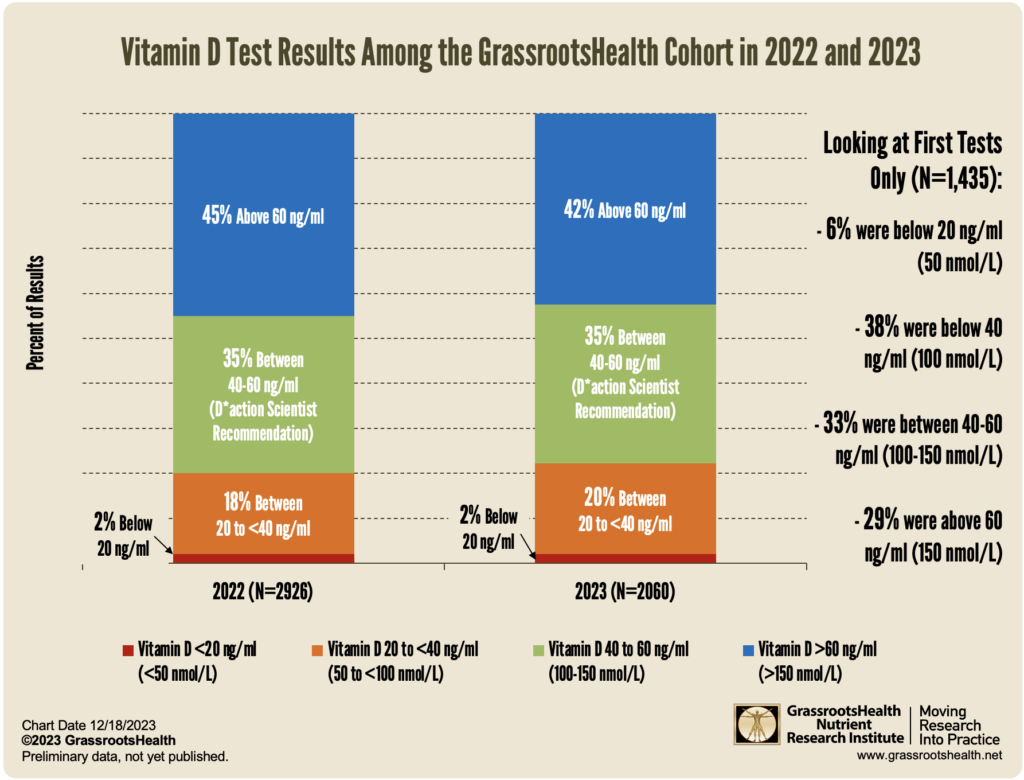
For a deeper visual reminder of vitamin D testing concepts:

Ultimately, the most useful approach is not choosing a side. It’s choosing a lens that matches your physiology. Total vitamin D may answer the first question; free vitamin D may refine the second. Together, they help transform vitamin D from a vague wellness idea into a more actionable biological profile.
Closing Reflection: The “Fascination” Isn’t Just the Test
The reason people become intrigued by free versus total vitamin D is that it exposes a hidden theme in health: availability matters as much as abundance. A nutrient can be present and still function unevenly. Biology is rarely a one-number system, and vitamin D is a vivid example of that rule.
So if your results feel counterintuitive—or if your symptoms don’t line up with expectations—consider that the answer may not be simply higher or lower. It may be a matter of how vitamin D travels, how it binds, and how much of it is truly ready to do the work it was designed to do.