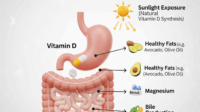
Should you take Vitamin D at the same time as your other supplements? It sounds like a tidy, “set-it-and-forget-it” routine—like tossing everything into one bowl and calling it dinner. But here’s the playful question: what if your supplements aren’t a friendly roommate ensemble, but a chaotic house band that only plays well when the drummer walks in first?
There’s a real, practical challenge behind the curtain. Timing can influence absorption, interactions, and how your body “interprets” what you feed it. The question isn’t whether you can combine supplements—it’s whether the combo behaves politely inside your physiology.
Why Vitamin D is a Different Kind of Supplement
Vitamin D isn’t a typical water-soluble vitamin that simply circulates and exits. It behaves more like a lipid-friendly passenger: it likes being taken alongside dietary fats, and it participates in longer-term biological processes. That means its “uptake” can be influenced by what else is in your system at the same time.
Vitamin D helps regulate calcium and phosphorus metabolism, supports immune function, and plays a role in musculoskeletal health. But if your routine is a literal stack of tablets taken in dry isolation, the effectiveness can be less predictable. In other words, you may still get vitamin D—but you might not get the full theatrical lighting.

Absorption: The Fats That Change the Plot
Vitamin D is fat-soluble. That’s the key phrase. Fat-soluble nutrients often ride along with dietary lipids, improving absorption. So, if you take vitamin D with other supplements—but those supplements also include fats, or you take everything with a meal containing fat—then you’re likely setting the stage for a smoother performance.
On the flip side, taking vitamin D on an empty stomach or alongside supplements that don’t align well with fat intake can dull the experience. You might still benefit, but the timing strategy could be suboptimal.
One simple approach: take vitamin D with a meal that includes some fat, then combine other fat-friendly supplements at the same time if they don’t cause friction. Keep the meal steady, too. Consistency is a quiet superpower.
Calcium and Vitamin D: A Team That Often Works Together
Vitamin D and calcium frequently appear in the same conversation because vitamin D improves calcium absorption. That pairing is usually synergistic rather than antagonistic. If calcium is part of your routine, taking them together (especially with a meal) is commonly reasonable.
However, there’s a nuance: if you take a high amount of calcium, splitting doses can reduce gastrointestinal discomfort for some people. Short sentences can help here: comfort matters. Tolerance matters. Your body is not a spreadsheet.

Mineral Interactions: When Supplements Compete for Space
Here’s where the playful band analogy gets real: some supplements can “bump elbows” in absorption pathways. Certain minerals may compete. For example, iron, zinc, and magnesium can sometimes interfere with each other’s uptake when taken simultaneously.
Vitamin D itself isn’t usually the troublemaker. It’s typically well-behaved with many supplements. But the other ingredients in your routine might be picky co-stars—especially mineral-heavy formulations or high-dose products.
If your stack includes iron and zinc, you may want to separate them from other minerals by a few hours. In those cases, you can still take vitamin D with a meal, but organize the minerals to avoid absorption bottlenecks. Think of it like scheduling: same day, different time slots.
Fat-Soluble Neighbors: A Practical Sorting Rule
Vitamin D belongs to a category alongside vitamins A, E, and K. When these are taken together with dietary fat, absorption can be more efficient. If your supplement plan includes several fat-soluble vitamins, taking them at the same time with a meal is often a logical move.
Yet, “logical” doesn’t always mean “comfortable.” Some formulations cause nausea. Some people notice reflux. Others feel sluggish. If you experience any of these, splitting doses or adjusting timing might help.
Small trial-and-observation is not a weakness; it’s a form of precision. Your body provides feedback in the language of sensations.
What About Iron, Thyroid Support, or Fiber Supplements?
Some supplements and meal components can complicate things. Iron is a classic example of something that may not love being taken at the same time as certain minerals. Also, fiber supplements—especially bulk-forming ones—can reduce absorption of some nutrients by binding in the gut.
If your routine includes fiber, consider timing it away from your vitamin D and minerals. The general rule of thumb: separate things that “stick” from things that need to “travel.”
Thyroid-related supplements are another area to be thoughtful. If you take medication or thyroid support products, timing can matter considerably. Medication timing is a separate discipline, often requiring careful spacing from minerals.

How to Decide: A Simple Decision Framework
Ask three questions, then act like a calm strategist:
First: Are you taking vitamin D with food that contains fat? If yes, combining with many supplements may be fine.
Second: Does your stack include minerals known for competition—especially iron, zinc, and high-dose magnesium/calcium? If yes, you may benefit from spacing certain minerals apart while keeping vitamin D anchored to a meal.
Third: Do you feel any digestive discomfort when taken together? If yes, split dosing or move vitamin D to a time when it agrees with your stomach.
This framework keeps the routine practical and personalized without turning every dose into a science experiment.
Safety Considerations: Don’t Accidentally Overdo
Vitamin D is powerful precisely because it accumulates in body tissues. Over-supplementation can lead to excessive calcium levels, which may cause symptoms like nausea, constipation, weakness, and confusion in severe cases. That’s why total intake matters: dietary sources plus supplements plus fortified foods.
If your other supplements include vitamin D as well, avoid duplication. Many “multi” formulas quietly contribute extra amounts. It’s easy to overshoot when products overlap like echoing voices in a hallway.
When dosing is uncertain, checking your 25(OH)D level with a clinician can clarify the direction. Even then, the routine still needs tailoring to your actual supplement list and lifestyle.
The Verdict: Usually Yes—But With Intent
Should you take vitamin D at the same time as other supplements? Often, yes—especially if you take them with a meal containing fat and if your supplement lineup isn’t mineral-colliding.
But take the challenge seriously: not all supplements are compatible in timing. Some minerals prefer distance. Some formulations cause side effects when stacked. The best routine is the one that respects absorption biology and your own comfort.
So let the playful question become a practical plan: keep vitamin D meal-bound, watch for mineral clashes, and adjust based on how your body responds. When your supplement schedule feels harmonious, your regimen stops being a guess and starts being a craft.