
Vitamin D is often described as a “sunshine vitamin,” yet its true influence is closer to a silent architect—quietly regulating calcium logistics, bone architecture, and immune signaling behind the scenes. Still, when the daily target climbs to 10,000 IU, the question changes from “Is it effective?” to “Is it safe?” This is not a simple yes-or-no. It is a safety audit of the body’s tolerance limits, the chemistry of accumulation, and the real-world variables that turn a dose from therapeutic into hazardous.

The 10,000 IU Threshold: When a Routine Becomes a Volume Too Loud
Think of vitamin D as a dimmer switch for many physiological systems. In moderation, the light is steady and useful. But with 10,000 IU daily, you may be turning the dimmer toward “overbrightness,” especially if baseline levels are already adequate. The human body can store vitamin D in fat and liver tissue, which is precisely why long-term high intake can become an issue.
Safety is less about the number alone and more about the context: your starting vitamin D status, age, body weight, kidney function, sun exposure, and whether you’re also consuming calcium or fortified foods. Without those details, 10,000 IU is like following a recipe without knowing whether your oven runs hot or cold.
How Vitamin D Works: The Two-Step Activation and the Accumulation Trap
Vitamin D doesn’t act immediately. It undergoes transformation—first converted in the liver, then in the kidneys—into its active forms that orchestrate calcium absorption and other signaling pathways. This multi-stage conversion is elegant, but it also creates a buffering system where vitamin D compounds can build up.
When dosing exceeds the body’s demand, the metabolite landscape can shift. Over time, elevated vitamin D can drive hypercalcemia—a condition where calcium levels rise beyond normal. Hypercalcemia may not announce itself instantly. It often arrives gradually, like a slow tide that finally reaches the shoreline.
What Counts as “Too Much”? The Body’s Alarm System via Calcium
The most practical safety lens is calcium behavior. Excess vitamin D increases intestinal calcium absorption. In a vulnerable configuration—whether due to predisposition, kidney limitations, or other supplements—calcium can climb enough to cause symptoms.
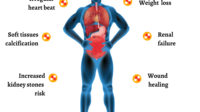
Potential signs include nausea, constipation, frequent urination, unusual thirst, fatigue, weakness, confusion, and in more severe situations, kidney stones or kidney injury. These symptoms can overlap with other conditions, which is why monitoring matters. The body’s alarm is not always a clean siren; it can be a muted hum that’s easy to misinterpret.
Symptoms and Risks: From Mild Discomfort to Clinically Concerning Outcomes
At lower excess levels, the risk may remain theoretical, especially for short-term use under medical supervision. But with sustained high intake, the probability of adverse effects rises.
Kidney-related risks are particularly important. Kidneys are involved in vitamin D activation and calcium regulation. If calcium becomes too high, it may crystallize—turning hydration into a protective ritual that may not be enough.
Cardiovascular and neurological effects can also appear indirectly through calcium imbalance. Calcium participates in nerve conduction and muscle contraction, so dysregulation can ripple outward.
Bone seems paradoxical at first: vitamin D is associated with stronger bones, yet excessive vitamin D can harm bone health indirectly by disturbing calcium homeostasis. It’s like reinforcing a foundation while accidentally misaligning the load-bearing framework.
Who Should Be Cautious First: High-Risk Profiles for Vitamin D Overreach
Not everyone faces the same safety curve. Some people are more likely to tip into toxicity with high doses. Consider extra caution if you have:
• Kidney disease or reduced renal function (lower ability to manage calcium and activate vitamin D appropriately).
• Sarcoidosis or other granulomatous diseases (can increase conversion of vitamin D to active forms).
• A history of kidney stones or high calcium levels.
• Concurrent use of calcium supplements or high-calcium diets.
• Conditions or medications that affect calcium balance.
Also, if you’re older, your physiology may respond differently. The “same dose” can behave unlike itself across age groups, body composition, and baseline vitamin D stores.
Short-Term vs Long-Term: Duration Is the Hidden Ingredient
10,000 IU per day can look very different depending on the time horizon. A brief period may be used by clinicians in specific deficiency contexts, usually with monitoring and follow-up testing. Yet long-term daily use without laboratory checks increases the chance of accumulating enough to provoke hypercalcemia.
Safety is not only about the peak dose; it’s about the sustained exposure. The body’s vitamin D reservoir behaves like a warehouse. Short shipments may be manageable; repeated deliveries can overflow shelves faster than expected.
Monitoring Like a Pro: What to Test and Why
If 10,000 IU is being considered, monitoring is the stabilizing compass. Clinically, the most informative blood tests typically include:
25(OH)D (the main circulating indicator of vitamin D status), and serum calcium (to detect hypercalcemia early). Sometimes clinicians also evaluate parathyroid hormone (PTH) and kidney function depending on the situation.
Monitoring turns uncertainty into data. It also helps distinguish between “vitamin D insufficient” and “vitamin D adequate,” where additional intake can become redundant rather than beneficial.
The Interactive Cast: Sunlight, Diet, and Fortified Foods
Vitamin D rarely travels alone. Sun exposure can raise levels naturally, and diet may add more through fatty fish, fortified dairy, egg yolks, and cereals. If you’re supplementing 10,000 IU while also receiving significant sun or consuming multiple fortified products, your total intake can quietly climb.
In that scenario, 10,000 IU might be an overcorrection—like adding fertilizer after the garden has already been fed. The plant is not “more hungry”; it’s just accumulating.
How to Think About Dosage Alternatives: Using Precision Instead of Guesswork
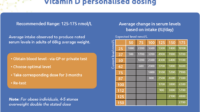
Some people benefit from a loading strategy under supervision, then transition to a maintenance dose. Others do better with lower daily amounts paired with consistent monitoring. The goal is not maximal vitamin D—it is optimal vitamin D.
Because individual biology varies, “one number for everyone” is an illusion. A more sophisticated approach resembles tuning an instrument: adjust, measure, and refine until the sound is right.
Metaphor in Action: The Body as a Clockwork System
Imagine your physiology as a clockwork mechanism. Vitamin D is a key gear. Too little and the mechanism slows: calcium absorption falters, bones lose a portion of their maintenance rhythm. Too much, however, and the gear binds. Calcium levels can surge, and the system strains to compensate.
10,000 IU is therefore not inherently evil—it is simply a gear that may be too large for certain clockwork tolerances. The safest path is to match gear size to the machine’s needs.
When 10,000 IU Might Be Considered (and When It Shouldn’t)
There are scenarios where high-dose vitamin D is used temporarily—typically in diagnosed deficiency and under professional guidance with follow-up testing. The key distinction is structure: a plan, a time window, and laboratory oversight.
By contrast, using 10,000 IU daily indefinitely without monitoring is the risky version of the story. It shifts from “treatment” to “guessing.” Guessing is fine for trivia; it is not fine for endocrine chemistry.
Practical Safety Checklist: A Confident, Cautious Way Forward
If you are weighing 10,000 IU daily, consider these safety guardrails:
• Confirm baseline with 25(OH)D testing.
• Evaluate calcium and kidney-related markers when appropriate.
• Avoid stacking high-calcium supplements unless medically advised.
• Keep track of dietary vitamin D and fortified foods.
• Recheck levels after a reasonable interval rather than assuming stability.
• Stop and seek medical attention if symptoms of hypercalcemia appear.
The Bottom Line: Can You Take 10,000 IU Vitamin D Daily?
Yes, sometimes—but not as a universal blanket. Safety depends on your starting vitamin D status, your total calcium exposure, kidney function, duration of use, and whether monitoring is in place. For many individuals, 10,000 IU daily may be excessive long-term and could elevate the risk of hypercalcemia and related complications.
In other words, vitamin D at 10,000 IU is not a villain; it’s a powerful lever. Pull it with measurement, not momentum. If the plan includes tests, time limits, and clinical context, it can be part of a responsible strategy. Without those, the lever can move from helpful to harmful faster than expected.