The question of whether calcium and vitamin D should be taken by “everyone” has never been purely academic. It has wandered through clinics and kitchens, appearing in supplement aisles, whispered in pharmacy lines, and debated in research journals. In 2025, the U.S. Preventive Services Task Force (USPSTF) reframes this discussion with a careful, evidence-forward lens—one that balances benefits, harms, and the real-world complexity of bone health. What follows is a guided tour of what readers can expect from the USPSTF’s calcium and vitamin D recommendations in 2025: the contours of the evidence, the types of guidance offered, and the practical implications for different populations.
1) What the USPSTF recommendation is trying to accomplish
The USPSTF’s recommendations are not lifestyle posters. They are structured decisions about preventive care—care intended to help people before disease becomes entrenched. For calcium and vitamin D, the underlying target is usually fracture prevention and the preservation of skeletal integrity over time. Yet bones do not behave like passive scaffolding. They respond to mechanical load, hormonal signals, nutrition, and comorbidities. That is why the USPSTF’s framing tends to emphasize nuance: the “right” preventive intervention depends on age, baseline intake, existing risk, and the probability of benefit versus harm.
In 2025, readers should expect language that is explicit about uncertainty. When evidence is strong, the guidance becomes firmer. When evidence is mixed or indirect, the recommendation becomes more circumspect, sometimes nudging clinicians toward individualized decision-making rather than automatic supplementation.
2) The architecture of the evidence reviewers look for
Before any recommendation can harden into clinical advice, the USPSTF examines a lattice of studies: randomized trials, observational research, and evidence on intermediate outcomes (like bone mineral density) as well as clinical endpoints (like fractures). Not all signals are equally trustworthy. For example, a change in bone density is not the same as a reduced risk of hip fracture. The body can thicken or remodel in ways that do not translate into fewer falls or fewer fractures.
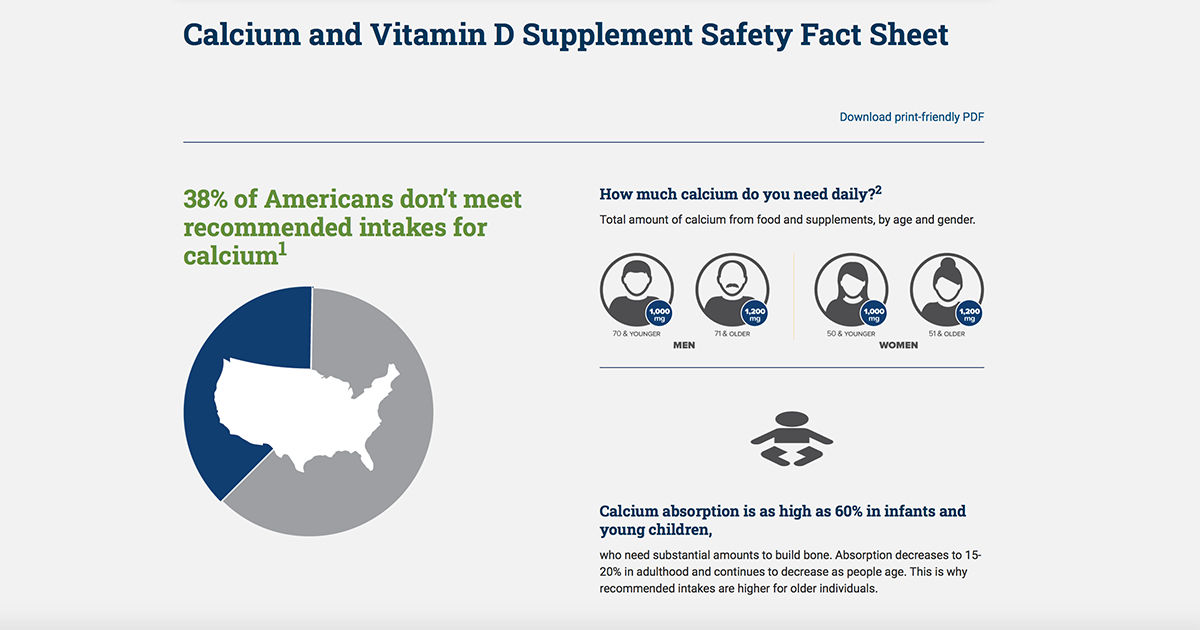
Readers can also expect attention to baseline nutrition. People who already ingest adequate calcium and vitamin D from food and sunlight may experience less marginal benefit from supplements. In contrast, individuals with dietary inadequacy, malabsorption, limited sun exposure, or higher fracture risk may be closer to the threshold where supplementation could matter.
The evidence appraisal usually includes harms too: kidney stone risk, gastrointestinal side effects, possible cardiovascular concerns raised in some literature, and the reality that supplements can displace nutrient-rich diets rather than complement them.
3) How the recommendations categorize people: age, sex, and risk strata
Calcium and vitamin D are not delivered in a one-size-fits-all monograph. Instead, the USPSTF’s guidance typically varies by demographic and clinical risk group. In 2025, readers should look for distinctions based on:
Age, since fracture risk accelerates as people grow older.
Sex, especially because postmenopausal bone loss differs biologically from other life stages.
Baseline vitamin D status and dietary intake, which often determine whether supplementation is likely to be a “useful marginal increment.”
History of fragility fractures or high-risk conditions, which may change the conversation from population-level prevention to targeted management.
The practical result is that some groups will be steered toward routine supplementation strategies, while others will be invited to consider supplements more selectively—often in conjunction with dietary counseling, risk assessment, or clinical evaluation.
4) The types of content readers will recognize: recommendations, strengths, and clinical interpretation
USPSTF communications are designed for action, but they come with gradations. Readers can expect a structure that includes:
Recommendation statements that clarify whether preventive supplementation is recommended, discouraged, or needs individualized interpretation.
Net benefit language that weighs expected benefits against expected harms.
Implementation considerations, such as when supplementation should be paired with other preventive measures.
Uncertainty statements, which are not loopholes—they are honesty about what the evidence cannot yet guarantee.
The text often reads like a bridge between population science and bedside reality. That’s because the USPSTF aims to reduce preventable harm without turning prevention into a blanket intervention that may add side effects without sufficient benefit.
5) Vitamin D: what “enough” means in prevention
Vitamin D occupies a special niche in the calcium story. It is involved in intestinal calcium absorption and influences bone mineralization. But levels of vitamin D can be complicated: sunlight exposure varies, skin pigmentation affects vitamin D synthesis, and certain conditions interfere with vitamin D metabolism.
Readers should expect content that addresses why vitamin D supplementation does not always yield uniform results. In some trials, vitamin D helped reduce fractures. In others, the effect was modest or absent—particularly when participants were not severely deficient, when dosing regimens differed, or when adherence varied.
Importantly, the USPSTF lens emphasizes that vitamin D should not be treated as a universal magic bullet. Instead, it behaves more like a conditional lever—strongest when the body is under-provisioned or at elevated fracture risk.
6) Calcium: the line between bone support and unintended consequences
Calcium is the building material of bone, yet supplementation introduces pharmacologic territory. Readers can expect discussion of calcium’s potential advantages: supporting bone mineral density and reducing fracture risk in selected populations. At the same time, the conversation includes potential downsides.
One recurring theme is the kidney stone risk signal that appears in some studies. Another theme is the gastrointestinal discomfort some people experience. Less discussed in casual conversation is the behavioral knock-on effect: when supplements become a substitute for dietary calcium, the overall nutritional pattern may drift away from foods associated with broader health benefits.
The USPSTF approach in 2025 tends to steer readers toward an integrated preventive framework—calcium planning that respects both biology and behavior.
7) Combined calcium and vitamin D: why pairing does not guarantee amplification
Readers often expect a synergistic effect: vitamin D helps calcium absorb, so together they should perform better than either alone. Sometimes that expectation holds. Other times, combined supplementation does not outperform well-timed dietary adequacy or targeted vitamin D correction.
The reason lies in the complexity of fracture pathways. Bone density is one piece. Muscle strength, balance, fall risk, vision changes, medication effects (like sedatives), and comorbid disease all influence whether a dense bone remains a resilient structure. When trials show inconsistent results, the USPSTF typically interprets that inconsistency as a clue: prevention is multifactorial.
Still, combined strategies may be appropriate when dietary calcium is low and vitamin D status is insufficient, particularly in higher-risk age groups. The key is appropriate matching, not indiscriminate supplementation.
8) Frequency, dosing, and the reality of adherence
Preventive guidance is only as effective as adherence. A recommendation can be biologically plausible yet clinically undercut by inconsistent use, forgetting, stomach intolerance, or fear of side effects. Readers in 2025 can expect discussion of dosing considerations in a practical, rather than purely theoretical, way.
Dose matters because absorption can saturate, and because dividing doses across the day may improve tolerability for some people. Route and formulation can also influence gastrointestinal effects. Finally, adherence relates to how people integrate supplements into their routines: a pill taken with meals is easier for some individuals to sustain than one taken in isolation.
Even when the USPSTF does not prescribe a universal dosing schedule, the content typically helps readers understand what “reasonable use” looks like and why “more” is not automatically “better.”
9) Harms, tradeoffs, and the ethical tone of prevention
Every preventive intervention is an ethical wager. Calcium and vitamin D supplements can offer benefit, but they also carry potential harms. Readers can expect harm-focused content that includes kidney stone risk, gastrointestinal disturbances, and the broader uncertainty landscape around long-term outcomes.
The USPSTF’s tone in 2025 typically resists dramatic claims. Instead, it presents a balanced narrative: harms are not assumed away, and benefits are not exaggerated. This matters because population-level prevention can affect millions, meaning small individual risks can add up.
When readers interpret the guidance, the central idea is proportionality—intervening when the expected net benefit justifies the tradeoff.
10) How clinicians might apply the guidance in real conversations
Clinical application is where prevention becomes human. In 2025, readers should expect emphasis on shared decision-making, especially for people who are not clearly in a single recommendation category. Clinicians may discuss dietary intake, discuss risk factors, review medications, and consider whether lab testing is appropriate.
For some patients, the next step may be nutritional counseling and targeted supplementation. For others, the focus may shift to different preventive strategies—fall prevention exercises, management of osteoporosis risk, or evaluation for causes of secondary bone loss.
USPSTF guidance also tends to remind clinicians that supplements are not substitutes for broader health behaviors: regular weight-bearing activity, adequate protein intake, and screening for conditions that raise fracture risk.
11) What readers can do next: turning recommendations into an action plan
At the end of the day, readers want a pathway. A useful action plan in 2025 often starts with inventory—how much calcium is coming from food, how consistent vitamin D exposure is, and what risk factors exist for falls and fractures.
From there, readers can move toward a structured decision:
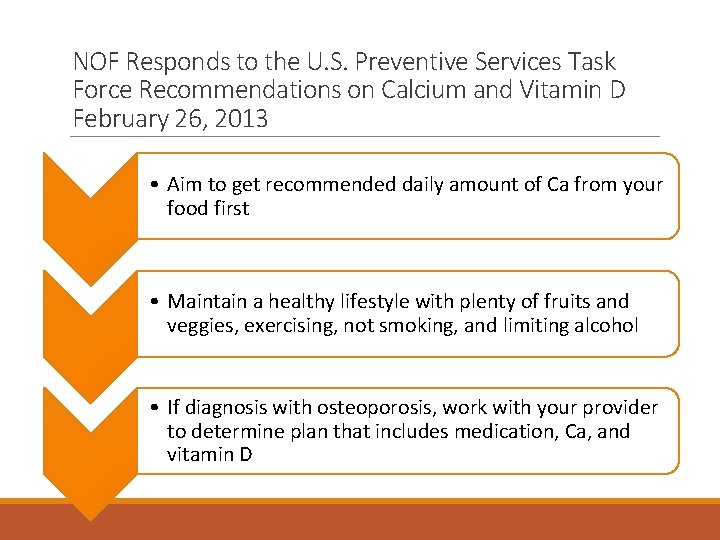
• If dietary intake is likely insufficient, consider focusing first on food-based calcium, then supplements if needed.
• If vitamin D status is uncertain, discuss whether testing or targeted dosing is appropriate for the individual.
• Review any history of kidney stones or gastrointestinal intolerance.
• Combine supplementation with fall-risk reduction strategies and, when relevant, osteoporosis risk management.
Prevention works best when it is assembled like a mosaic—many small pieces, each justified, each contributing to overall resilience.
12) Common questions readers ask in 2025
Readers frequently ask whether supplementation is “worth it,” how long it should be continued, and whether it is safe alongside other medications. Another common question is whether bone density improvements mean fractures will automatically decrease. The USPSTF-style answer is typically conditional: effects depend on starting point, dose, adherence, and the broader risk environment.
There is also a recurring concern about “stacking” supplements—calcium from one product, vitamin D from another, plus multivitamins. The guidance in 2025 encourages awareness of total intake from all sources, because the body’s needs are finite and side effects can rise with excess.
Ultimately, the guidance is meant to make prevention more intelligent—not more complicated, but more aligned with evidence and individual context.