Most people first encounter vitamin D through the familiar storyline: sunlight, supplementation, and the reassuring numbers that appear on a lab report. Yet there’s an unsettling pattern many clinicians and researchers notice—vitamin D status doesn’t always track neatly with exposure. Some individuals seem to “run low” despite reasonable daylight habits, while others maintain steadier levels. The missing thread, often subtle and frequently ignored, may be circadian rhythm disruption. When internal timing systems begin to drift, vitamin D metabolism can become oddly inefficient, as if the body is receiving the right ingredients but misplacing the steps in the cooking process.
The Body’s Timing Orchestra: Where Circadian Rhythm Fits in
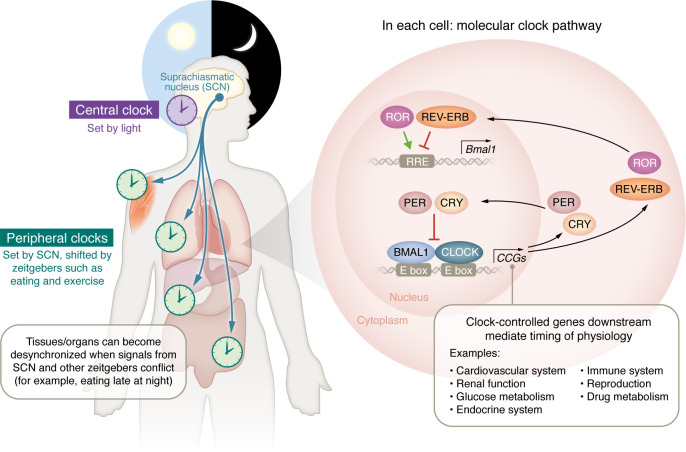
Circadian rhythms are not merely lifestyle ornaments. They are molecular schedules that coordinate transcription, hormone release, enzymatic activity, and cellular repair across tissues. Think of the body as an orchestra where the conductor is the circadian clock. If the conductor falls behind—or keeps skipping beats—musicians can still play, but the performance becomes discordant.
Vitamin D metabolism is a multistage cascade. After vitamin D is obtained (from cutaneous synthesis or diet), it must be transported, processed in the liver, and further refined in the kidneys. Each stage involves enzymes and regulatory proteins that are influenced by time-of-day signaling. Therefore, circadian disruption can change not only how much vitamin D is available, but also how effectively it is converted into its biologically useful forms.
To visualize the concept of time-dependent coordination, imagine that the metabolic “conveyor belt” for vitamin D has speed limits and staffing schedules. When circadian rhythms go off-script—through shift work, late-night light exposure, jet lag, irregular sleep, or even chronic insomnia—the conveyor belt can run less smoothly.
Vitamin D: From Skin or Diet to Systemic Availability
The common observation is simple: more sunlight often correlates with higher vitamin D. But real life is messier. Circadian disruption can alter the physiology surrounding sunlight use—sleep timing, activity patterns, core body temperature rhythms, and even behaviors related to outdoor exposure. When sleep becomes fragmented, appetite and activity change. Stress hormones rise at inappropriate times. These shifts can influence intake, outdoor duration, and the biological handling of vitamin D.
Moreover, sunlight’s contribution is not only about photons; it is also about timing. Vitamin D synthesis in the skin occurs in response to UVB, but the subsequent steps depend on internal timing. The initial vitamin D “raw material” may be produced, yet the transformation process may still lag.

Conversion in the Liver: The Importance of Chronobiology
Once vitamin D enters circulation, it typically becomes 25-hydroxyvitamin D (25(OH)D), a form measured in routine blood tests. This step largely involves hepatic activity and vitamin D–binding proteins. Circadian rhythms govern liver enzyme expression and metabolic pathways; so when timing cues collapse, the liver may process vitamin D less efficiently.
In a disrupted circadian state, the expression of enzymes and transport-related proteins can become desynchronized. The result may be a less favorable kinetic profile: vitamin D might circulate longer without being properly converted, or conversion might occur at times when downstream capacity is reduced.
There’s also an indirect pathway. Circadian disruption is associated with metabolic stress—alterations in insulin sensitivity, inflammatory tone, and oxidative balance. Inflammation is not an abstract concept; it can influence hepatic metabolism and shift resource allocation away from “routine processing” toward acute defense. Vitamin D processing can become collateral damage.
The Kidney’s Refinement Role: From 25(OH)D to Active Hormone
The most biologically active form—1,25-dihydroxyvitamin D (1,25(OH)2D)—depends on further enzymatic conversion. This step is especially sensitive to endocrine context. Circadian disruption can influence the hormonal landscape that regulates vitamin D activation, including signaling related to parathyroid hormone, fibroblast growth factor pathways, and calcium-phosphate homeostasis.
When internal timing shifts, endocrine communication can become temporal “static.” Even if vitamin D stores are adequate in theory, the conversion into active hormone may not match the body’s demand at the right hours. This can contribute to a scenario where blood levels appear deceptively stable or fluctuate in confusing patterns, especially across long weeks of irregular sleep and variable daily routines.
In practical terms, circadian disruption doesn’t necessarily eliminate vitamin D; it can distort the rhythm of its activation—like a lighthouse with a misaligned lens.
Clock Genes, Vitamin D Receptors, and the Cellular Loop
Vitamin D doesn’t simply act as a nutrient; it functions through a receptor system that can behave like a time-aware transcriptional switch. The vitamin D receptor (VDR) influences gene expression tied to calcium handling, immune regulation, and cellular differentiation. Meanwhile, clock genes regulate transcriptional rhythms across tissues.
A fascinating possibility emerges when considering a bidirectional relationship: circadian clocks may influence vitamin D pathway genes, while vitamin D signaling may in turn modulate circadian-related transcription. This creates a loop—an interactive system rather than a one-way conveyor belt.
If circadian disruption breaks the rhythm of VDR activity or associated co-regulators, cellular responsiveness to vitamin D can weaken. The outcome might be functional vitamin D deficiency: not necessarily a low vitamin D level, but a reduced biological effect.
Melatonin and Light: The Night Shift Inside the Metabolic Story
Light at night is a quiet disruptor. It suppresses melatonin, a hormone often associated with sleep but also linked to immune modulation and metabolic regulation. Melatonin’s influence may extend to vitamin D metabolism through effects on oxidative stress pathways, inflammation, and the timing of endocrine signaling.
Melatonin suppression—common in shift work, late-night screen exposure, and chronic irregular sleep—could therefore alter the conditions under which vitamin D is processed and activated. The idea is not that melatonin is a simple “vitamin D booster.” Rather, it may act as a temporal governor that helps keep metabolic pathways synchronized.
Immune Signaling and Inflammation: Why Vitamin D Can Seem Uncooperative
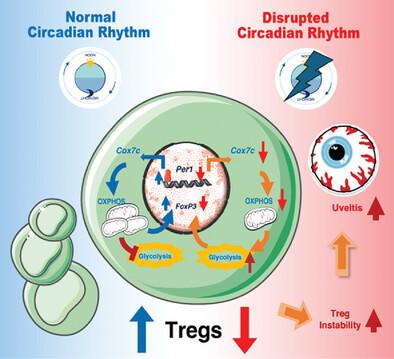
Vitamin D is widely appreciated for immune-related roles. Circadian disruption, meanwhile, is linked to altered immune regulation and a chronic low-grade inflammatory profile. The intersection is compelling: inflammation can affect vitamin D metabolism by influencing enzyme expression, binding proteins, and the sensitivity of target tissues.
In other words, if circadian disruption “tilts” the immune system toward a more activated state, vitamin D might be consumed faster, handled differently, or prevented from exerting its usual regulatory effects. People sometimes interpret this as an absence of efficacy—taking supplements without perceiving improvement. Yet the biology may be time-shifted rather than absent.
This is where fascination deepens. The same vitamin can behave differently depending on when and how the body receives it—suggesting that timing may matter as much as dosage.
Metabolic Syndrome, Insulin Resistance, and Vitamin D Handling
Metabolic disruption is frequently associated with vitamin D irregularities. Circadian disruption can contribute to metabolic syndrome features: changes in glucose regulation, lipid metabolism, and systemic energy balance. These conditions may affect vitamin D’s distribution and conversion through liver function, hormonal signaling, and inflammatory mediators.
Another uncommon but important nuance: vitamin D is fat-soluble, and its distribution can be influenced by body composition and adipose tissue signaling. Circadian disruption may alter adipokines and stress hormones that influence how vitamin D is stored and mobilized. Thus, the same sun exposure can yield different serum outcomes depending on internal timing and metabolic context.

Shift Work, Jet Lag, and the Real-World Laboratory Effect
Clinical life provides repeated “natural experiments.” Shift workers may maintain adequate vitamin D intake yet show inconsistent vitamin D profiles. Jet lag can cause temporary circadian misalignment and altered hormone rhythms. Even when people compensate behaviorally—sleeping more or taking supplements—the timing mismatch can persist for days or weeks.
The body responds to these perturbations with a kind of rhythmic improvisation. Some pathways accelerate; others lag. Vitamin D metabolism, with its multi-organ journey, can be particularly vulnerable to this temporal turbulence.
Thus, a common observation—low vitamin D despite exposure—might not be a failure of sunshine or willpower. It could be a failure of synchronization.
Implications for Supplementation: Dosage Is Not the Only Lever
If circadian disruption alters conversion and responsiveness, then supplementation strategies may benefit from time-aware thinking. Taking vitamin D at a time that aligns with metabolic readiness—rather than convenience alone—might improve conversion dynamics and biological utilization. This is not a claim that timing is a magic switch; it is a suggestion that the body’s “metabolic clock” could determine how efficiently vitamin D is used.
Additionally, addressing sleep regularity, light exposure timing, and circadian stabilization may complement supplementation. In practical terms, improving circadian alignment could help restore the enzymes and endocrine signals needed for vitamin D to move smoothly from substrate to active regulator.
Future Directions and the Path Toward Chrono-Precision
The most intriguing aspect of circadian disruption’s role in vitamin D metabolism is that it reframes vitamin D as a chronobiological participant rather than a static nutrient. The research frontier is moving toward chrono-precision: understanding how timing cues influence vitamin D pathway genes, binding proteins, receptor activity, and downstream cellular effects.
As the clockwork becomes clearer, one can imagine personalized interventions that consider work schedules, habitual sleep patterns, chronotype, and exposure timing—treating vitamin D deficiency not only with supplements but with rhythm restoration.
In the end, vitamin D metabolism may be less about how much light enters the skin and more about how well the body processes light-derived chemistry when the internal timing system is functioning like a well-tuned instrument. When the conductor is present, the performance changes. When it isn’t, even the right ingredients can land in the wrong measure.