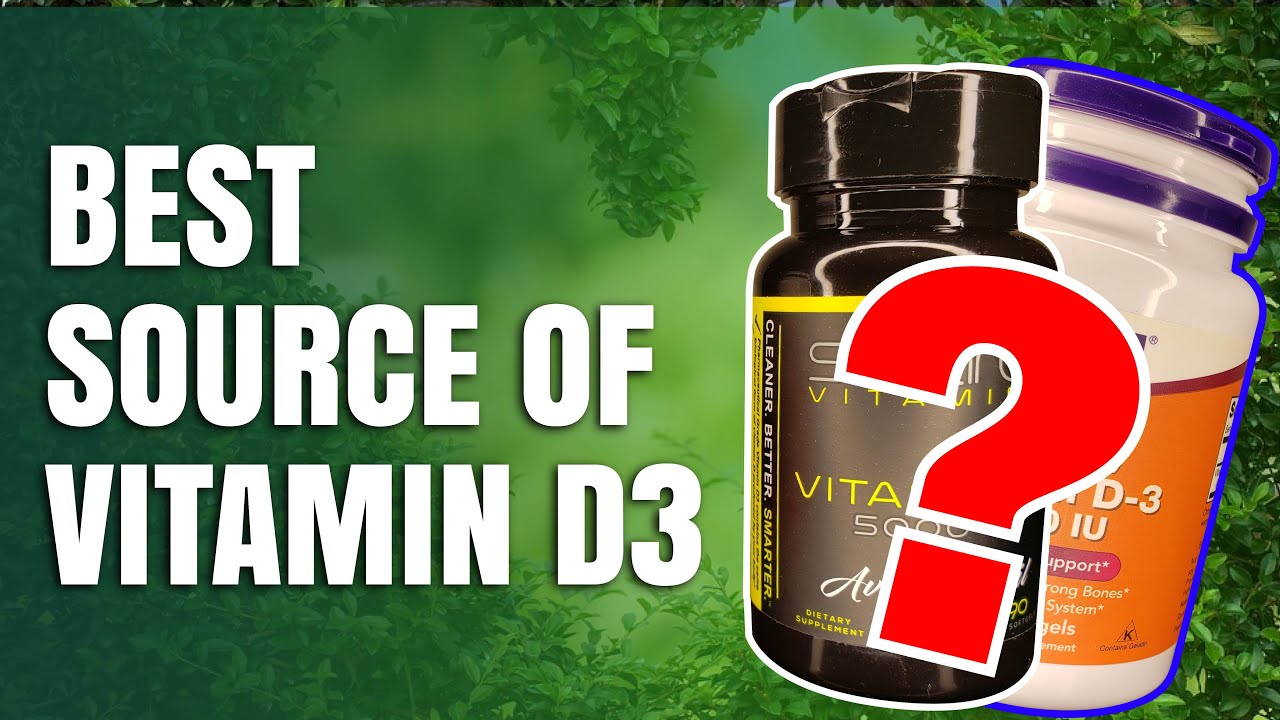
Vitamin D is often discussed like a single, uniform nutrient—one ingredient, one outcome. Yet in practice, the story changes depending on where that vitamin D comes from and how the body processes it. In particular, lichen-derived D3 and lanolin-derived D3 share the same core molecule (cholecalciferol), but many people still wonder whether they behave differently inside the body. The common observation is simple: “They’re both D3, so shouldn’t the bioavailability be identical?” The more intriguing question is what hides behind that surface-level assumption.
First, what “bioavailability” really means
Bioavailability is not merely a yes-or-no concept. It describes how much of an ingested compound actually becomes available in the bloodstream and tissues where it can do work. That journey includes several bottlenecks: digestion, release from its carrier, absorption in the intestine, transport through the lymphatic system or bloodstream, metabolism in the liver, and eventual activation pathways. A vitamin can be chemically the same while still showing different performance depending on formulation, excipients, and the physical form of the product.
With D3 specifically, the compound is fat-soluble. That single fact turns absorption into a choreography influenced by dietary fat, bile secretion, gut health, and the way the supplement is engineered to dissolve and travel.
Same molecule, different beginning: lichen D3 vs lanolin D3
Both lichen D3 and lanolin D3 provide cholecalciferol. If someone is expecting a dramatic “chemical mismatch” effect, they won’t find it. The body recognizes D3 primarily by structure, not ancestry.
However, the source can still matter indirectly. Lichen D3 is produced via cultivation of lichen-associated biology and extraction processes that yield high-purity D3. Lanolin D3 is extracted from sheep-derived wool wax (lanolin), then processed into a supplement format. These routes can influence the supplement’s impurities profile, residual compounds, and the carrier system used for delivery.
This is where fascination begins: the “same” nutrient may arrive wearing a different molecular outfit, and absorption is sensitive to that outfit.
Why the common observation persists: “If it’s both D3, absorption should match”
It’s reasonable to think bioavailability should be similar. After all, once D3 is in the bloodstream, it must be converted into 25(OH)D and later 1,25(OH)2D. Those downstream steps should not care whether the precursor originated from lichen or lanolin.
And yet, people often notice differences in real-world experiences—sometimes subtle, sometimes striking. That does not necessarily mean the D3 molecules differ in potency. More often, the effect is a consequence of formulation variables, timing habits, or individual physiology. Even the same person can absorb vitamins differently depending on whether the supplement was taken with a fatty meal, whether bile flow is optimal, and whether gut transit was altered by travel, stress, or dietary changes.
In other words: the observation is plausible, but incomplete. The deeper reasons tend to be “system-level,” not “molecule-level.”
The carrier and formulation: where “bioavailability” is often decided
Consider the supplement as a delivery vehicle. If one product uses an oil base that forms micelles efficiently, it may blend into intestinal fat absorption patterns more readily. If another uses a different base—such as medium-chain triglycerides, refined oils, or emulsifiers—the dissolution and uptake can shift.
Lichen D3 products are often packaged in vegan-friendly oils. Lanolin-based products may be formulated in a lanolin-derived base or compatible fats. Neither category automatically guarantees superior absorption. But each may harmonize differently with a person’s typical meal composition and digestion physiology.
Look for clues like softgel design, liquid vs capsule form, and whether the product is designed to be taken with food. A D3 supplement that dissolves quickly can be absorbed more consistently, while one that depends heavily on fat co-ingestion may be more variable.
Purity, impurities, and the “minor components” effect
Even when the active ingredient is the same, the “nearby chemistry” can differ. Natural extracts sometimes contain minor constituents—trace lipids, fatty alcohols, or other compounds—that can influence how the body handles the supplement matrix.
Lichen cultivation and extraction practices are typically optimized for high-purity D3. Lanolin-based extraction also aims for purification, but the final product might retain trace differences in the lipid profile. These tiny differences rarely translate into dramatic potency changes, but they can affect tolerability, digestion comfort, or perceived efficacy—especially for people with sensitive gastrointestinal systems.
That’s the quiet twist: bioavailability is not only about the vitamin molecule. It’s also about how the “package” behaves.
Absorption dynamics: bile, dietary fat, and timing
Because D3 is fat-soluble, absorption often follows the rhythm of bile secretion and meal composition. Taking D3 alongside a meal with adequate dietary fat can enhance uptake. Taking it on an empty stomach may reduce absorption efficiency for many people.
Even if lichen D3 and lanolin D3 are equally bioavailable in principle, real-life outcomes can diverge based on when and how the supplement is taken. Long gaps between meals, low-fat dieting, or certain digestive conditions can all alter absorption more than the botanical origin of D3.
So, if two people report different results, it may not be the origin—it may be the environment the vitamin entered.
Safety, tolerability, and the psychological layer
There’s also a psychological dimension that deserves respect. People often choose lichen D3 for ethical, religious, or dietary reasons. That choice can lead to greater consistency—taking the supplement regularly, following directions more closely, and tracking their health goals. Consistency can mimic bioavailability differences because frequent correct dosing tends to produce steadier blood levels.
Meanwhile, some individuals may be wary of animal-derived inputs and subconsciously alter their routines—changing dose timing, meal pairing, or expectations. None of these factors change the molecule, but they change the regimen.
And regimens matter. In supplementation, adherence is a silent co-author of outcomes.
What evidence suggests, and what it can’t fully answer
In many cases, researchers and clinicians approach both forms as “D3” and evaluate blood levels of 25(OH)D. When comparable doses are used in similar formulations, results often converge. That supports the idea that cholecalciferol’s fundamental behavior dominates over its source.
Still, head-to-head comparisons can be limited by differences in softgel composition, dose strength, and study design. It’s difficult to isolate origin from packaging when products vary widely. This is why the question persists: people are sensing nuance, even if the molecule itself seems straightforward.
The fascination remains justified because bioavailability is multi-factorial—even when the nutrient looks identical on a label.
Practical guidance: how to choose based on your body and your routine
If your goal is maximizing absorption, choose a D3 supplement you can take consistently with a meal containing fat (unless a healthcare professional advises otherwise). Then pay attention to formulation cues and comfort. If you experience gastrointestinal sensitivity, you may prefer a product with a vehicle designed for smoother digestion.
For those following vegan or vegetarian diets, lichen D3 provides the same vitamin D3 structure without animal-derived ingredients. For those seeking traditional options, lanolin D3 can be perfectly appropriate as long as the product is reputable and well-formulated.
Ultimately, “best” is contextual: best depends on your digestion, your meal patterns, your tolerance, and how steadily you incorporate the supplement into daily life.
Visual intuition: the supplements behind the question
Sometimes the difference people imagine is visible—source materials, textures, or packaging styles. Even so, what matters most is what reaches your bloodstream.


The real answer: any difference is usually about delivery, not identity
So, is there a bioavailability difference between lichen D3 and lanolin D3? In theory, the active vitamin is the same cholecalciferol, so large biological disparities are unlikely. If differences appear, they are more often rooted in formulation mechanics (carrier choice, dissolution behavior), real-world habits (meal timing, dietary fat), and individual physiology (bile function, gut health), rather than the lichen-versus-lanolin origin itself.
And that is why this topic remains captivating. The question looks simple—two sources of D3—yet it unfolds into a broader lesson: absorption is a systems-level process. When you understand the system, the labels become less mysterious, and the “difference” becomes a story about how your body receives, processes, and deploys the nutrient you give it.