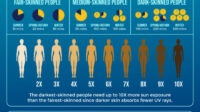
Vitamin D functions less like a simple nutrient and more like a backstage conductor—quietly orchestrating calcium handling, immune signaling, and cellular differentiation. Yet the dosage that once felt “right” can become misaligned as life circumstances shift: seasons change, body weight evolves, medications intervene, and blood levels drift. The good news is that vitamin D dosing is not guesswork. With blood tests and a careful framework—often summarized in a chart—people can fine-tune their intake with greater precision, safety, and intent.
Start With the Right Lab Targets: 25(OH)D vs. “Active” Vitamin D
Before adjusting anything, it helps to identify what the blood test is actually measuring. Most clinicians rely on 25-hydroxyvitamin D—written as 25(OH)D—because it reflects vitamin D stores more reliably than “active” forms. Active vitamin D (like 1,25-dihydroxyvitamin D) can remain within range even when stores are low, which can mislead interpretation.
A dosing chart typically maps 25(OH)D concentration to dosing strategies. Expect different thresholds depending on the lab units (ng/mL vs. nmol/L). Many charts are designed for one unit system; mixing them can create a dangerous arithmetic detour.
Common reader takeaway: confirmation that the lab value is 25(OH)D, unit consistency, and awareness that “active” lab markers don’t substitute for the storage marker.
Understand the Chart: How Blood Levels Translate Into Dose Adjustments
Most practical charts use ranges such as deficient, insufficient, and sufficient. While exact cutoffs vary among guidelines and clinicians, the logic is consistent: the lower the blood level, the more aggressive the replenishment; once levels normalize, maintenance becomes the priority.
A typical chart workflow looks like this:
1) Locate the current blood level on the chart (baseline).
2) Choose a dosing direction: repletion (to raise levels) or maintenance (to hold levels steady).
3) Recheck labs after a predictable interval to verify response.
Short sentence, long consequence: dosing charts are not rigid recipes—they’re calibrated decision maps. Your body may respond slower or faster, depending on absorption, adherence, and physiology.

Repletion Phase vs. Maintenance Phase: Two Different Mindsets
When levels are low, most people need a repletion phase—a temporary dose designed to “fill the tank.” This is where charts often recommend higher daily doses or staged regimens. The goal is not permanent megadosing; it’s controlled acceleration.
Once the target range is reached, the chart usually transitions into a maintenance phase. Maintenance doses tend to be lower, because the purpose shifts from replenishment to stability. This shift matters. A common pitfall is treating the repletion number as a lifelong maintenance plan.
Long sentence, practical meaning: maintenance aims to prevent both relapse and unnecessary excess, while repletion aims to correct deficiency efficiently and safely.
Daily vs. Weekly (or Monthly) Dosing: Choosing a Schedule That Sticks
Charts may propose different schedules depending on practicality. Some regimens use daily dosing; others use weekly or intermittent dosing. The best schedule is often the one that produces consistent intake without provoking gastrointestinal discomfort or adherence fatigue.
Readers frequently ask whether weekly dosing is “less effective.” In many cases, it can be equally effective when dosed appropriately, because vitamin D storage allows a degree of smoothing over time. Still, charts should be applied carefully—especially if you switch from daily to weekly—because the total weekly dose and timing of lab retesting can influence interpretation.
Expect this in educational content: guidance on how to translate a chart’s dosing instruction into a schedule that fits real life, not just the clipboard.
Absorption and Bioavailability: Why the Same Dose Can Produce Different Blood Results
Vitamin D absorption is not uniform. Fat malabsorption, certain gut conditions, and liver issues can reduce uptake. Diet composition also matters—because vitamin D is fat-soluble, taking it without dietary fat may blunt absorption for some individuals.
Medications can also act like quiet saboteurs. Some drugs increase metabolism of vitamin D, lowering circulating levels. If a chart seems “off,” the issue may not be the chart at all; it may be absorption, timing, or drug interactions.
One of the most useful chart-adjacent concepts: dosage adjustments should account not only for the number on the lab report, but also for the reasons that number is being underachieved.
Body Weight, Adiposity, and Dose Responsiveness
Another recurring theme in dosing charts is that larger body stores can dilute the response. Vitamin D can partition into adipose tissue, which may lower the fraction available in circulation. Consequently, some people—especially those with higher body weight—may require higher intake to reach the same 25(OH)D level.
At the same time, weight-based dosing is not a license for escalation without monitoring. The chart gives structure, but measurement provides truth.
How readers benefit: understanding why personal context (weight, fat distribution, metabolic factors) influences dose-response, prompting appropriate retesting rather than reckless fine-tuning.
Interpreting “Borderline” Results: What to Do When Levels Are Not Dramatically Low
Not every adjustment begins with deficiency. Many people present with “borderline” or “insufficient” values. Charts often recommend smaller corrective steps in these cases—incremental increases designed to nudge levels into the desired range.
This is where patience becomes a strategy. Small dose changes may take longer to show meaningful improvement, and aggressive escalation can overshoot.
Readability note: strong chart content typically includes advice like “adjust modestly and retest after an interval,” rather than implying that every small deviation demands a large dose change.
Retesting Timing: When to Measure Again After Adjusting Dosage
After changing intake, it’s tempting to recheck labs immediately. Yet vitamin D dynamics require time. Blood levels rise gradually as stores replenish. Many regimens recommend retesting after a span such as several weeks to a few months, depending on the baseline level and the dosing intensity.
Some educational articles include a simple rule of thumb: don’t judge early. A retest too soon can capture transient fluctuations rather than the “new steady state” response.
Short sentence, crucial outcome: correct timing prevents whiplash dosing.
Safety Boundaries: Avoiding Oversupplementation and Hypercalcemia Risk
Even though vitamin D is often discussed as “natural,” it can be harmful in excess. High intake may elevate calcium levels, potentially leading to symptoms such as nausea, constipation, confusion, excessive thirst, and kidney stress in severe cases.
Chart-based dosing content generally emphasizes:
• stay within recommended maximum intake ranges unless supervised clinically.
• be cautious if also taking calcium supplements.
• consider periodic monitoring if levels were very low, if the regimen is aggressive, or if there are risk factors.
A professional dosing philosophy is conservative: aim for adequacy, not excess.
Special Populations: Pregnancy, Kidney Disease, Malabsorption, and Bone Disorders
Certain conditions alter both baseline vitamin D status and dosing response. In pregnancy, clinicians often emphasize stability and sufficiency for maternal health and fetal needs. In chronic kidney disease, conversion pathways can change, sometimes requiring individualized plans rather than a generic chart.
People with malabsorption conditions may need higher or more targeted dosing, and sometimes alternative supplementation strategies. Those with bone disorders may involve additional laboratory assessments and tailored goals.
What readers can expect here is nuance: charts provide a starting scaffold, but specialists adapt the framework to physiology.
Common Reader Mistakes: Misreading Units, Forgetting Adherence, and Doubling Up
Many dosing errors are mundane:
• Unit confusion (ng/mL vs nmol/L).
• Inconsistent intake—skipping multiple days or forgetting weekly doses.
• Doubling supplements inadvertently (multivitamins plus separate vitamin D).
• Treating the target as permanent, even after lifestyle changes (winter to summer, reduced sun exposure, diet changes).
Good chart-oriented content often includes a checklist. Readers appreciate a narrative that sounds like common sense: verify units, confirm your total daily intake from all sources, and keep a simple log.
How to Use the Chart Like a Pro: A Step-by-Step Adjustment Routine
To operationalize the chart, adopt a routine:
1) Record baseline 25(OH)D with units and reference range context.
2) Confirm total vitamin D intake (dose + schedule + all products).
3) Choose the appropriate chart pathway: repletion or maintenance.
4) Implement the dose change steadily and consistently.
5) Retest at the interval suggested by the regimen philosophy.
6) Adjust based on the new reading—usually by scaling down when in range.
This approach reduces randomness. It turns vitamin D dosing from a reactive scramble into a controlled feedback loop.
What Different Content Formats Can Help You With
Readers encounter vitamin D dosing information in several formats, each with strengths:
• Chart graphics: fast interpretation of ranges and dosing direction.
• Long-form articles: reasoning behind thresholds, safety boundaries, and retesting logic.
• Clinician-guided protocols: personalized nuance for complex cases and comorbidities.
• Checklists: practical guardrails for unit verification and adherence tracking.
A well-rounded reader doesn’t rely on one format only. Charts tell you where you are; narratives explain why changes make sense; checklists prevent preventable mistakes.
Closing Perspective: Precision, Not Guesswork
Adjusting vitamin D dosage based on blood levels is ultimately an exercise in calibrated precision. A chart provides structure, but your lab results provide the feedback. With careful attention to units, dosing phases, absorption factors, and safety boundaries, vitamin D management can become a deliberate, measurable process—one that supports long-term health rather than temporary correction.