Vitamin D is one of those quiet nutrients that rarely makes headlines—until you notice the consequences of being low. Maybe your mood feels flattened, your bones feel less resilient, or fatigue arrives with an almost clockwork regularity. Yet the story isn’t as simple as “take more and you’ll be fine.” The truth is more intriguing: your recommended daily allowance (RDA) sets a baseline, while an “optimal” target asks a sharper question—what level truly supports health in the real world?
Why Vitamin D Feels Like a Question, Not an Answer
Vitamin D is often misunderstood as a vitamin in the diet, but it behaves more like a hormone that orchestrates far-reaching cellular choreography. Sunlight initiates its production in the skin, and then the body performs a series of transformations—turning an inert precursor into the biologically active form that can influence immune function, calcium absorption, muscle performance, and even certain signaling pathways related to mood regulation.
So when people ask, “How much should I take daily?”, they’re actually asking about outcome. The amount that keeps you from falling short (RDA) may not be the same amount that supports peak function (optimal). This shift in perspective matters. It turns vitamin D from a checkbox into a personalized calibration.
RDA vs Optimal: The Core Distinction
The RDA is designed to cover the needs of most people to prevent deficiency-related problems. Think of it as a safety net—important, practical, and conservative. However, RDA values are not always calibrated to account for differences in sunlight exposure, skin tone, geographic latitude, seasonality, body composition, and baseline blood levels.
An “optimal” intake is a different lens. It’s less about merely avoiding deficiency and more about achieving and maintaining a desirable blood concentration of 25-hydroxyvitamin D (25(OH)D), the common marker clinicians use. Optimal targets vary by individual and guideline philosophy, but the driving idea is consistent: the right dose depends on where you start and how your body responds.
In other words, RDA answers “How much to prevent deficiency?” Optimal answers “How much to feel and function your best?”
What the Daily Numbers Typically Look Like
Most adults do not need extreme doses to cover their baseline requirements—especially when some sunlight exposure is available. Yet many individuals, intentionally or unintentionally, live in low-vitamin-D territory due to indoor lifestyles, sun-avoidant habits, higher latitudes, or seasonal shifts.
Common guidance often places RDA targets in the range of about 600–800 IU (15–20 mcg) daily for many age groups. But “optimal” frequently nudges higher, with some people benefiting from 1000–2000 IU daily, particularly when baseline blood levels are low. It’s not a universal prescription; it’s a starting point for adjustment, ideally guided by a blood test.
Consider vitamin D like a dimmer switch rather than an on/off switch. Too little leaves the room shadowy; too much can oversaturate the system. The goal is the luminance that supports your physiology.
How Age, Skin Tone, and Lifestyle Change the Equation
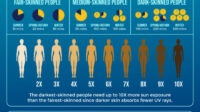
Vitamin D needs are not static; they behave like a moving target. Age reduces the skin’s capacity to synthesize vitamin D efficiently. Skin pigmentation influences the amount of ultraviolet B that can convert precursors into vitamin D. People with darker skin often require more time in sunlight for the same production.
Lifestyle is equally decisive. Office jobs, heavy sunscreen use, and clothing coverage reduce UV exposure. Season and location matter too: winter in higher latitudes can turn “sunlight” into a weak signal, not a reliable source.
Then there’s body composition. Higher body fat can sequester vitamin D, making it less available in circulation. This doesn’t mean vitamin D is “lost,” but it often means the dose required to reach a similar blood level may be higher than expected.
Testing Your Level: The Best Way to Turn Guesswork into Precision
If you want the shift from “how much should I take?” to “how much should I take?”, testing is the compass. A blood test measuring 25(OH)D provides clarity. Without it, supplementation can become a study in averages—sometimes adequate, sometimes insufficient, occasionally excessive.
Once you know your baseline, clinicians can tailor intake, often by using a short-term increase followed by a maintenance dose. This approach respects individual variability and prevents the common frustration of taking pills that don’t seem to “work,” or taking too much because you’re aiming too high without feedback.
Signs You Might Be Low (and Why Symptoms Are Tricky)
Vitamin D deficiency can be stealthy. Some people experience muscle weakness, aches, low mood, frequent fatigue, or a general sense of malaise. Bone health can also be affected over time, especially in higher-risk groups.
But symptoms are rarely exclusive to vitamin D. They can overlap with iron deficiency, thyroid disorders, sleep deficits, low protein intake, or inflammatory conditions. That’s why an evidence-based route—testing—beats symptom guessing.
Still, if your life includes low sunlight exposure and you’re not sure where your levels sit, curiosity deserves structure: test, interpret, and then adjust.
Safety Limits: The Fine Line Between Helpful and Too Much
Vitamin D is fat-soluble, which means excess can accumulate. That’s why safety matters. Higher supplemental intakes should be approached with caution, particularly without laboratory confirmation.
Over-supplementation can raise calcium levels in the blood, potentially leading to symptoms like nausea, constipation, excessive thirst, or confusion in more severe scenarios. In the background, kidney stress can also become a concern when calcium balance is disturbed.
This is where the optimal mindset becomes responsible. Optimal does not mean maximum. It means targeted adequacy—supported by blood levels and adjusted dosing.
Promising a Shift: How to Think Like a Calibrator
Picture vitamin D intake as a calibration process. Start with baseline risk factors, choose a reasonable dose, then use follow-up testing to confirm whether you’ve moved into the desired range. Many people discover that the “right” daily amount is not the amount that was recommended to someone else.
That reframing can be surprisingly empowering. Instead of chasing broad claims, you build a feedback loop. You become less reactive and more methodical. And as your level normalizes, you often feel the difference—subtle at first, then more noticeable as muscle function, energy patterns, and overall resilience align.
Practical Ways to Take Vitamin D Daily (Without Making It Complicated)
Vitamin D absorption improves when taken with a meal containing fat. That doesn’t have to be a heavy feast; even a modest meal can help. Some people prefer consistent daily dosing; others choose weekly or monthly schedules. Both can work, but daily dosing often offers finer tuning, especially when aiming for “optimal” levels.
If you supplement, also consider the “stack” around it. Calcium status, magnesium intake, and overall dietary patterns can influence how vitamin D functions in the body. Vitamin K2 is sometimes discussed as well, but the central pillar remains: vitamin D adequacy verified by blood levels.
Curiosity, again, deserves structure. Pair supplementation with a plan, not a hope.
What About Sunlight? It’s a Source, But Not a Strategy for Everyone
Sun exposure can stimulate vitamin D production, but it’s not uniformly reliable. Skin cancer risk concerns lead many people to use sunscreen or avoid prolonged sun, which is wise behavior. Weather, latitude, and daily schedules also restrict UVB availability.
So sunlight is best viewed as a variable contributor—not a dependable daily calculator. For many, the most consistent approach is supplementing thoughtfully and confirming outcomes through testing.

A Simple Conclusion: RDA Is a Floor; Optimal Is the Target
RDA answers a protective question: “How much prevents deficiency?” Optimal answers a performance-oriented question: “How much supports your body’s physiology based on your actual needs?” The difference is where curiosity turns into clarity.
For many adults, RDA-level intake may be enough—but a significant number of people require more to reach and maintain desirable blood levels. Age, skin tone, latitude, season, body composition, and lifestyle all tilt the scale. The most intelligent route is testing, followed by individualized dosing and periodic rechecks.
In the end, the best vitamin D strategy isn’t maximalism. It’s measured intention—steady, responsive, and tailored to your biology.