Vitamin D is often described as the “sunshine vitamin,” yet in winter it can feel more like a rumor—faint, hard to verify, and easy to misinterpret. In summer, it arrives with the enthusiasm of early morning light, turning rooftops and sidewalks into gentle reservoirs of health. In winter, however, daylight becomes an undertow: shorter days, lower sun angles, and colder air conspire to make production less reliable. The question isn’t merely “How much vitamin D do I need?” It’s also “How do I translate seasonal weather into steady cellular chemistry?”
Vitamin D’s seasonal choreography: why the same body behaves differently
Your skin isn’t a passive window—it’s an active workshop. Ultraviolet B (UVB) radiation helps your skin manufacture vitamin D, which then travels through the bloodstream and liver for refinement before becoming the hormone-like signal your body uses across many systems. In summer, UVB is abundant and reaches deeper levels of the skin with less obstruction. The result is production that can feel almost effortless.
Winter changes the physics. The sun climbs lower in the sky, UVB is attenuated, and many people wear more layers that physically block UV exposure. Even on bright winter days, the intensity and spectrum may not be ideal for meaningful vitamin D synthesis. Think of it as trying to bake bread with a weaker oven: the intention is there, but the energy source is inconsistent.
How much vitamin D do you need? The baseline and the reality check
When discussing intake, it helps to start with a baseline target and then adjust based on how much your body can produce naturally. Many guidelines commonly reference daily targets expressed in international units (IU). For adults, a typical maintenance range often sits around 600 IU/day, with higher needs sometimes considered for older adults, people with limited sun exposure, or those who have low blood levels.
But winter versus summer requires more nuance. In summer, your body may generate a meaningful portion of vitamin D through sun exposure; in winter, that production often drops. Intake becomes a lever you can pull—either through food, supplementation, or both—to stabilize overall levels.
It’s not only about “more” in winter. It’s about “steady.” Seasonal swings can be like waves against the same shoreline: your health doesn’t fail overnight, but gradual under-support can accumulate into fatigue of the immune system, subtle shifts in bone metabolism, and sluggishness in the body’s regulatory rhythms.
Summer needs: when sunlight can do some of the heavy lifting
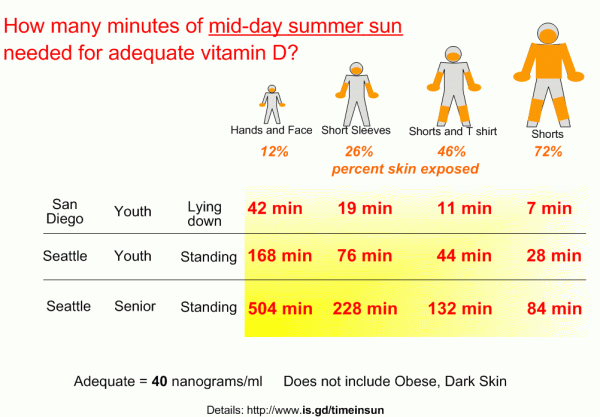
During summer, many people can maintain healthier vitamin D status with a combination of moderate sun exposure and dietary support. Yet “sunny” doesn’t automatically mean “sufficient.” Skin tone, latitude, time of day, cloud cover, and sunscreen all alter UVB penetration. Even the habit of stepping outdoors briefly may not equal the duration necessary for consistent vitamin D synthesis.
A practical mindset is helpful: treat summer like a savings season. If your skin can generate vitamin D efficiently, your body may store a portion for later months. Still, overconfidence is a pitfall. Overexposure increases skin cancer risk, and sunscreen—while it reduces vitamin D production—helps protect you from UV damage. The best strategy balances safety with plausibility.
So, in summer, your “need” is often partially met by production. In other words: your requirement may not vanish, but the burden on supplements can lessen.
Winter needs: daylight becomes thin, and supplementation often matters
Winter typically marks the season where vitamin D production becomes unreliable. Short days, indoor routines, and a lower sun angle can turn UVB into a rare guest. For many, dietary sources alone are insufficient to compensate. That’s where supplementation often becomes the bridge between what the body needs and what the environment provides.
Common winter-focused approaches frequently involve maintaining the baseline daily target and, depending on individual risk factors, using higher dosing strategies under medical guidance. People with darker skin, those living at higher latitudes, individuals who are housebound or heavily covered, and older adults may be more vulnerable to deficiency in winter.
In narrative terms, winter is the chapter where you stop assuming the plot will continue as usual. Instead of waiting for sunlight to solve everything, you plan for scarcity.
Food sources: helpful, but usually not a complete winter substitute
Vitamin D is found in relatively limited dietary options. Fatty fish like salmon and sardines can contribute meaningful amounts. Fortified foods—such as some dairy alternatives, cereals, and milks—can also add support. Egg yolks and certain mushrooms provide smaller contributions.
However, food is usually more like seasoning than main course. To consistently reach targets through diet alone, you might need frequent intake of fortified products or vitamin D–rich foods, which is not always realistic during winter when appetites and routines shift.
That’s why many people view nutrition as the companion, while supplementation becomes the reliable anchor.
Testing and tailoring: using blood levels as a compass
The most intelligent approach is personalization. A blood test for 25-hydroxyvitamin D offers a snapshot of vitamin D status over time. If levels are low, winter can magnify the problem; if levels are adequate, you can adjust dosing to avoid unnecessary excess.
Testing doesn’t have to be dramatic. It’s simply a compass you consult before you decide whether to increase, maintain, or taper. The goal is not to chase a number for its own sake; it’s to support bone health, muscle function, and immune regulation with a stable biochemical landscape.
When you tailor, you stop guessing. You start steering.
Absorption factors: why some winters feel worse than others
Vitamin D status isn’t determined only by sun. Body composition matters: higher body fat can sequester vitamin D, reducing its availability. Gastrointestinal conditions that impair absorption can also contribute to low levels. Certain medications may influence vitamin D metabolism.
Even lifestyle plays a role. If winter means less outdoor movement, fewer opportunities for UVB exposure, and less physical activity, then your vitamin D “account” may be shrinking while your needs remain steady or even increase.
Consider your vitamin D level as a bank balance affected by both income and spending. Winter often reduces income; some health demands may rise. The accounting principle is simple: know your numbers, then plan your deposits.
Safe dosing considerations: balancing benefit with caution
Vitamin D is fat-soluble, which means it’s stored in body tissues. That storage is helpful for seasonal coverage, but it also creates the possibility of excess if dosing is poorly managed. This doesn’t imply fear. It implies respect for dosage.
Higher doses may be prescribed for deficiency, sometimes as a short-term strategy followed by maintenance. For day-to-day use, many people choose modest supplementation aligned with general targets, then fine-tune based on blood test results and clinician guidance.
The “right” winter plan is the one that supports your health without overreaching.
Sun exposure safely: making winter light count without risking skin
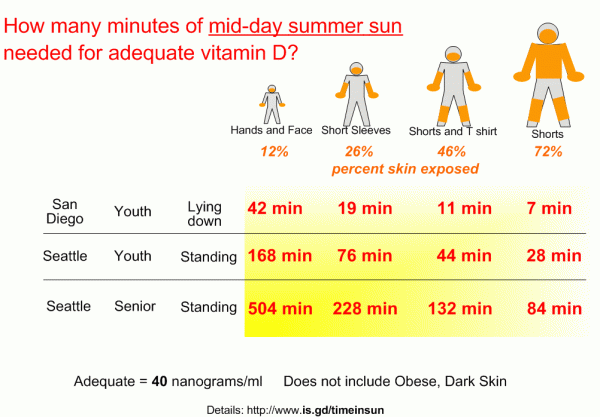
When people talk about sunlight, it’s easy to imagine reckless behavior. But safe strategies exist. If you’re going to get sun, consider midday windows when UVB is highest. Short, conservative exposure can be considered for some individuals while still protecting skin with sunscreen as appropriate after brief periods. Clothing choices matter too—lighter coverage can help during times of sufficient UVB, while still respecting skin sensitivity.
Yet the core truth remains: for many, especially in winter, sun exposure alone doesn’t consistently generate enough vitamin D. Safety first, then support through diet and supplementation.
A season-ready plan: turning winter scarcity into a steady routine
Rather than thinking of vitamin D as an emergency topic, treat it like seasonal maintenance. In summer, you can aim for sensible outdoor exposure and nutritional reinforcement, building a buffer. In winter, you focus on stability—consistent daily intake, mindful food choices, and periodic blood testing if you’re at higher risk or have known low levels.
Long sentences help explain the physiology, but simple actions help the body. Choose an evidence-informed target, confirm status when possible, and adjust with care. Winter can be a quiet season for many things, but it doesn’t have to be a deficit season for your health.
When vitamin D is well supported, the story changes: less uncertainty, more resilience. The light may be scarce, but your biology doesn’t have to be.