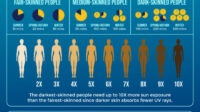
Vitamin D has a particular kind of magnetism. People chase it for energy, for immunity, for mood, and—quietly, almost ceremonially—for the reassurance that their body is being “tuned” to the right frequency. Yet the question keeps returning: How many IU of Vitamin D do you really need? The answer is rarely a single number. It’s a moving target influenced by skin tone, geography, body composition, age, diet, medications, and even how consistently you get sunlight. In 2025, the most useful approach is not merely dose-driven, but context-aware—an elegant blend of science and personal physiology.
The Common Observation: “Just Tell Me the IU”
It’s a familiar moment: someone reads a supplement label, hears a number repeated online, and decides that certainty is only one bottle away. The conversation typically goes like this—“Take 1,000 IU,” “Take 2,000 IU,” or “Take what your doctor says.” Each statement is partially true and partially incomplete. Short, definitive advice feels comforting, but human vitamin D physiology is not a vending machine. It’s more like a layered orchestra, where sun exposure acts as the conductor, genetics sets the tempo, and metabolism decides how long the notes linger.
So why do the IU numbers feel so interchangeable? Because many public recommendations aim to cover broad populations with reasonable safety margins. But individual needs vary more than people expect. Two adults can both be told to take vitamin D; one might barely notice, while the other could be correcting a deficiency that has been building silently for years.

What “IU” Really Means (and Why Units Matter)
IU—International Units—sounds clinical, but it’s an engineered unit tied to biological activity. When labels list IU, they’re communicating a measured potency rather than a direct mass of vitamin D. In everyday terms, this matters because vitamin D supplements come in different forms and strengths, and consumers often compare labels without understanding the biology behind them.
Vitamin D is typically supplied as cholecalciferol (vitamin D3) or ergocalciferol (vitamin D2). In many contexts, D3 is often preferred for raising blood levels more reliably, though what’s “best” depends on the product and the person’s starting point. In other words, the number on the bottle is not the whole story—the “starting line” is crucial.
The Deeper Reason: Vitamin D Needs Are Really “Level-Based”
Most conversations about vitamin D forget one essential truth: vitamin D requirements are typically determined by your 25-hydroxyvitamin D blood level (often written as 25(OH)D). That marker reflects vitamin D status from both sunlight and food. If your baseline is low, you usually need more support. If your baseline is adequate, higher doses may be unnecessary—or at least not beneficial in the way people assume.
This is where fascination turns into clarity. People are drawn to vitamin D because it feels actionable. But the body’s response isn’t uniform; it’s recalibrated by endocrine feedback loops. When vitamin D rises in the bloodstream, the body adjusts its absorption and utilization. That regulation is partly why some individuals need longer timeframes to see improvement, even with the same IU dose.
2025 Baseline Guidance: Typical Daily Ranges (Without the Myth of One-Size-Fits-All)
In 2025, many clinicians still use “common-sense ranges” as starting points, especially when testing isn’t immediately available. For many adults who are not deficient, modest supplementation may maintain sufficiency during low-sun seasons. But maintenance is different from correction.
Consider three broad scenarios—general wellness, borderline low levels, and confirmed deficiency. General wellness approaches often center on relatively conservative daily doses, while borderline or deficient situations may require higher short-term dosing to rebuild stores. The key phrase is stores. Vitamin D isn’t just about daily intake; it’s about replenishment, sustainability, and the timeline of response.
Because the body’s reservoir behaves nonlinearly, a “higher IU” doesn’t always mean “faster correction.” Factors like body mass index, gut absorption, liver function, kidney health, and medication interactions can all change the curve.
Sunlight, Skin, and Geography: The Invisible Dosing Variable
Sunlight is the original vitamin D strategy—powerful, but inconsistent. Latitude, season, cloud cover, sunscreen habits, clothing coverage, and even time spent outdoors alter how much UVB reaches the skin. Skin pigmentation adds another layer: more melanin can reduce vitamin D synthesis, which often shifts the supplementation need upward for some people living at similar latitudes.
Then there’s the modern reality of indoor schedules. Office work, remote labor, and evening lifestyles mean fewer opportunities for UVB exposure. Many adults have learned to substitute outdoor time with indoor comfort—while their vitamin D physiology continues to follow the old rules.
In short, the IU question is often a proxy for a larger issue: how much UVB did your body actually receive?

Age and Life Stage: Why Needs Change After 30, and Again Later
Vitamin D dynamics shift across the lifespan. Older adults often generate less vitamin D from sunlight and may absorb or metabolize it less efficiently. Lifestyle patterns may also change—less outdoor activity, dietary shifts, and medication use that can affect vitamin D metabolism.
Pregnancy and lactation can also alter requirements. Not because vitamin D is “different,” but because demand is redistributed. The body prioritizes vital developmental processes, and the mother’s vitamin D status can become a key part of the biochemical environment.
So the “IU you need” is not merely a number; it’s a demographic fingerprint.
Weight, Absorption, and Medications: The Hidden Adjusters
One of the most misunderstood drivers of vitamin D need is body fat distribution. Vitamin D is fat-soluble, meaning it can be sequestered in adipose tissue. For individuals with higher body fat, a standard dose may not raise blood levels as effectively, requiring careful adjustment guided by labs.
Absorption matters too. Conditions affecting the gut—celiac disease, inflammatory bowel conditions, bariatric surgery history—can reduce the uptake of fat-soluble nutrients. Similarly, medications such as anticonvulsants, glucocorticoids, and some weight-loss or cholesterol-related treatments can alter vitamin D pathways.
In practice, these factors create an important lesson: if supplementation doesn’t seem to work, it’s not always “low discipline.” It may be biology.
Safety in 2025: Avoiding the Trap of Excess
Vitamin D is valuable, but more is not automatically better. Excess vitamin D can contribute to elevated calcium levels, potentially leading to symptoms like nausea, constipation, weakness, confusion, or kidney-related complications. This is why high-dose strategies should generally be supervised, especially when used for longer periods.
Many people take vitamin D alongside other supplements without realizing they may stack ingredients. Multivitamins, fortified foods, and separate vitamin D capsules can combine into an unintended total. A practical approach in 2025 is to total daily intake across all sources and then align supplementation with bloodwork if possible.
Safety doesn’t have to be fear-based. It’s control-based: knowing your baseline, choosing an evidence-aligned dose, and rechecking when appropriate.
How to Decide Your Dose: A Practical, Lab-Guided Mindset
The most precise strategy is to use a blood test and a clinician-informed plan. Because different labs use slightly different measurement and reporting, it’s helpful to interpret results within the same system when possible.
Once you know your 25(OH)D level, the next step is selecting a dose that moves you toward sufficiency without overshooting. Typically, clinicians consider how long it’s been low, whether there are absorption barriers, and how consistently you will take the supplement.
Then come the timing realities: vitamin D repletion usually takes weeks to months. The body doesn’t rewrite its vitamin D profile overnight. Patience is not passive—it’s biochemical scheduling.
Vitamin D Is a Conductor, Not a Soloist: Magnesium, K2, and Lifestyle
Vitamin D works alongside other nutrients and physiological systems. Magnesium plays a role in vitamin D metabolism and activation. Without adequate magnesium, vitamin D pathways may be less efficient. K2 is also frequently discussed because it may help direct calcium to where it belongs, though evidence and product quality vary.
Lifestyle matters too. Regular weight-bearing activity supports musculoskeletal health, and overall dietary patterns influence absorption and balance. Vitamin D is often framed as “just a supplement,” but in practice it is one instrument in a broader symphony of health.
The Bottom Line: Find Your Number Through Context
So, how many IU of vitamin D do you really need? The truthful answer is that your IU dose should reflect your vitamin D status, risk profile, and absorption capacity. Generic recommendations can help people start, but blood levels clarify the route. The common observation—“I just need a number”—is understandable, yet it sidesteps the deeper reasons vitamin D is so compelling: it’s both measurable and personal.
In 2025, the most sophisticated approach isn’t chasing trends. It’s choosing a dose that fits your biology, then confirming results with sensible follow-up. When vitamin D intake aligns with your actual needs, the fascination becomes something else entirely: not a mystery, but a well-calibrated routine.