For years, the conversation about vitamin D has sounded like a daily ritual—something you “should” do often, in measured doses, at the mercy of UV index charts and weather forecasts. But what if the body’s vitamin D story is less like a steady paycheck and more like a seasonal reserve? The question to linger on is simple, and oddly comforting: Can you maintain adequate vitamin D with only weekend sun exposure? The answer isn’t a flat yes or no. It’s a nuanced “sometimes,” shaped by biology, geography, skin, and lifestyle details that most people never think to tally.
The weekend hypothesis: where the idea gains its footing
Think of vitamin D as a compound that your skin manufactures when exposed to ultraviolet B (UVB) radiation. Once produced, it doesn’t vanish overnight. Instead, it circulates and gets stored, especially in adipose tissue, creating a reservoir effect. This is why the weekend approach feels plausible: you might generate enough vitamin D on two sun-rich days to cover the needs of the rest of the week.
However, the body’s budget system is delicate. Vitamin D synthesis depends on UVB intensity, which changes dramatically by latitude, season, time of day, cloud cover, glass exposure, and even how much skin is exposed. Two weekends can be either a replenishing feast or an unproductive drizzle—depending on those variables.
It helps to shift perspective here. Instead of asking, “Do I get vitamin D every day?” ask, “Do I get enough UVB dose per week to keep my vitamin D status stable?” That reframing makes the weekend question more measurable, and therefore more answerable.
Vitamin D metabolism: the long tail of sun exposure
When UVB strikes the skin, a precursor is converted into vitamin D forms that eventually become biologically active. The process includes steps in the liver and kidneys, with storage and recycling that can buffer against short gaps. Because of this, vitamin D status often reflects cumulative exposure more than daily exposure.
Short sentences matter because they feel like reality checks: some days contribute very little. Some weekends contribute a lot. Vitamin D is not “on/off.” It’s more like a slow-moving ledger. Even if you miss weekdays entirely, your status could remain adequate if weekend exposure is sufficient to cover the weekly deficit.
But there’s a catch. If your UVB exposure is inconsistent or too low, the ledger won’t balance. The body may dip gradually, and the first warning signs are often subtle—energy shifts, muscle aches, or bone discomfort. Many people never connect those symptoms to vitamin D, which is why testing can be illuminating.
UVB intensity: why “sunny” doesn’t always mean “productive”
Sunlight isn’t a single ingredient. You might experience warmth and brightness without adequate UVB reaching your skin in usable quantities. UVB intensity can be low even on days that feel pleasant. Seasonal changes alter the solar angle. Cloud cover can scatter or filter UVB. Pollution can also reduce effective exposure.
Time of day is another quiet determinant. Midday sun often provides stronger UVB than morning or late afternoon. Geographic location plays a large role too: higher latitudes generally require more time outdoors to achieve the same effect during colder months.
So, the weekend strategy is hostage to physics. If you’re north of the equator in winter, two brief weekend outings may not generate meaningful vitamin D synthesis. In summer, the same routine could be entirely different—especially if you expose more skin and spend enough time.
Skin tone, coverage, and sunscreen: the “dose” problem
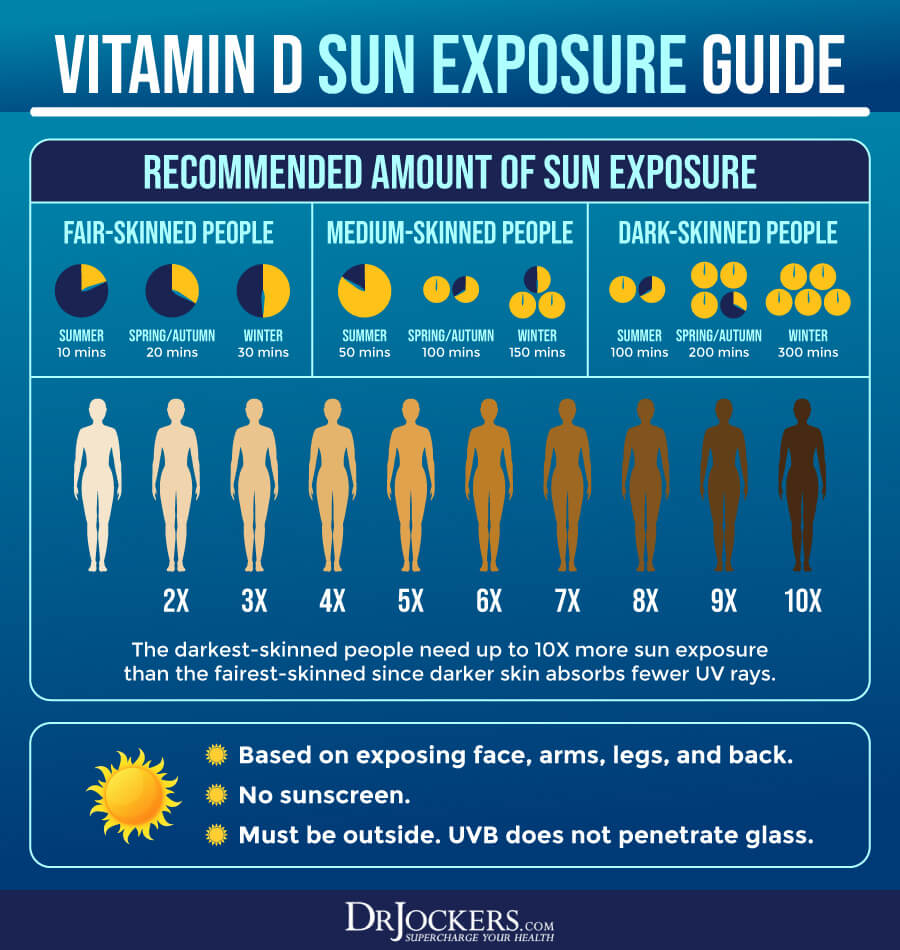
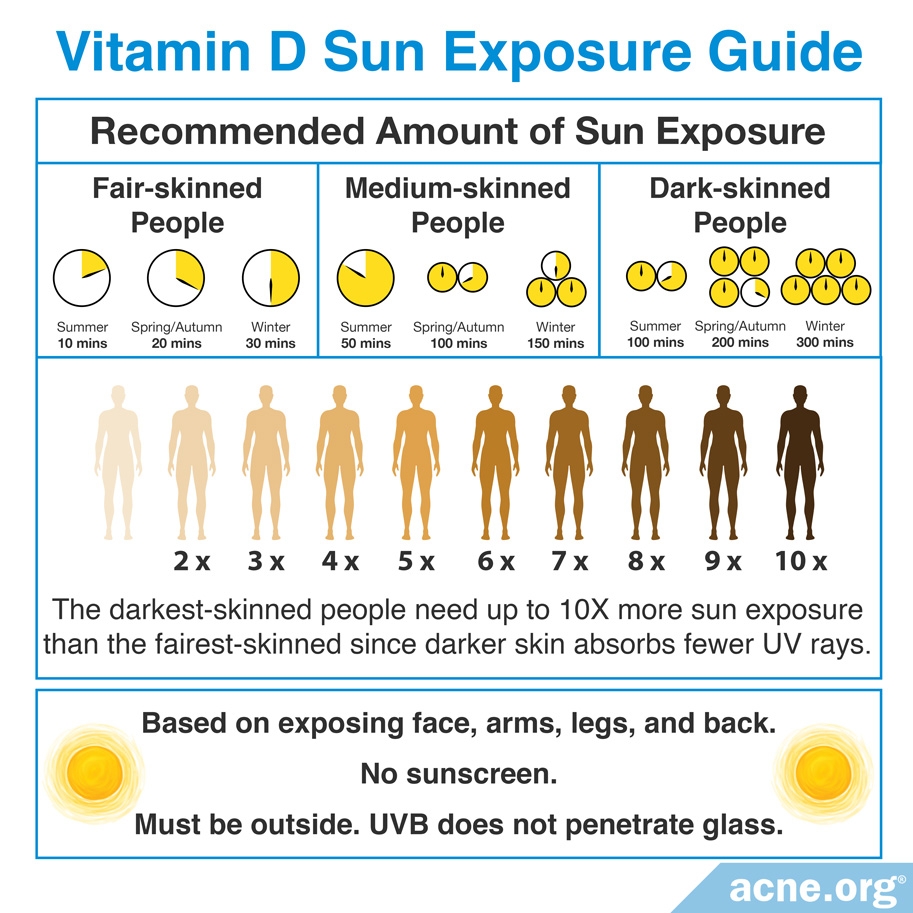
Skin pigmentation affects how efficiently UVB is converted into vitamin D. Deeper melanin content generally reduces UVB penetration, meaning more exposure time is typically required to reach similar vitamin D production compared with lighter skin.
Clothing coverage introduces another variable. A T-shirt, jeans, and closed-toe shoes may limit UVB exposure substantially. Meanwhile, sunscreen—while excellent for skin cancer prevention—reduces UVB absorption. That means it can lower vitamin D synthesis during a given exposure window.
This doesn’t imply you should skip sunscreen; it means the weekend approach must be calculated rather than assumed. Balancing dermal protection with adequate UVB exposure is a practical challenge, and the solution depends on your skin type, local UV index, and risk factors.
How long is “long enough” on Saturdays and Sundays?
There’s no universal time, because vitamin D synthesis varies across people. Instead, think in terms of target UVB exposure. The closer you are to your optimal UVB conditions, the shorter your weekend “maintenance window” can be. When UVB is weak, “longer” becomes necessary—but unlimited sun time isn’t a free option, because burns and skin damage are real, immediate consequences.
Many people underestimate how quickly the body transitions from safe stimulation toward irritation. Short bursts may be productive without tipping into overexposure—yet the exact balance is individualized. That is why an evidence-based approach often involves monitoring, not guessing.
One curious mindset can help: treat weekends like a planned replenishment effort, not a casual stroll. If you’re aiming for stability, consider using the UV index as a compass, exposing more skin where appropriate, and spending enough time to make the session count.
Testing and interpretation: the reality check vitamin D deserves
Maintaining adequate vitamin D with weekend-only sun is easiest to confirm with a laboratory value. A common measure is 25-hydroxyvitamin D, which reflects longer-term vitamin D status. Testing can reveal whether your weekend exposure keeps your levels within a healthy range or whether you’re gradually trending downward.
Consider timing the test to reflect your routine. If you test shortly after a high-UV weekend, you may see a temporary rise. If you test midweek after several sunless days, you may better capture stability. Patterns matter. A single number rarely tells the whole story.
If levels are borderline, the most reliable lever may not be “more sun.” It could be more predictable intake through food and, when appropriate, supplementation—especially during seasons when UVB is chronically insufficient.
When weekend exposure is likely insufficient
There are scenarios where the weekend hypothesis tends to break. Winter months at higher latitudes are a frequent culprit. So is living where air quality or persistent cloud cover reduces effective UVB. Wearing fully covered clothing for cultural or occupational reasons can also limit synthesis.
Another factor is body mass. Vitamin D is fat-soluble, and in some people, larger body fat stores can alter how vitamin D is distributed and how quickly levels change. Additionally, certain medical conditions and medications can influence absorption or metabolism.
If any of these apply, the weekend plan may feel optimistic—almost like trying to recharge a battery with a flashlight. The battery might charge a little, but not enough to power the week.
When weekend exposure might work beautifully
Weekend-only sun exposure has the best odds when UVB conditions are reliably strong and you can expose adequate skin without risking burns. In many locations, late spring through early fall can provide enough UVB to produce meaningful vitamin D, particularly with longer weekend sessions.
People with lighter skin, or those who can spend time outdoors during peak UV hours, may find their vitamin D status remains stable. Those who also maintain an active lifestyle outdoors—walking, gardening, or exercising—often accumulate more effective exposure than they realize.
Still, the success is conditional. Even in favorable seasons, consistent cloudiness or sunscreen habits can reduce the total UVB dose. The weekend strategy is powerful when it’s grounded in measurement and awareness.
Food, supplements, and the “hybrid” strategy
Sunlight is a compelling source, but it’s not the only path. Dietary vitamin D can support maintenance, especially when weekend sun is weak. Fatty fish, fortified dairy alternatives, and fortified products can contribute, though intake varies widely.
When diet and sun don’t reliably maintain levels—particularly in winter—supplements often become the pragmatic bridge. This isn’t a failure of the weekend approach; it’s a systems upgrade. Think of supplementation as insurance against the seasons’ unpredictability.
The most sustainable mindset is hybrid: use weekends to generate what you can, use food to support the baseline, and consider supplementation when testing indicates you need it.
Safety first: achieving benefit without courting harm
There’s a temptation to treat sun as a nutrient you can harvest endlessly. But skin damage is cumulative. The weekend plan must respect limits: avoiding burns, minimizing prolonged exposure during peak risk hours, and maintaining sun protection when needed.
Safety can coexist with effectiveness. For example, brief, strategic exposure during times when UVB is available may reduce the chance of overexposure. Then, resume protection—shade, clothing, and sunscreen—before the risk climbs.
If your skin is prone to burning, or you have a history of skin cancer or high-risk lesions, the weekend strategy should be approached with extra caution, ideally alongside professional guidance.
So, can you maintain adequate vitamin D with only weekend sun?
You can, in some circumstances—but it’s not guaranteed. Weekend sun exposure can maintain adequate vitamin D when UVB intensity is strong, skin exposure is sufficient, and your routine is consistent enough to keep your body’s vitamin D ledger in balance. It fails when UVB is weak, exposure time is limited, skin synthesis is reduced, or testing reveals a downward trend.
The real shift in perspective is this: weekend sunlight isn’t automatically “too little.” It’s simply highly conditional. Treat it like a variable you can manage rather than a rule you either obey or break.
If curiosity has brought you here, let it mature into a plan. Use seasonal context, consider UV index guidance, protect your skin, and—when it matters—confirm with a vitamin D blood test. The goal isn’t to chase sun. The goal is to maintain health steadily, even when your sun schedule is weekend-only.