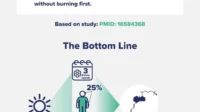
Sun-dried mushrooms have a quiet mystique: they look sturdy, smell earthy, and feel almost culinary—yet their potential nutritional prowess invites a deeper question. Can sun-dried mushrooms provide enough vitamin D? The answer is more nuanced than the usual “yes” or “no,” and the nuance is exactly what makes this topic fascinating. What appears to be a simple preservation method can, under the right conditions, become a vitamin-boosting ritual hidden in plain sight.
Why Vitamin D Is So Hard to Replace
Vitamin D is a peculiar nutrient. Unlike many vitamins that arrive ready-made from food, vitamin D is closely tied to sunlight-driven chemistry. In human biology, the story begins when ultraviolet rays interact with skin, then continues through metabolic transformations in the liver and kidneys. Because the pathway is indirect, nutritional substitutes must do more than “contain” vitamin D—they must supply it in a form and quantity that your body can actually use.
This is why many people are skeptical of plant-based or fungi-based strategies. It feels counterintuitive that something harvested from the forest could mimic a process that normally occurs under summer skies. Still, mushrooms offer a clue: certain species can contain vitamin D precursors that respond to ultraviolet exposure.
That brings us to sun drying—not merely for shelf-life, but potentially for functional nutrition.
The Mushroom Secret: Ergosterol and UV Conversion
Fresh mushrooms do not automatically behave like vitamin D supplements. Their biochemical profile includes ergosterol, a naturally occurring sterol that can be converted when exposed to ultraviolet light. During sun drying, the surface receives sunlight, and that UV exposure can trigger conversion into vitamin D compounds—commonly vitamin D2 (ergocalciferol).
In other words, the “sun” isn’t a garnish. It’s an active participant. Drying is also important because it changes water content and can stabilize compounds over time, though it cannot protect vitamin D indefinitely. Some retention is expected, but the degree depends on how the mushrooms are dried, how long they remain exposed, and how they’re stored after drying.
So the fascination is not just that mushrooms can make vitamin D—it’s that the process resembles an organic laboratory experiment conducted outside, often with variable conditions.
Study Findings: Can Sun-Dried Mushrooms Meet Daily Needs?
Research exploring sun-dried mushrooms suggests that vitamin D content can be meaningful—sometimes substantial—but it is not guaranteed. The practical question becomes: what counts as “enough”?
For many adults, “enough” vitamin D refers to meeting dietary targets that support bone health and broader physiological functions. Yet dietary targets are not one-size-fits-all. Age, baseline vitamin D status, geographic latitude, skin pigmentation, and lifestyle determine actual needs. Someone with low baseline levels may find small dietary sources insufficient, while another person with regular safe sun exposure might find mushrooms supportive rather than essential.
In studies and nutrient analyses, sun drying tends to produce vitamin D amounts that vary widely. The range reflects differences in mushroom species, maturity at harvest, UV intensity, duration of exposure, and even how the mushrooms were arranged on drying racks. A batch dried for longer in stronger sunlight can behave like a vitamin D food; a batch dried quickly under softer light may become nutritionally modest.
That variability is the crux: sun-dried mushrooms can be a helpful dietary lever, but they should not be treated as a predictable replacement for sun-derived vitamin D or a precisely dosed supplement—especially when vitamin D deficiency is a concern.
Why the Results Vary So Much (And Why That Matters)
If the vitamin D potential were stable, the question would be simple. But nature rarely offers uniformity, and here the reasons are surprisingly practical.
First, UV radiation fluctuates across seasons and weather patterns. A bright day at midday is not comparable to a hazy afternoon. Second, the drying method matters. Mushrooms stacked tightly may receive less UV exposure at the center. Third, thickness and surface area affect how much of the internal biomass is “seen” by sunlight.
Finally, post-drying storage plays a quiet role. Vitamin D compounds can degrade under heat, light exposure, and prolonged storage. Even when sun drying succeeds in generating vitamin D, poor storage can slowly erode that benefit.
These factors explain why some consumers report robust nutritional effects while others see little change in dietary contribution. The fascination here isn’t inconsistency for its own sake—it’s the hidden choreography between biology, environment, and food handling.
Practical Portion Sizes: From Curiosity to Coverage
Even when vitamin D content is present, portion size becomes the deciding variable. Vitamin D in mushrooms is often reported per 100 grams, but people rarely eat mushrooms in that exact measure daily—especially if they view them as a garnish rather than a staple.
To approach “enough,” regular intake may be required, or selection may need to be deliberate. Dried mushrooms are calorie-light and versatile, which helps. They can be rehydrated and added to soups, sauces, rice dishes, and braises, allowing steady consumption without culinary fatigue.
Still, the honest reality is that relying on mushrooms alone may not satisfy every person’s vitamin D needs—particularly for those with limited sun exposure, higher risk of deficiency, or increased physiological demands.
Rather than replacing medical guidance, sun-dried mushrooms can function as a strategic component in an overall vitamin D plan: one that may include dietary sources, safe sunlight practices, and—if needed—supplementation.
Vitamin D2 vs. Vitamin D3: The Deeper Biochemical Angle
Mushrooms primarily supply vitamin D2 (ergocalciferol) when UV exposure converts ergosterol. Vitamin D3 (cholecalciferol) is typically associated with animal sources and endogenous skin production. While both forms can raise vitamin D levels, they may differ in how efficiently they maintain status over time.
This is where the deeper reasons for fascination return. The mushroom story is not merely about “vitamin D exists.” It’s about which form appears, how it behaves in human metabolism, and how well it integrates into real-world dietary patterns.
Some people gravitate toward mushrooms because they prefer plant-based routes. For others, the appeal is functional cooking: a food that is both flavorful and nutritionally reactive. But plant-based doesn’t automatically mean “perfectly equivalent” to sunlight-driven vitamin D3 in every circumstance. Understanding the form helps set expectations accurately and reduces disappointment.
Who Benefits Most from Sun-Dried Mushrooms?
Sun-dried mushrooms may be especially useful for individuals who want to diversify their micronutrient intake and include a vitamin D–containing food in a regular diet. This can include vegetarian or flexible diets, people who consume fewer animal products, and those who want a food-first approach rather than relying solely on capsules.
However, people with a history of vitamin D deficiency—those with malabsorption conditions, kidney or liver impairments, or limited sunlight exposure—should treat mushrooms as a supportive measure rather than a standalone solution.
A practical pathway is to combine dietary sources with periodic blood tests when appropriate. Monitoring turns uncertainty into clarity. Mushrooms can then be tuned into a routine that aligns with personal needs.
How to Choose and Store Sun-Dried Mushrooms for Maximum Vitamin D
Since results vary, selection and storage become your best tools. When possible, choose sun-dried products with clear processing notes. If a brand communicates extended UV exposure or careful drying, that can hint at higher vitamin D potential.
Once purchased, store mushrooms away from direct light and excessive heat. Airtight containers can reduce moisture fluctuations and help preserve quality. Use within a reasonable time window to limit nutrient drift.
In the kitchen, rehydration is gentle and practical, but avoid prolonged simmering at high temperatures when the goal is retaining delicate nutrients. Culinary reality will still win sometimes. Still, short cooking cycles and thoughtful recipe planning can help maximize benefits.
Takeaway: A Helpful Vitamin D Food, Not a Universal Guarantee
Sun-dried mushrooms can provide vitamin D, and studies indicate that the amounts can be meaningful—sometimes enough to contribute substantially. Yet “enough” depends on the batch, the conversion conditions, your baseline vitamin D status, and your dietary pattern.
Think of sun-dried mushrooms as a nutritionally opportunistic food: they don’t merely sit on the shelf; they carry the evidence of sunlight exposure inside their dried structure. That’s why they remain intriguing—because a preservation method can double as a vitamin activation process.
If you incorporate them consistently, choose quality batches, and align expectations with your overall vitamin D strategy, sun-dried mushrooms can be a sensible, flavorful way to nudge your vitamin D intake upward.