Imagine a future that already feels fragile—then imagine the uncomfortable question that follows: could something as quiet and ordinary as low vitamin D be quietly contributing to miscarriage? It’s a question many people search for with equal parts hope and apprehension. Vitamin D rarely appears in casual conversation, yet it plays roles that touch implantation, immune signaling, and early embryonic development. The story isn’t as simple as a single “yes” or “no.” Still, research has assembled enough clues to justify a closer look—and to invite a shift in perspective from blame to biology, from certainty to probability.
Vitamin D: More Than “Bone Nutrition”
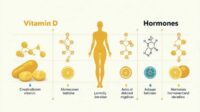
Vitamin D is often reduced to calcium absorption and bone health, but that’s only the first chapter. In reality, vitamin D behaves like a hormone, with downstream effects that ripple through reproductive physiology. Its active form—calcitriol—interacts with vitamin D receptors found in multiple tissues, including the reproductive tract. That means vitamin D isn’t merely passing through the body; it may participate in cell signaling at times that are unusually consequential.
In early pregnancy, the embryo relies on a synchronized environment. The uterus must prepare for implantation; immune responses must be modulated rather than inflamed; and cellular processes must proceed with precise timing. Vitamin D has been proposed to influence several of these pathways. Think of it less like a single light switch and more like a dimmer that can subtly tilt the room’s atmosphere.
That’s why low vitamin D can raise concern in miscarriage research. When the “setting” is less than ideal, multiple biological systems may respond in ways that affect pregnancy outcomes.

What Counts as “Low Vitamin D,” and Why It Matters
“Low” isn’t a universal label; thresholds vary across studies and clinical settings. Many investigations use blood levels of 25-hydroxyvitamin D, the most common marker for vitamin D status. Different cutoffs define deficiency versus insufficiency, and those differences can change which participants qualify as “low” and how results are interpreted.
Still, a consistent theme emerges: low vitamin D status is frequently more prevalent among people experiencing pregnancy loss than among those with ongoing pregnancies. However, prevalence is not causation. The key question is whether low vitamin D is a contributing factor, a marker of broader health circumstances, or simply an accompanying signal in a complex biological landscape.
This is where perspective matters. Instead of asking, “Did low vitamin D cause miscarriage?” it may be more illuminating to ask, “Could low vitamin D be part of the biological milieu that increases vulnerability?” That phrasing doesn’t dilute concern—it refines it.
Observational Studies: Patterns That Raise Eyebrows
Many studies in this area are observational, meaning they examine associations rather than directly manipulating vitamin D levels. Such research can’t prove that low vitamin D causes miscarriage, but it can reveal patterns worth investigating.
Typically, observational findings suggest that lower vitamin D levels are linked to higher rates of miscarriage. Some studies report that vitamin D deficiency correlates with increased odds of pregnancy loss. Others note that low levels are more common among individuals who experience recurrent miscarriage.
But observational studies have a way of blurring the edges. Vitamin D deficiency often clusters with other variables that can influence pregnancy outcomes—body mass index, sun exposure, nutrition quality, chronic inflammation, or underlying endocrine differences. In other words, vitamin D may be a messenger, not always the culprit.
Even so, when a biological pattern repeats across different populations and measurement methods, it becomes harder to dismiss as coincidence.
Recurrent Miscarriage: Where the Evidence Gets Personal
Recurrent miscarriage—often defined as multiple pregnancy losses—has its own diagnostic and emotional gravity. People pursuing answers in this category frequently look for actionable levers. Vitamin D becomes especially prominent because it’s measurable, modifiable, and connected to immune function.
Some research focusing on recurrent miscarriage suggests that lower vitamin D levels may be more prevalent. The hypothesis is that adequate vitamin D supports a more favorable immune environment at the maternal-fetal interface. This is not a poetic claim; it’s rooted in immunology. Early pregnancy requires immune tolerance—an elegant reprogramming. If vitamin D influences immune modulation, then deficiency could plausibly tilt the system toward dysregulation.
Yet, even in recurrent miscarriage studies, results aren’t uniform. Not every dataset finds a strong association, and not every subgroup behaves the same way. That variability doesn’t nullify the idea; it emphasizes that pregnancy loss is multifactorial. Vitamin D may contribute along a pathway that’s only one thread in a braided cord of biology.
Randomized Trials: The Missing Link Between Association and Causation
To move from “linked” to “caused,” researchers rely on randomized controlled trials—studies that assign participants to vitamin D supplementation versus placebo. Trials help address confounding factors by design.
However, the trial landscape for miscarriage outcomes is still evolving. Some trials evaluate supplementation during pregnancy or preconception periods and track outcomes such as miscarriage, live birth, or implantation metrics. Results across trials have varied, which is not unusual in reproductive medicine where timing, dosing, baseline deficiency, and participant selection all differ.
One reason findings can be mixed is that the body’s response to supplementation depends on starting levels. If someone is severely deficient, correcting it might matter more than in those already sufficient. Another reason is that miscarriage is a heterogeneous endpoint—different underlying etiologies can end in the same clinical outcome. A “catch-all” endpoint can mask meaningful effects in particular subgroups.
So the most accurate interpretation is neither panic nor complacency. It’s a measured stance: the evidence suggests plausibility and association, while causation remains imperfectly mapped.
How Vitamin D Might Influence Early Pregnancy
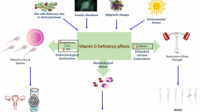
Several mechanisms have been proposed, and they create a coherent narrative. Vitamin D may influence implantation by regulating genes involved in endometrial receptivity. It may also support vascular and cellular processes important for establishing pregnancy.
Immune regulation is another major pathway. Vitamin D has been described as part of a “tuning” process for immune cells, encouraging tolerance rather than an overly aggressive inflammatory response. Early pregnancy is a negotiation between maternal and embryonic signals. In that negotiation, vitamin D may act like a mediator, encouraging a more harmonious exchange.
There’s also the indirect angle: vitamin D deficiency is associated with metabolic and inflammatory states. If deficiency correlates with insulin resistance or chronic low-grade inflammation, it could indirectly affect reproductive outcomes. This is why a low vitamin D level can feel like a single number while representing a whole constellation of physiological conditions.
Uncertainty doesn’t mean emptiness. It means the map is incomplete—and still worth studying.
Can Correcting Low Vitamin D Reduce Risk?
This is the question most people want answered. The careful answer is: vitamin D supplementation is biologically reasonable, and it may help—especially for those who are deficient. Yet evidence for a definitive miscarriage risk reduction is not uniformly conclusive across all studies.
From a practical standpoint, correcting deficiency is generally considered beneficial for overall health. Bone metabolism, immune function, and metabolic regulation are not optional extras. In pregnancy, those systems matter.
Still, miscarriage prevention cannot be reduced to one nutrient. If vitamin D helps, it likely helps as part of a broader preconception and prenatal strategy—adequate folate, balanced nutrition, appropriate management of thyroid and glucose status, attention to overall health, and individualized care.
Think of supplementation as scaffolding. It supports the structure, but it doesn’t build the entire house by itself.
Safety, Dosing, and the Risk of Overcorrection
Vitamin D is fat-soluble, meaning it can accumulate. That’s why “more” isn’t automatically “better.” Excess vitamin D can lead to hypercalcemia and related complications. While toxicity is uncommon under medical supervision, it’s a reminder that supplementation should be intentional.
In research settings, doses vary widely. Some protocols target repletion toward sufficiency, others aim for maintenance, and still others focus on correcting deficiency more aggressively. For individuals, the most prudent route is measurement and guidance: check baseline levels, consider pregnancy timing, and choose dosing with a clinician’s oversight.
This framing matters emotionally too. When people feel a sense of responsibility after loss, they may reach for extreme measures. A safer perspective is stewardship: the goal is adequacy, not excess.
When to Ask for Testing: A Curiosity-Forward Checklist
If you’re exploring vitamin D and pregnancy planning, consider asking about 25-hydroxyvitamin D testing—particularly if you have risk factors such as limited sun exposure, darker skin pigmentation, obesity, malabsorption syndromes, certain medications, or a history of deficiency.
Also consider your context. If you’ve had recurrent miscarriage, have thyroid disorders, or are managing chronic inflammatory conditions, vitamin D becomes more than trivia—it becomes a component of a broader evaluation.
Testing doesn’t guarantee answers, but it replaces guesswork with data. And data, unlike rumor, allows decisions to be calibrated rather than impulsive.
Limitations of the Evidence: Why the Story Isn’t Fully Closed
The scientific record is complicated. Studies vary in how they define deficiency, the timing of vitamin D measurement, the supplementation dose, and how miscarriage is categorized. Confounding factors—dietary patterns, lifestyle differences, underlying medical conditions—can blur causality.
Moreover, miscarriage is influenced by genetic, anatomical, hormonal, and immune factors. Vitamin D likely interacts with only some of those pathways. So even a strong association might not translate into a universal effect across all cases.
Still, the overall direction is meaningful: vitamin D deficiency is common, plausibly relevant, and potentially modifiable. The evidence may not be definitive, but it’s not negligible.
A Shift in Perspective: From Blame to a Healthful Investigation
Low vitamin D can feel like a personal indictment, but it’s better to frame it as an investigative lead. Pregnancy loss is rarely caused by one factor. Vitamin D sits among the variables that may affect implantation readiness, immune tolerance, and early developmental conditions.
If vitamin D is low, addressing it is a reasonable, health-oriented step. It doesn’t erase grief, but it can transform uncertainty into agency. And for many people, that shift—toward informed action—matters as much as the number on a lab report.
In the end, the question “Can low vitamin D cause miscarriage?” may be less important than the broader invitation: “What can be measured, corrected, and supported—so the body’s conditions become more favorable?”