Intermittent fasting can feel like a disciplined rhythm—an intentional pause that reshapes hunger cues, energy patterns, and even routine. Add vitamin D into the mix, and timing becomes more than a scheduling detail. It becomes a small lever that may influence absorption comfort, consistency, and how smoothly you can stick to your fasting window. The “best time” isn’t a single universal hour; it depends on how you fast, what form of vitamin D you take, and how your body tends to respond. Below, you’ll find a grounded, practical guide—written for real life, not idealized lab conditions.
Why Vitamin D Timing Matters During Intermittent Fasting
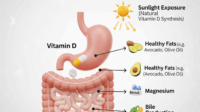
Vitamin D is fat-soluble. That matters because absorption often improves when it’s taken with dietary fat. Fasting, by design, reduces or eliminates food intake for a stretch. So the question becomes: are you taking vitamin D in an environment where your gut has access to the components that help it travel through the absorption pathway more efficiently?
There’s also the matter of tolerance. Some people experience mild nausea or stomach heaviness when taking supplements on an empty stomach. Others feel nothing at all. Intermittent fasting adds variability: your digestive system may be more sensitive at certain points of the day simply because you aren’t eating consistently.
To make timing meaningful, think in terms of three goals: absorption support, stomach comfort, and adherence. When those align, your supplement routine feels less like an interruption and more like a quiet anchor.

Fast Types: Align Vitamin D With Your Eating Window
The most practical way to determine the best time is to map your vitamin D dose onto your eating phase. Most intermittent fasting schedules include at least one eating window, even when the fast periods are strict.
16:8 fasting (common): Many people do well taking vitamin D early or mid-way through the 8-hour eating window. This often coincides with the first meal that contains some fat.
14:10 fasting: With a shorter fast and a longer eating window, timing becomes more forgiving. Taking vitamin D with a balanced meal is still preferable, but you have more flexibility if mornings are hectic.
5:2 fasting: Since there are low-calorie days, consider taking vitamin D on a typical or higher-calorie day—especially if low-calorie meals are low in fat. If you choose to take it on fasting days, pair it with the fattier components of your limited meal.
Alternate-day fasting: Consistency becomes your best friend. Many choose to take vitamin D on “eating days,” with meals that include healthy fats.
In every case, the core logic remains the same: vitamin D tends to absorb more smoothly when the digestive landscape includes dietary fats.
Best Time Options: Morning, Midday, or Evening?
Once your fasting schedule is clear, you can decide on a time-of-day strategy. There are trade-offs, and the best answer may be the one that you’ll actually repeat.
With the first meal of your eating window: This is often the most reliable approach. Early in the eating window, your gut is more ready to process nutrients. It’s also psychologically simpler: you don’t have to micromanage a later meal.
Midday dosing: Some prefer midday because nausea risk can be lower after the body has “warmed up” with food. Midday can also create a stable routine for workdays.
Evening dosing: Vitamin D can be taken with dinner without controversy for most people. If your dinner includes healthy fats, the absorption environment is favorable. However, if you notice reflux or stomach sensitivity at night, shifting to earlier in the eating window may be wiser.
Short sentences help here: Consistency beats perfection. And if your stomach sends signals—pause, reassess, and adjust the meal pairing.
Take It With Food: The Role of Dietary Fat
Vitamin D is fat-soluble, meaning it rides along with dietary lipids for more efficient absorption. During intermittent fasting, your meal composition matters. A supplement taken alongside a meal that includes fat may work better than the same dose taken after a low-fat meal.
Consider meal pairings such as:
- Eggs or avocado
- Olive oil–based dressings
- Fatty fish (salmon, sardines)
- Full-fat yogurt or cheese (if tolerated)
That doesn’t mean you need to overdo fat. It means you need enough to create the “absorption-friendly” milieu your gut expects.
Empty Stomach or Not? How to Choose Based on Your Body
Some supplement schedules emphasize taking vitamins on an empty stomach for convenience. With vitamin D during fasting, the story is more nuanced.
If you feel fine on an empty stomach: You can experiment cautiously. Take it just before breaking your fast, then assess how you feel over several days.
If you experience nausea, cramps, or a heavy stomach: Move the dose to a meal. Even a small meal with some fat can help.
What about “just after eating”? That timing can also work, especially if your first meal is not ready for digestion. The goal is to avoid the supplement being stranded in a low-nutrient digestive window.
Your body is not an afterthought. It’s the measuring instrument.
Vitamin D Forms Matter: D2 vs D3 and Supplement Style
Not all vitamin D supplements behave identically. Most people encounter vitamin D3 (cholecalciferol) as a common option, though vitamin D2 also exists. The “best time” still centers on absorption conditions, but form can influence how your routine feels.
Softgels and oil-based capsules: These often blend well with meal timing that includes fats. Taking them during your eating window is usually the easiest win.
Gummies or chewables: These can be convenient but vary in formulation. If they don’t include meaningful fat, absorption support from meals becomes even more important.
Liquid drops: Some people like them because dosing can be adjusted. If the liquid is oil-based, meal pairing may be more effective.
Whichever type you use, the same principle applies: choose a consistent anchor time during the eating period.
How to Build a Routine That Survives Real Life
The highest-performing supplement strategy is often the simplest: attach vitamin D to an existing habit. Humans are pattern-making machines. If vitamin D is linked to something you already do reliably, it becomes almost automatic.
Here are practical routines:
- Take vitamin D at the start of your eating window, right with your first meal.
- Keep it next to your coffee or breakfast essentials so it happens even on busy mornings.
- Use a weekly reminder if you take a larger dose less frequently.
Short, durable routines reduce “supplement drift”—the gradual slide from consistency to forgetfulness. Fasting schedules are already demanding. Your vitamin D should not become another point of mental load.
Common Mistakes During Intermittent Fasting
Even thoughtful routines can stumble. Watch for these pitfalls:
Taking vitamin D during the fast by default: If you do this, consider whether absorption and comfort are being compromised. The fix is usually meal timing.
Ignoring meal composition: A supplement with no dietary fat may feel less effective for some people.
Switching times often: Frequent changes can make it harder to judge whether the supplement is agreeing with you.
Overcomplicating the schedule: A “perfect” dosing plan that you rarely follow provides fewer benefits than a consistent plan you can maintain.
Clarity beats complexity. The stomach and the calendar both prefer coherence.
What to Expect: Feedback Signals and Timeline
Vitamin D is not a “notice tomorrow” nutrient. Its effects are often gradual, tied to overall status and baseline levels. During intermittent fasting, your body may also be adjusting metabolically, which can complicate self-assessment.
However, you can still look for subtle signals:
- Improved energy consistency (not explosive energy, but less fluctuation)
- Comfort after meals when timing is optimized
- Fewer stomach complaints when vitamin D is paired appropriately
For concrete evaluation, labs are the clearest feedback tool. If you’re working with a clinician, regular testing can guide whether dose timing and dosage remain appropriate.
Who Should Be Extra Careful With Timing
Certain situations call for extra caution. If you have conditions affecting fat absorption (such as certain gastrointestinal disorders), timing and form may require more deliberate planning. If you’re taking medications that interact with vitamin D metabolism, your regimen should be coordinated with healthcare guidance.
Also consider your personal response. If you’re prone to kidney stones, have hypercalcemia risk, or use high-dose vitamin D strategies, timing and dosage should be supervised. In these cases, the “best time” is not merely behavioral—it becomes therapeutic.
Practical Recommendations: A Simple “Best Time” Summary
If you want a straightforward answer that fits most intermittent fasting routines, it’s this: take vitamin D during your eating window, ideally with your first meal that includes some dietary fat. For many people, that reduces stomach sensitivity and supports absorption conditions.
If you prefer a time-of-day rule: choose the meal you reliably eat, then pair vitamin D with it. One stable routine usually outperforms multiple experimental tweaks.
Start there. Track comfort. Adjust only if your body requests a change. In the disciplined world of intermittent fasting, the most effective strategy is the one that remains intact.