So you’ve heard that vitamin D is “the sunshine vitamin,” and now you’re staring at a high-dose bottle like it’s a magic wand. But here’s the playful challenge: what if the dose that feels safe is exactly the dose that becomes problematic? High-dose vitamin D supplements can be lifesaving in the right medical scenarios—yet they can also turn into an expensive gamble when used without a clear indication. Let’s walk through the moments when high-dose vitamin D is truly justified, and the situations where it’s less like medicine and more like roulette.
Why “High-Dose” Isn’t a Single Thing
“High-dose” vitamin D can mean different things depending on the context. In some clinics, it refers to repletion strategies for deficiency—often delivered as larger, time-limited doses. In other settings, it can imply long-term maintenance at higher-than-standard levels. The distinction matters because the body’s response is not linear; it’s more like a thermostat with a temper than a simple on/off switch.
Vitamin D’s goal is to normalize calcium-handling and support bone metabolism, immune signaling, and muscle function. But when doses exceed what the body can safely metabolize, circulating vitamin D metabolites can build up. This sets the stage for hypercalcemia, which can be sneaky: symptoms may start as fatigue or nausea and escalate into serious complications like kidney injury. Therefore, “justified” isn’t about ambition—it’s about medical necessity plus monitoring.
Severe Vitamin D Deficiency: The Classic Reason
If vitamin D levels are markedly low, the body may not have enough substrate to maintain normal calcium absorption. In such cases, clinicians often choose a high-dose regimen to replenish stores more efficiently. Think of it as refueling a low tank, not as continuously revving an engine.
Typically, high-dose treatment is considered when blood tests show deficiency and when patients have risk factors for malabsorption or low sun exposure. The repletion phase may use weekly or daily high-dose strategies, followed by a maintenance plan. Short, targeted intensity is often safer than indefinite high dosing.
What to watch: after repletion, labs usually guide dose reduction. Without that step, vitamin D can drift from “correction” into “excess.”

Malabsorption Syndromes: When the Gut Becomes the Bottleneck
Some medical conditions blunt the absorption of fat-soluble nutrients like vitamin D. When the gut is the limiting factor, standard low-dose supplementation can be disappointingly ineffective. In these scenarios, high-dose vitamin D may be justified because the body can’t reliably extract what’s already offered.
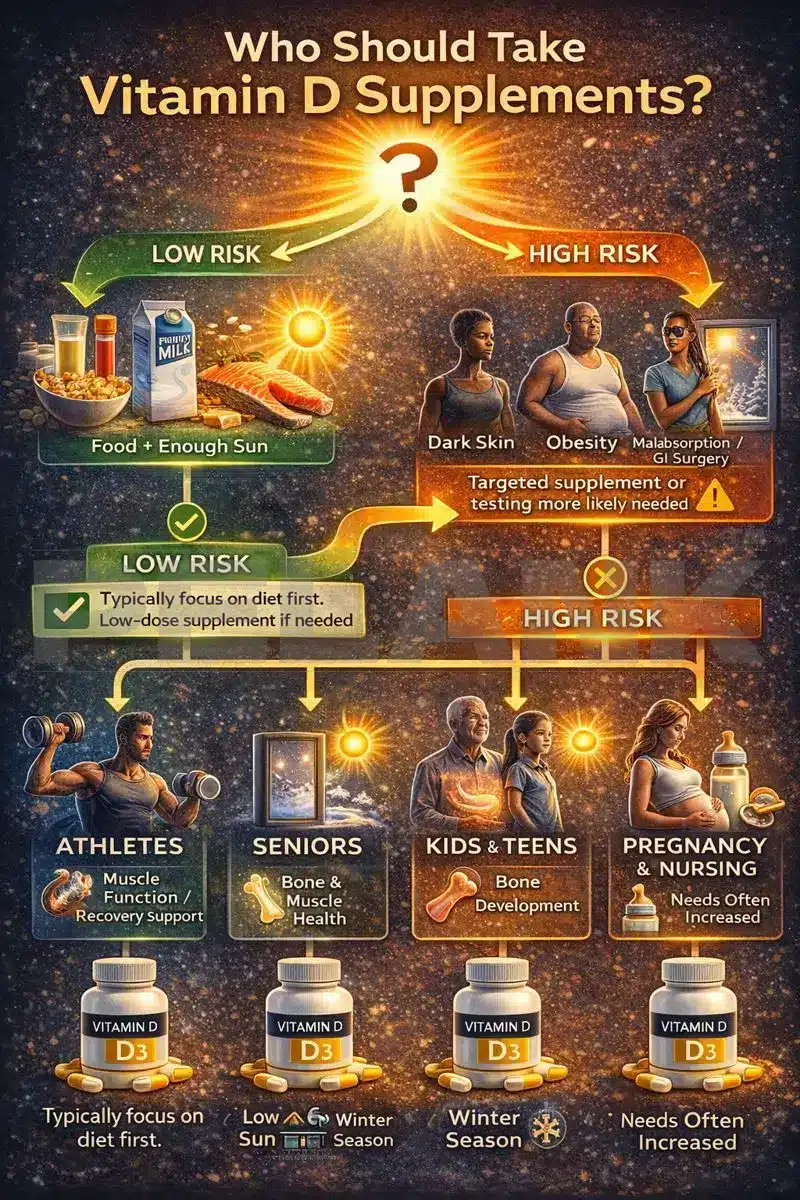
Examples include celiac disease (especially if untreated), inflammatory bowel disease with significant malabsorption, pancreatic insufficiency, and certain bile acid disorders. People with a history of bariatric surgery may also fall into this group—an anatomy shift can substantially reduce how much vitamin D is absorbed.
High-dose treatment here isn’t “more is better” in a vacuum. It’s “more is needed to overcome impaired uptake,” and it should be paired with monitoring of calcium, phosphorus, and vitamin D metabolites. Otherwise, treatment can become a misdirected attempt to correct what isn’t fully being absorbed.
Rickets and Osteomalacia: When Bone Symptoms Demand Action
Rickets in children and osteomalacia in adults are bone diseases tied to inadequate mineralization. When vitamin D deficiency is the driver, high-dose supplementation may be not just justified but urgently necessary. The bones can’t wait politely for gradual correction.
In these conditions, clinicians often use higher doses to restore mineralization capacity and relieve pain, muscle weakness, and skeletal deformity risk. The timeline matters: delayed treatment can prolong suffering and increase long-term orthopedic complications.
Yet even in these dramatic scenarios, safety still reigns. High-dose vitamin D is typically coordinated with calcium management, follow-up labs, and sometimes additional evaluation for other contributors to bone disease.
Chronic Kidney Disease and Specific Disorders of Vitamin D Metabolism
Kidneys play a crucial role in activating vitamin D. When kidney function is reduced, the conversion steps can fail, and vitamin D physiology becomes more complicated than a simple supplementation story. Some patients may require active vitamin D analogs rather than traditional high-dose cholecalciferol.
In chronic kidney disease, the “justification” is often less about raising vitamin D levels broadly and more about correcting dysfunctional pathways. Clinicians may prescribe specific formulations to manage calcium-phosphate balance and bone health. This is a domain where dosing without laboratory guidance can be hazardous, because calcium regulation becomes delicate.
The playful warning still applies: if the metabolic machinery is impaired, blindly pouring in extra vitamin D is like trying to power a generator with the wrong fuel.
Primary Hyperparathyroidism and Calcium-Related Conditions
Some endocrine disorders intertwine vitamin D status with parathyroid hormone dynamics. Primary hyperparathyroidism, for instance, can involve complex feedback loops affecting calcium and vitamin D. In certain cases, vitamin D deficiency is simultaneously present and contributes to elevated parathyroid hormone secretion.
When clinicians identify vitamin D deficiency in the context of calcium disorder management, high-dose replacement may be justified—but it must be done carefully. The aim is to normalize vitamin D to stabilize hormone signaling, without pushing calcium levels too high.
Here, monitoring isn’t optional. Repletion requires a controlled environment with periodic measurements. The body’s endocrine circuitry is not a simple staircase; it’s a circuit board—small changes can ripple.
Pregnancy and Lactation: When Risk Factors Elevate the Stakes
Pregnancy and breastfeeding increase demand for vitamin D due to fetal skeletal development and maternal-neonatal transfer. For people with low baseline levels—especially with limited sun exposure, darker skin pigmentation in high-latitude settings, malabsorption risks, or dietary insufficiency—higher dosing may be recommended to achieve adequate maternal levels.
However, pregnancy is not a place for casual experimentation. The threshold between correction and excess is narrower than people often assume. Clinicians typically align treatment with lab values and trimester considerations, then shift toward safer maintenance once sufficiency is achieved.
One question worth asking: Are we treating a confirmed deficiency, or just guessing? The answer changes everything.
Autoimmune and Inflammatory Conditions: Promising, But Not Always Straightforward
Vitamin D has immunomodulatory effects, which fuels interest in using higher doses for autoimmune and inflammatory diseases. The challenge is that “biological plausibility” doesn’t automatically equal clinical necessity. Many studies show associations, but translating that into individualized high-dose therapy requires careful interpretation.
In practice, high-dose supplementation may be justified when a patient is actually deficient and when deficiency correction is expected to support broader health outcomes. But using high doses purely as an “immune strategy” without confirmed deficiency or monitoring can become an overreach.
Inflammatory conditions can be complex; symptoms fluctuate. The safest approach usually starts with evidence: measure levels, identify deficiency, then treat it—rather than treating the assumption.
How Clinicians Make High-Dose Decisions (and Why Monitoring Wins)
The justification process often follows a clear pattern: confirm deficiency or related metabolic dysfunction, assess risk factors, consider comorbidities, and then choose a dosing strategy that is intense enough to correct but not so persistent that it escalates risk.
Monitoring typically includes blood tests such as 25-hydroxyvitamin D (the main storage marker), calcium (to detect hypercalcemia early), and sometimes phosphorus and parathyroid hormone depending on the scenario. Clinicians also review symptoms—headaches, constipation, thirst, frequent urination, confusion—because these can be signals of calcium imbalance.
Monitoring is not bureaucracy. It’s guardrails on a steep road.
When High-Dose Supplementation Is Not Justified
Now for the uncomfortable truth: high-dose vitamin D is often unjustified when people self-treat without lab confirmation, when dosing is based on trends rather than medical indication, or when long-term high dosing continues after levels normalize.
It’s also less justified when someone’s medical profile suggests a different problem than “low vitamin D,” such as kidney disorders requiring specialized management, unexplained hypercalcemia, or symptoms that could arise from other deficiencies or endocrine causes. In these cases, vitamin D might not be the main actor—it might be a miscast understudy.
If you’re thinking of escalating the dose, the best first move is asking: what diagnosis is being treated? Medicine works best when the target is real.
Practical Takeaway: Dose Like a Clinician, Not Like a Consumer
High-dose vitamin D can be justified when there is confirmed deficiency, malabsorption, bone mineralization disorders, specific metabolic conditions, or pregnancy/lactation risk requiring correction. The common denominator is not the number on the label; it’s medical rationale plus follow-up.
If you remember one thing, let it be this: vitamin D is powerful enough to help—and precise enough to harm when used blindly. The sunshine vitamin shouldn’t be a leap of faith. It should be a guided intervention.