On the outside, athletic life looks like a parade of sprint splits, immaculate footwork, and polished recovery routines. On the inside, however, immunity is doing its own quiet labor—detecting intruders, coordinating inflammation, and keeping tissues resilient while training stress accumulates. One nutrient shows up repeatedly in that backstage work: vitamin D. For many athletes, it’s not just a “nice-to-have.” It can be a linchpin for immune health, especially when training loads rise, sunlight exposure is inconsistent, and the body is constantly recalibrating under physical strain.
Vitamin D and the Immune System: More Than Bone Support
Vitamin D is often introduced as a bone-building ally, but its influence extends far beyond skeletal strength. Immune cells—such as T cells, B cells, and macrophages—have vitamin D receptors. That means vitamin D can help regulate immune response intensity. In plain terms: it supports appropriate immune activation without pushing the system into unnecessary turbulence.
During hard training, the immune system can shift toward a state of higher demand. Microtrauma, metabolic stress, and sleep disruption can all contribute to transient immune suppression. Vitamin D plays a role in maintaining immune equilibrium, helping the body respond to pathogens with greater precision. It’s not a shield that prevents every illness. It’s more like a conductor that helps the orchestra play on time.
Why Athletes Are at Higher Risk of Low Vitamin D
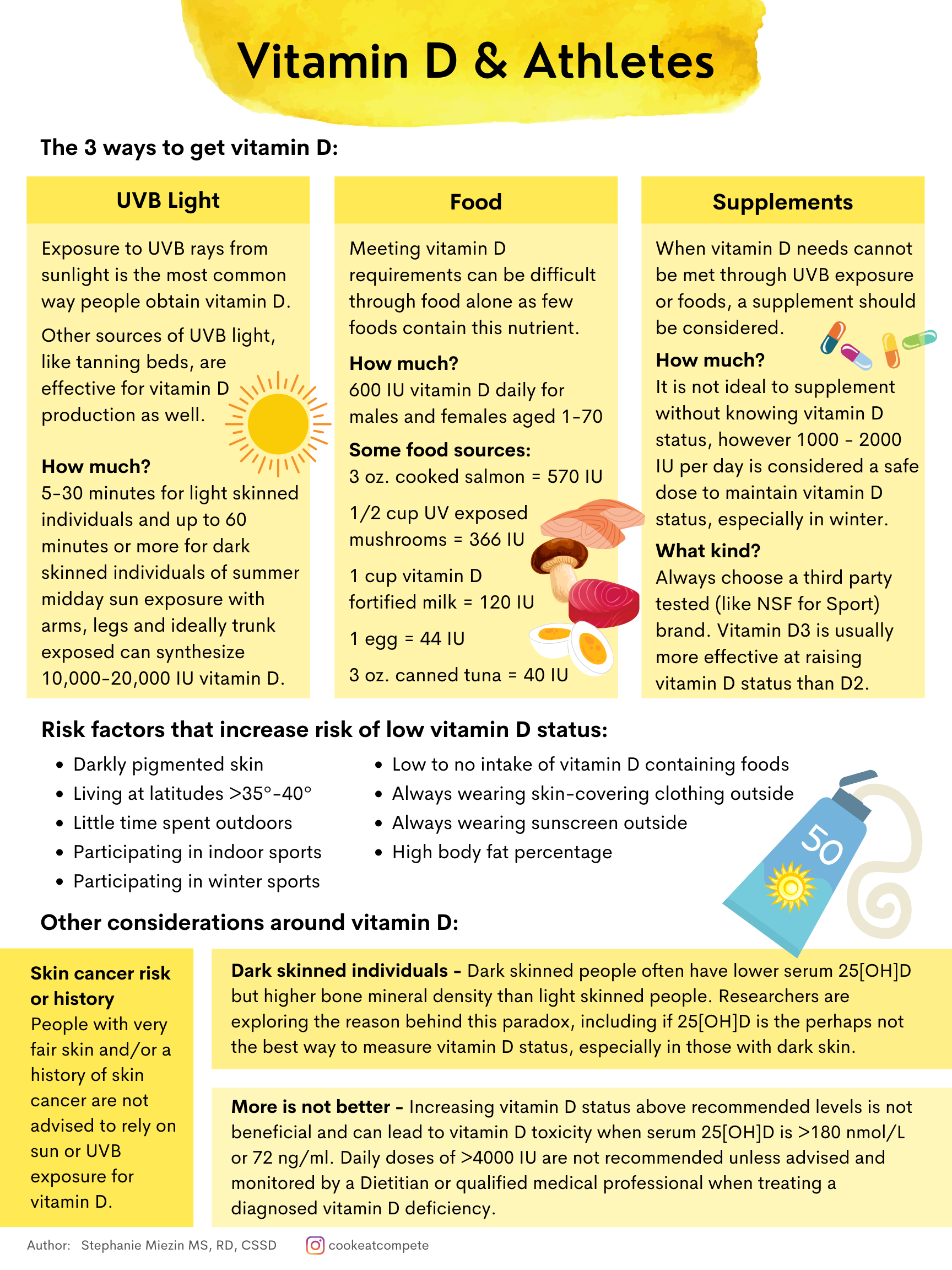
Many athletes assume they’re “covered” because they spend time outdoors. Yet vitamin D status depends on several variables: latitude, season, skin pigmentation, clothing coverage, sunscreen usage, and how much time is actually spent in direct sunlight. Two athletes can train in the same sport and live in the same city, yet have radically different sun exposure patterns.
Indoor training is another common culprit. Stadiums, arenas, gyms, and cold-weather routines can drastically reduce ultraviolet B (UVB) exposure—the key trigger for vitamin D synthesis in the skin. Even athletes who train outdoors may not get sufficient UVB exposure if practice happens early in the morning, late in the afternoon, or behind glass.
Then there’s the matter of body composition and metabolism. Some vitamin D can be sequestered in adipose tissue, leaving less available for circulation. While this isn’t a reason to panic, it’s a reason to treat vitamin D like an intentional input rather than a passive byproduct.
Winter Training, Sunlight Gaps, and Immune Vulnerability
Seasonality can feel like an invisible coach—one that sometimes sabotages preparation. During winter months, UVB availability drops, and daylight hours shrink. The athlete’s immune system may already be stressed from increased indoor sessions, heavier workloads, or travel schedules. Add a seasonal vitamin D reduction, and the combination can become more consequential.
That’s why off-season and pre-season periods deserve special attention. The body is adapting, and immune defenses are part of that adaptation. A low vitamin D reservoir may correlate with more frequent upper respiratory infections in some individuals, and it can also influence how inflammatory responses unfold after training. Long stretches of winter training can make a small deficit feel like a recurring tax on performance.
The Training Stress Connection: Recovery, Inflammation, and Defense
Immune health isn’t isolated from athletic physiology. It’s entwined with recovery. When training intensity spikes, the body produces reactive oxygen species and inflammatory signaling molecules as part of normal adaptation. However, when the balance tips—too much load, too little recovery—the immune system can become overworked.
Vitamin D supports immune modulation, which may help the body avoid extremes: not too little defense, not too much inflammatory noise. Think of it as helping the immune system avoid “overfiring.” That matters because chronic inflammation can sap energy, disrupt sleep quality, and leave athletes more susceptible to illness.
Recovery is not merely the absence of soreness. It’s the restoration of regulation. Vitamin D can be one ingredient that helps that regulatory circuitry run smoothly.
Supplementation Options: How Athletes Commonly Approach Vitamin D
When diet and sunlight are insufficient, supplementation often becomes the practical strategy. Athletes typically consider two major paths: daily dosing or less frequent bolus dosing. The “best” approach depends on baseline vitamin D levels, body characteristics, consistency habits, and medical guidance.
Vitamin D comes in two primary forms: D2 (ergocalciferol) and D3 (cholecalciferol). Many people choose D3 because it’s widely used for raising and maintaining circulating vitamin D. Still, the right choice is ultimately individualized—especially for athletes with documented deficiency.
Consistency matters. The immune system doesn’t respond to sporadic inputs the way motivation does. It responds to stable biochemical conditions. For that reason, an athlete’s routine—traveler vs. homebody, indoor vs. outdoor schedule—should influence dosing structure.
Testing and Timing: Knowing Your Baseline
Vitamin D status varies dramatically between athletes. That’s why testing is often the smartest starting point. A blood test (commonly measuring 25-hydroxyvitamin D) provides a clearer snapshot than guesswork. Once baseline is known, an athlete can adjust intake with more precision.
Timing is also important. Vitamin D doesn’t act like caffeine. It’s not an immediate “pre-game” boost. Instead, it supports longer-term immune regulation. Athletes may benefit from planning supplementation around training blocks, especially when seasonal sunlight drops or when competition schedules intensify.
Short-term illness prevention strategies rarely outperform long-term nutritional fundamentals. Vitamin D belongs to the fundamentals category.
Food Sources That Fit an Athlete’s Diet
Dietary vitamin D can complement sunlight and supplementation. Certain fatty fish—like salmon, sardines, and mackerel—are well-known sources. Egg yolks can contribute as well, particularly when diets include more whole eggs rather than only whites.
Some foods are fortified, including certain dairy products and plant-based alternatives. Fortified cereals and juices may also contribute. Athletes who keep a structured meal plan can often incorporate these options without disrupting performance nutrition.
Still, food alone may not cover the gap for many athletes, especially during winter or indoor-heavy seasons. The best plan often combines food, sunlight when possible, and supplementation when needed.
Who Should Be Extra Careful: Injury, Illness, and Special Situations
Not all athletes approach vitamin D the same way. Those with a history of deficiency, those with limited sun exposure, and athletes who frequently travel across latitudes may require a more deliberate strategy. Individuals with malabsorption conditions—whether gastrointestinal or medication-related—can struggle to absorb fat-soluble vitamins.
Some athletes also train through recurrent illness episodes. While no single nutrient is a cure-all, repeated bouts of fatigue and infection can justify a check-in with a clinician and a structured nutritional review. Vitamin D can become part of the diagnostic conversation, not the entire answer.
One more note: megadosing without guidance can be harmful. Vitamin D is fat-soluble, meaning excess can accumulate. A thoughtful plan prioritizes accuracy, not bravado.
What Readers Can Expect: Content Types That Make the Topic Actionable
Understanding vitamin D for immune health works best when it’s presented in multiple formats. You may encounter athlete-centered guides explaining how to integrate supplementation into training schedules. You may also see checklists for seasonal planning, including indoor/outdoor session audits and travel-based sun exposure estimates.
Some content pieces focus on “what it does”—the immunology narrative. Others emphasize “what to do”—testing recommendations, dosing frameworks, and food pairing ideas. You might even find practical meal concepts designed for gym schedules: quick breakfasts with vitamin D-rich ingredients, post-training options that support recovery, and weekly meal templates that reduce decision fatigue.
For a more reflective angle, narrative-style storytelling can connect immune health to the athlete experience: the week you feel run down, the strange delay in recovery, the way early infections ripple into training consistency.

Closing the Loop: A Strong Immune Foundation for Strong Training
Athletes often chase performance metrics—pace, power, perceived exertion, and endurance markers. Immune health rarely gets the same highlight reel, yet it can quietly determine whether those metrics keep improving or abruptly wobble. Vitamin D supports the immune system’s regulation, especially when training stress climbs and sunlight exposure falters.
When vitamin D is optimized, athletes are not guaranteed perfect health. But they may experience better immune resilience, improved recovery dynamics, and fewer disruptions that derail training continuity. Treat vitamin D as part of a cohesive recovery strategy—alongside sleep, nutrition quality, hydration, and smart training periodization.
In the end, the most powerful advantage is consistency. And immune health, backed by adequate vitamin D, helps keep that consistency intact.