Your brain is a busy city at night—quiet from the outside, thunderous within. Neurons fire like neon signs, synapses connect like street grids, and neurotransmitters flow as if they were rivers carrying messages. Vitamin D, though less talked about than omega-3s or caffeine, behaves like a maintenance crew that keeps the city’s power systems stable. And within that “crew,” Vitamin D3 and Vitamin D2 may not be identical foremen. The question many people now ask is quietly urgent: which one supports cognitive function and brain health more reliably—D3 or D2?
The Brain’s Hidden Chemistry: Why Vitamin D Matters
Vitamin D is often framed as a bone-supporting nutrient, but in reality it is closer to a molecular conductor. It interacts with receptors found throughout the body, including regions relevant to cognition. Think of vitamin D as a backstage stagehand: it doesn’t perform the play, but without it, the actors can’t move with confidence. In the brain, vitamin D has been associated with processes such as neuroprotection, regulation of inflammation, and modulation of neurotransmission.
When vitamin D status is low, the city metaphor becomes less romantic and more precarious. Inflammation can feel like smog creeping into narrow alleys; oxidative stress can resemble rust spreading across key infrastructure. Proper vitamin D signaling may help keep cellular “machinery” from misfiring—especially in tissues that depend on delicate balance rather than brute force.
D3 vs D2: Two Forms, Different Origins, Distinct Behavior
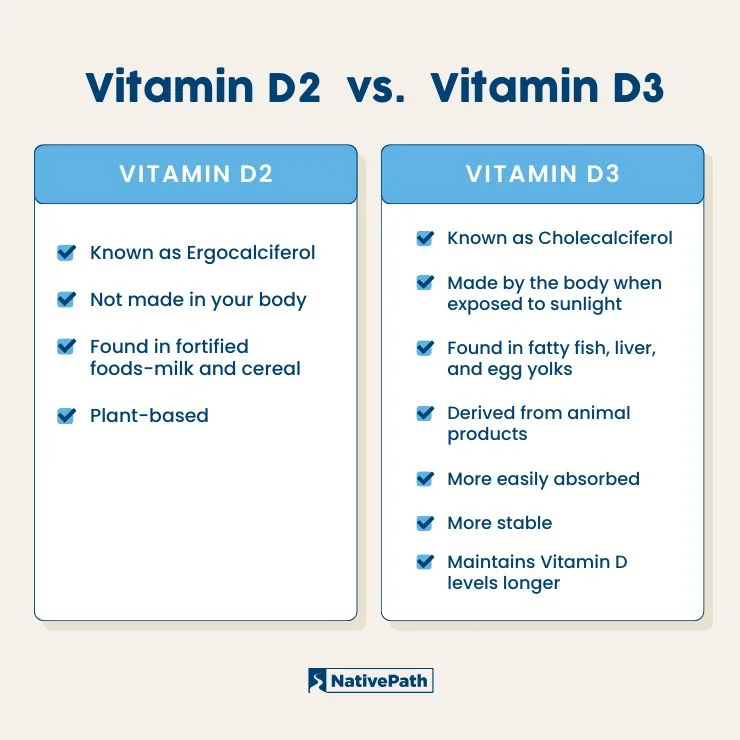
Vitamin D comes in forms that share a core framework but differ in how the body processes them. Vitamin D3 (cholecalciferol) is naturally produced in the skin after sunlight exposure. Vitamin D2 (ergocalciferol) is typically derived from plant or fungal sources. Despite both being “vitamin D,” the body’s conversion pathways and resulting blood metabolites can differ.
Imagine D3 as a suit tailored for the brain’s specific thermostat. D2 is also a suit, but one stitched to a slightly different pattern. Both can keep you warm, but one may fit more precisely—especially over time and across fluctuating metabolic conditions.
Cognitive Function: The Case for a Stable Vitamin D Signal
Cognitive function is not a single dial; it’s an orchestra. Memory, processing speed, attention, and executive function rely on synchronized biological rhythms. Vitamin D likely participates in this coordination by influencing neural signaling and supporting the brain’s resilience under stress.
While the research landscape continues to evolve, a practical takeaway remains compelling: brain health favors consistency. If one form of vitamin D better maintains circulating levels and supports sustained signaling, that form may offer an advantage for cognitive goals. Stability matters because neurons are not impressed by sudden bursts—they prefer steady operating conditions.
Neuroinflammation and Oxidative Stress: Calming the Storm, Not Just Lighting the Lighthouse
Inflammation in the brain can be both complicated and consequential. It’s not always a villain; it can be part of the immune conversation. But chronic, dysregulated inflammation can act like a constant alarm system. Oxidative stress adds another layer—like corrosive particles in the air that slowly degrade infrastructure.
Vitamin D’s role in modulating inflammatory pathways and oxidative stress responses positions it as a potential “risk manager” for cognitive decline. In metaphor terms, it helps dampen the storm rather than merely announcing that weather has changed. Between D2 and D3, the unique appeal often centers on whether the body sustains a more favorable vitamin D profile—because a calmer biochemical environment can make the mind feel sharper and more resilient.
Blood Levels and Longevity: How Maintenance Can Matter More Than a One-Time Boost
Many people think of supplementation as a spotlight: take it, see immediate effects. But brain health often resembles landscaping—small adjustments over time create a durable ecosystem. Therefore, how vitamin D forms influence circulating levels and longevity becomes a meaningful consideration.
Some forms of vitamin D may elevate blood markers differently and may be supported by a longer-lasting presence. In plain language: the brain may benefit from a more durable supply of the signaling molecules it recognizes. D3 is frequently favored in discussions about maintaining steady status, though individual response can vary.
Activation and Signaling: The “Key” and the “Lock” Perspective
Vitamin D doesn’t simply arrive and instantly command the brain. It undergoes transformations—like a key being shaped by the right workshop before it can fit the lock. Once activated, vitamin D can influence gene expression and cellular behavior through vitamin D receptors.
If D3 tends to integrate more seamlessly into the system’s “key-and-lock” workflow for many people, that integration becomes a subtle advantage for cognitive support. Even small differences in bioavailability and metabolite patterns can tilt the balance when the goal is brain health, where timing and continuity can matter.
Sunlight Imitation vs Dietary Strategy: Choosing Based on Real Life
Sunlight is the original source of D3, which makes D3 feel intuitive for anyone who thinks in terms of natural biology. Yet modern life often includes indoor time, sunscreen habits, geographic limitations, and seasonal changes. That reality pushes vitamin D into the realm of strategy rather than coincidence.
D2 can still play a role—particularly for those who prefer plant-derived options or have dietary constraints. The most intriguing angle is personalization: what fits your lifestyle, your preferences, and your body’s response pattern? A wise approach treats vitamin D as a targeted nutrient, not a generic “more is better” supplement.

Who Might Benefit Most from D3 for Cognitive Goals?
Certain life contexts can increase the importance of vitamin D sufficiency. People who experience limited sun exposure, those with darker skin pigmentation (which reduces cutaneous vitamin D synthesis), older adults with changes in vitamin D metabolism, and individuals with malabsorption risk often face higher odds of inadequate vitamin D status.
For cognitive ambitions—supporting focus, clarity, and mental stamina—starting with a form that helps maintain healthier levels may be especially appealing. D3’s popularity often comes from a practical viewpoint: it aligns with sunlight biology and is frequently associated with more consistent vitamin D status.
When D2 May Still Be the Right Fit
D2 is not a villain in this story. It can be valuable, particularly for those who prefer vegan-friendly sources. It can also be a reasonable option when dosing schedules, cost, or personal preference make it the better choice.
Yet the “unique appeal” of any supplement depends on outcomes, not only identity. If D2 achieves sufficient vitamin D status reliably for you, then it may serve your cognitive-support mission effectively. The brain cares about the end result: stable signaling, reduced inflammatory burden, and a biochemical environment that supports neural performance.
Dosing Intelligence: Consistency, Monitoring, and Individual Variation
Vitamin D dosing is not one-size-fits-all. Body size, baseline levels, dietary intake, sun exposure, and health conditions can all change the response curve. Because of this, monitoring can act like a compass. Rather than guessing, many people choose periodic blood testing to understand whether their vitamin D strategy is producing the intended effect.
Dosing intelligence means respecting both physiology and the timeline of change. Your brain doesn’t recalibrate overnight. It adjusts through gradual normalization of cellular processes—like an undercurrent smoothing rough waves.
Brain-Forward Lifestyle Synergy: Vitamin D Works Best with the Whole Plan
Vitamin D is not a solitary hero. Cognitive resilience is built with an ensemble cast: sleep quality, physical activity, adequate protein, hydration, vascular health, mental stimulation, and nutrient-dense meals. Think of vitamin D as the rhythmic drummer—supporting the tempo—while other habits contribute melodies and harmony.
If vitamin D is low, brain support efforts may feel like paddling against a current. If vitamin D status is adequate, other interventions can work more smoothly, because the underlying environment is less hostile.
The Takeaway: Choosing the Form That Keeps the Mind’s City Running
Vitamin D3 and D2 both belong to the same biochemical family, yet they may differ in how reliably they support long-term vitamin D signaling—an element that can matter for cognitive function and brain health. D3 often carries a unique appeal because it mirrors sunlight-derived biology and is frequently associated with more consistent maintenance of vitamin D status. D2 can still be a valid choice for many people, particularly where plant-based preferences or practical considerations apply.
In the end, the brain’s needs are elegantly simple: stability, protection, and a reduction in biochemical “noise.” Whether you choose D3 or D2, the most brain-friendly decision is the one that helps you maintain sufficient vitamin D levels over time—turning the city back into a smoothly humming metropolis instead of a flickering one.