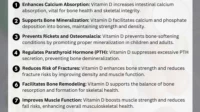
Every older adult seems to know the sensation: the slow unspooling of strength, the subtle reluctance of stairs, the way a once-reliable grip feels suddenly negotiable. Sarcopenia—age-related muscle loss—often appears as a common, almost inevitable companion of aging. Yet beneath this familiarity lies a more intriguing question: why does muscle decline so unevenly, and why do certain biological signals look like they might be “tuning forks” for this process? Among the most compelling candidates is vitamin D, a nutrient that operates more like a hormone-leaning regulator than a simple vitamin. Its influence touches calcium handling, inflammation, neuromuscular coordination, and possibly the cellular choreography of muscle repair. The fascination is not merely nutritional. It is mechanistic, and in many cases, it feels personal—because the consequence is functional independence.
Why sarcopenia feels inevitable—and why it isn’t uniform
Sarcopenia is not a single event but a gradual attrition. Muscle mass drops, yes, but the more disruptive shift is usually in muscle quality: contractile proteins, fiber composition, and the efficiency of motor unit recruitment. The result can be a paradoxical scene—someone may still “look” strong while their performance tells a different story.
This unevenness hints at deeper reasons. Aging alters endocrine signaling, increases oxidative stress, and changes how tissues respond to anabolic stimuli. Some people experience faster declines, not because aging is different, but because the biological buffering systems are. Vitamin D deficiency is one such buffering system candidate. When low vitamin D becomes persistent, the body’s readiness for muscle maintenance may quietly erode.
Vitamin D: more than bone chemistry
Vitamin D is often introduced through its role in skeletal health, and that connection is real. But muscle is not merely a passenger in the vitamin D story. Vitamin D receptors are present in various tissues, including skeletal muscle, and vitamin D can influence gene expression related to growth, differentiation, and mitochondrial performance.
Think of vitamin D as a backstage director. It doesn’t necessarily perform the choreography, but it shapes what the dancers are allowed to do. If vitamin D signaling is blunted, muscle cells may become less responsive to repair cues. The decline can then accelerate—subtle at first, then unmistakable.
Low vitamin D status: a common pattern in older adults
It’s easy to overlook vitamin D because sunlight exposure is uneven and dietary sources may be limited. Older adults often spend more time indoors, experience reduced skin synthesis, and may have changes in absorption efficiency. Additionally, chronic illnesses and certain medications can further complicate vitamin D metabolism.
The observation that many older adults have insufficient vitamin D creates an uncomfortable possibility: sarcopenia may sometimes be worsened by an avoidable nutritional deficit. This does not mean every case of sarcopenia is driven by vitamin D. But when a large fraction of the population shares a low-status biomarker, the association becomes clinically meaningful and biologically plausible.
Calcium, excitation-contraction coupling, and the “timing” of muscle function
Muscle contraction depends on finely timed electrical and chemical signals. Calcium is central to this process, and vitamin D supports calcium homeostasis. If calcium availability or handling becomes less optimal, the efficiency of excitation-contraction coupling can decline.
In practical terms, a muscle may not just be “weaker.” It may also be slower to generate force, more fatigued, and less coordinated during repeated efforts. The body often compensates initially, recruiting additional motor units. Over time, compensation can become costly, and performance may drop.
Inflammation and oxidative stress: the hidden accelerants
Aging frequently comes with a chronic, low-grade inflammatory milieu. This inflammatory drift—sometimes described as “inflammaging”—does not merely accompany aging. It can actively interfere with muscle remodeling. Cytokines may impair protein synthesis and promote muscle protein breakdown.
Vitamin D is implicated in immunomodulation. When vitamin D is sufficient, inflammatory signaling may be better balanced. When it is deficient, the inflammatory background can rise like an uninvited smoke plume, thickening the conditions under which muscle must regenerate. Oxidative stress—another aging partner—can also harm muscle fibers and mitochondrial function. In this context, vitamin D’s regulatory role becomes more than supportive; it may be protective.
Neuromuscular performance: strength is not only muscle mass
Sarcopenia is frequently described in terms of muscle quantity, but functional decline depends on neuromuscular performance. Coordination, reaction time, and motor unit firing quality matter. Vitamin D may influence neuromuscular health through effects on nerve-muscle signaling and muscle cell metabolism.
This helps explain why some individuals with marginal muscle loss still experience disproportionate weakness. Their limitation may be partly neuromuscular. Vitamin D’s involvement offers a way to connect the dots between biochemical deficiency and the lived experience of reduced control.
Muscle protein synthesis, regeneration, and the regenerative niche
Muscle maintenance is a continuous negotiation between synthesis and breakdown. Repair requires satellite cell activation, proper differentiation, and a microenvironment that supports regeneration. Aging alters this niche, making recovery slower and less robust.
Vitamin D may intersect with these processes by modulating pathways that govern differentiation and cellular growth. While vitamin D alone cannot reverse all age-related changes, it may help create a more permissive environment for repair. When the environment is permissive, muscle has a better chance to rebuild after daily stressors—walking, lifting, balance challenges, and even the quiet strain of posture.
Chronic kidney disease, metabolic constraints, and why associations can deepen
Vitamin D deficiency does not occur in a vacuum. Chronic kidney disease, metabolic syndrome, and other chronic conditions can shift vitamin D handling and intensify musculoskeletal risk. In kidney disease, conversion pathways and vitamin D activation can become impaired, while inflammation and endocrine dysregulation often intensify.
In such scenarios, sarcopenia may become more severe or more resistant to recovery. This layered relationship is fascinating because it suggests that vitamin D status might be both a marker and a mediator. Sometimes deficiency reflects systemic strain; sometimes it actively contributes to the muscle trajectory.
How researchers visualize the relationship: a proposed causal map
It is common to see conceptual models that place vitamin D status, muscle integrity, and disease pathways into a single explanatory diagram. These models often imply a chain of influence: reduced vitamin D leads to impaired regulation of inflammation, calcium handling, and muscle cell function, which then increases vulnerability to muscle loss. The relationship may become more pronounced when comorbidities are present.
Even when diagrams remain “proposed,” they provide a useful cognitive scaffold. They remind clinicians and investigators to look beyond muscle alone and to consider the upstream regulators that set the tempo of aging physiology.
What supplementation can and cannot do
Vitamin D supplementation is often discussed as a straightforward solution, but biology resists simplicity. Correcting deficiency is a reasonable first step when levels are low, and it may support muscle function indirectly through improved calcium homeostasis and better inflammatory regulation. Yet sarcopenia is multifactorial: protein intake, physical activity, sleep quality, medication effects, chronic disease burden, and hormonal changes all compete in the physiological ledger.
Supplementation may be most beneficial when deficiency is present and when interventions are layered. Think of vitamin D as one component of a larger rebuilding plan. If the plan lacks resistance exercise, adequate protein, and metabolic support, vitamin D’s contribution may be limited.
Measuring vitamin D status: beyond a single number
Vitamin D assessment often revolves around circulating 25-hydroxyvitamin D. Interpretation should consider trends over time, symptoms, dietary intake, sun exposure habits, and comorbidities that affect metabolism. A single measurement can be informative, but context gives it meaning.
Just as muscle assessment cannot be reduced to scale weight, vitamin D interpretation should not ignore the narrative of the person. Functional outcomes—walking speed, grip strength, chair-rise ability, balance—help reveal whether biochemical improvement translates into lived strength.
Designing a muscle-protective routine: combining nutrients and motion
The most persuasive approach to sarcopenia is integration. Resistance exercise stimulates muscle protein synthesis and neural recruitment. Protein supports the raw materials for rebuilding. Vitamin D may help the regulatory environment so that muscle can respond more effectively.
A cohesive routine might include progressive strength training, adequate dietary protein distributed across the day, and vitamin D sufficiency tailored to baseline status. Balance and mobility work can also reduce falls—because muscle weakness is often accompanied by instability.
Safety, personalization, and the art of dosing
Vitamin D is not a “more is always better” nutrient. Over-supplementation can carry risks, including hypercalcemia. Therefore, individualized dosing guided by clinical assessment is essential. Older adults frequently have polypharmacy and comorbidities, which makes careful selection and monitoring more important than generic advice.
The goal is not maximal vitamin D saturation. The goal is functional competence: muscle strength that sustains independence and minimizes frailty.
The deeper fascination: a deficiency that may be both signal and lever
Vitamin D’s appeal in sarcopenia research stems from its dual nature. It is both a potential indicator of broader systemic change and a potential lever that could alter muscle physiology. When vitamin D is low, the body may be operating under regulatory constraints—less effective repair, a thicker inflammatory atmosphere, and less reliable muscle excitation mechanics.
What makes the subject so compelling is that the outcome is tangible. Improved muscle function can change everything: how someone stands from a chair, how confidently they navigate uneven ground, how resilient they feel against the next illness. In aging, small biochemical corrections can sometimes open the door to outsized functional gains—especially when paired with motion, nutrition, and thoughtful care.