If you’re taking 5,000 IU of vitamin D daily, a blood test can feel like a snapshot of your body’s “vitamin D weather report.” The result you get isn’t just a number—it’s an integration of genetics, sun exposure history, body mass, absorption efficiency, and the pace at which your liver and kidneys convert vitamin D into its circulating forms. But what level is actually expected after consistent supplementation, and what ranges should you interpret as reassuring versus potentially problematic? Let’s walk through the most useful way to think about a vitamin D blood test while you’re on 5,000 IU daily—using the kind of clarity that helps you talk to your clinician with confidence.
Understanding the Blood Test: Which Vitamin D Marker Matters
Most clinicians order 25-hydroxyvitamin D, often written as 25(OH)D. This is the most reliable indicator because it reflects total vitamin D status from both skin synthesis and dietary/supplement sources. In contrast, 1,25-dihydroxyvitamin D (1,25(OH)2D) is tightly regulated and can remain normal even if 25(OH)D is low. So, when people say “my vitamin D level,” they almost always mean 25(OH)D.
When your report arrives, you may see measurements in either ng/mL (US) or nmol/L (many other regions). A useful mental anchor: 30 ng/mL ≈ 75 nmol/L. Your lab’s reference interval may vary, but most interpretation revolves around whether you’re below, within, or above common clinical targets.
What “Expected Level” Often Means on 5,000 IU Daily
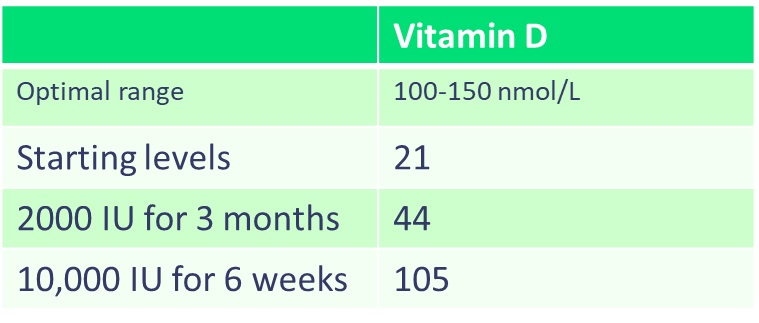
With 5,000 IU daily, many people—especially those who were initially insufficient—trend upward into a comfortable target zone after several weeks to a few months. The precise outcome is not identical for everyone. Still, there are patterns that make expectations more realistic.
Broadly speaking, if your starting level is low or borderline, supplementation tends to “lift” 25(OH)D substantially. If your baseline is already adequate, the same dose may produce a smaller rise or lead to higher-than-you-anticipated values. This variability can feel inconvenient, but it’s also the reason blood testing matters: it helps replace guesswork with measured physiology.
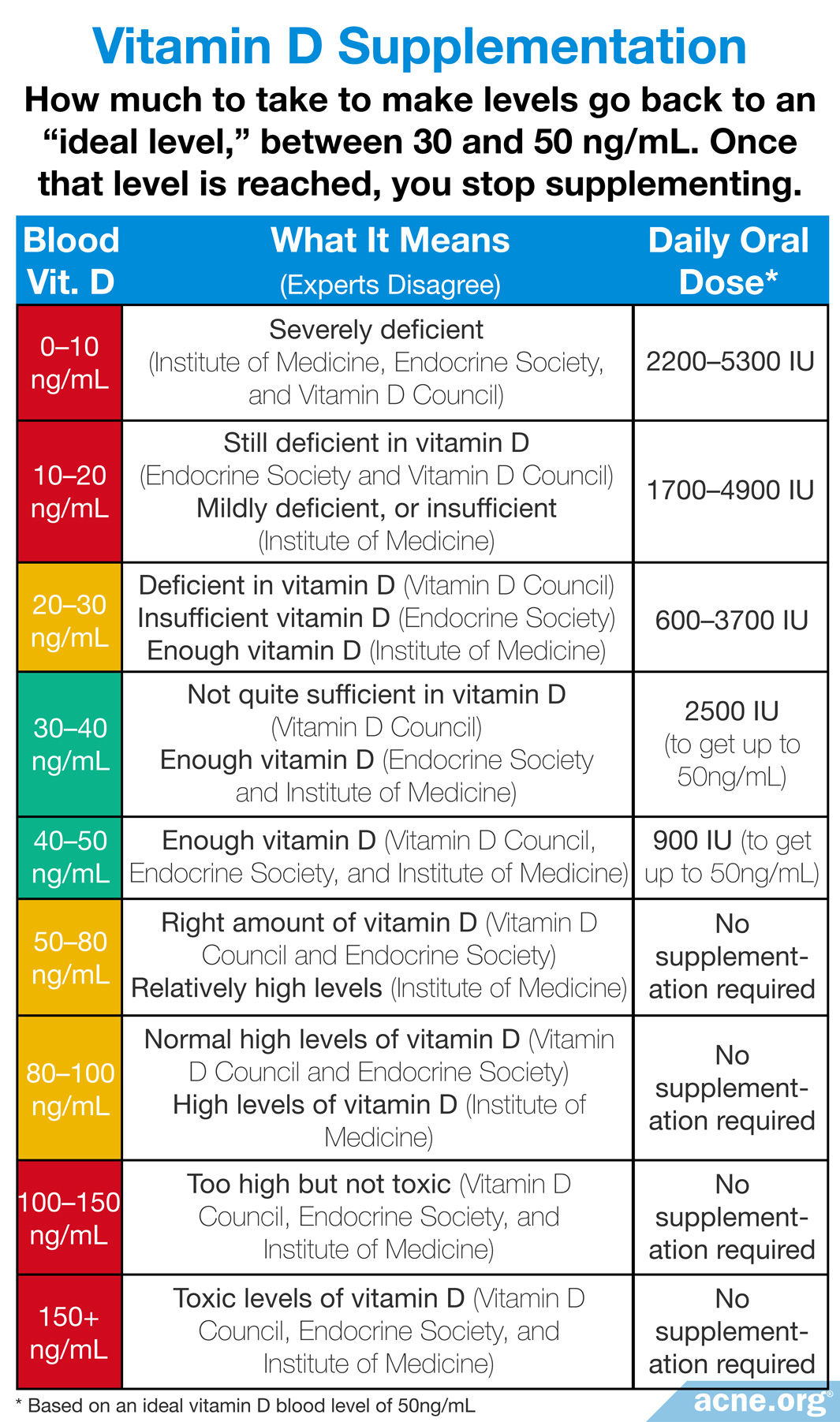
Many clinicians consider 30–50 ng/mL (75–125 nmol/L) a commonly pursued zone for overall sufficiency in otherwise healthy adults. On 5,000 IU daily, a frequent expectation is that some individuals land somewhere in the mid-range of that window, while others may edge higher. The goal is not to chase an arbitrary maximum; it’s to achieve a stable and safe level that supports your individual needs.
Timeline: When to Test After Starting (and Why Timing Changes the Result)
Testing too soon can make your result look deceptively low, even when the plan is working. Vitamin D metabolism is a chain reaction: after intake, circulating 25(OH)D rises gradually. A common approach is to recheck about 8–12 weeks after beginning or changing your dose. That window allows your levels to equilibrate rather than fluctuate.
Some people feel fine right away—energy perception, mood, or muscle comfort can improve—but those subjective shifts don’t reliably predict your lab numbers. Blood measurement is the more objective compass. If you test earlier than the recommended window, you may need a second measurement later to confirm the trend.
Also consider seasonality. If you started supplementation during winter and then re-tested in summer, your results may partly reflect sunlight exposure rather than only the capsule effect. Keeping this in mind helps you interpret the “noise” that climate can introduce.
How Dose, Body Size, and Baseline Level Interact
Five thousand IU is not a universal lever that moves everyone to the same final level. Body mass influences vitamin D distribution through adipose tissue. Higher body weight often requires either more time or a different dose to reach comparable 25(OH)D levels. Absorption also matters—fat malabsorption conditions, bariatric surgery, inflammatory bowel disease, or certain medications can blunt the response.
Your baseline level is another major determinant. People who start deficient frequently see a larger increase. Those who start already replete may rise less dramatically but still climb into higher territory if the dose stays unchanged.
Finally, adherence and administration details matter. Taking vitamin D with a meal containing fat can improve absorption. A small change in how you take the supplement can alter your results more than you might expect.
Reference Ranges: Interpreting “Low,” “Sufficient,” and “High”
Labs often provide their own reference intervals, but clinical interpretation typically hinges on whether your result is below, within, or above commonly targeted thresholds. A value around 20 ng/mL (≈50 nmol/L) is frequently considered insufficient by many clinicians. Many aim for at least 30 ng/mL (≈75 nmol/L) for sufficiency, while some pursue higher targets in specific contexts.
When levels are elevated, clinicians look for the context. A single high reading may be monitored, while persistent elevation may prompt dose adjustment. It’s not about fear—it’s about pharmacological prudence. In general, concerns increase as levels approach higher ranges (often discussed around 60 ng/mL and beyond, though exact thresholds vary by guidance).
If your result is high, repeat testing is often warranted, and clinicians may evaluate calcium status as well, because vitamin D acts in concert with calcium handling in the body.
What to Expect if Your Level Comes Back Higher Than Desired
A higher-than-expected 25(OH)D can happen for several reasons. You may have been underestimating prior sun exposure. Your baseline may have been closer to adequate, so the dose produces a bigger increment than you anticipated. Alternatively, absorption may be unusually efficient for you.
If you receive a result that’s above your clinician’s preferred range, the usual response is not panic—it’s recalibration. Dose reduction is often considered, or clinicians may switch from daily dosing to intermittent strategies depending on your situation. The key is to avoid “set-and-forget” behavior when your numbers suggest you’re overshooting.
Some people benefit from rechecking after adjusting the dose, rather than making further assumptions. This turns the process into a feedback loop instead of a guessing game.
What to Expect if Your Level Comes Back Still Low or Borderline
Not every person rises into the expected range, even at 5,000 IU daily. If your level remains low after a reasonable interval, possible explanations include inadequate absorption, inconsistent intake, or an underlying condition affecting vitamin D metabolism. Sometimes the timing of your blood draw also contributes—if tested prematurely, the level may not have fully stabilized.
Clinicians may review adherence, meal timing, and any relevant GI history. They might also consider additional labs if there’s clinical suspicion, such as markers related to calcium balance or parathyroid function. The objective here is to avoid repeatedly increasing dose blindly when the bottleneck might be absorption or metabolism.
Symptoms vs. Numbers: Why You Shouldn’t Rely on How You Feel
Vitamin D is often associated with “how you feel,” but symptoms are unreliable. Some people feel great while their levels are suboptimal, and others feel tired even when lab results are in range. It’s a stubborn mismatch: subjective signals are influenced by sleep quality, stress physiology, iron status, thyroid function, and countless other variables.
Blood testing provides a direct read of biochemical status. Even if you feel fine, consistent measurement helps you maintain safe territory. Similarly, if you feel unwell, it doesn’t automatically mean your vitamin D is wrong—there may be a different mechanism at work.
Safety Considerations: Avoiding Vitamin D Overshoot
Vitamin D is fat-soluble, which means excess can accumulate. That’s why monitoring is more than bureaucracy—it’s a safeguard. Clinicians may recommend checking not only 25(OH)D but also related markers such as calcium, especially if levels become unusually high or if symptoms suggest metabolic disturbance.
A balanced plan often includes periodic testing and dose adjustments based on trend lines. Some people take 5,000 IU daily for a “repletion phase” and then reduce to a maintenance dose once the target is reached. This staged approach is widely used because it treats supplementation like training: build capacity, then stabilize.
In short: consistency matters, but so does restraint. The best outcomes usually come from measured progression rather than indefinite high dosing.

Different Content Paths: What You Can Look For Beyond the Single Result
Readers often want more than one answer. Some prefer numeric clarity: “What should I hit on the test?” Others want procedural guidance: “When do I test, and what else should be checked?” Still others want narrative reassurance—how to interpret uncertainty without turning it into alarm. A complete vitamin D discussion can satisfy all three.
If you’re the numeric type, focus on target ranges, units, and the difference between insufficient, sufficient, and elevated levels. If you’re the procedural type, track the test date, dose start date, meal timing, and adherence, then compare the trend. If you’re the narrative type, consider the “why” behind variability—your body is not a calculator, and that’s normal.
Whatever your preferred style, the best content usually includes: baseline context, expected trajectory, timing guidance, interpretation scaffolding, and safety guardrails. That combination turns a blood test from a confusing event into a useful instrument.
Practical Next Steps: How to Use Your Result Effectively
Once you receive your 25(OH)D result, treat it like a decision point. Confirm the units, compare it to your clinician’s target range, and consider your starting level and the test timing. If you’re within range, a maintenance plan may be appropriate. If you’re below range, adjustments might be considered—often with attention to absorption and consistency first. If you’re above range, dose reduction and follow-up testing become more important.
Finally, keep the process longitudinal. A single measurement is informative, but trend data is wiser. Your ideal level isn’t just a number; it’s the safe, sustainable zone that supports your health without nudging you toward unintended metabolic strain.