Vitamin D is often framed as a dependable sun-cousin—quietly supporting bones, mood, and immunity. But high-dose vitamin D can behave less like sunshine and more like a slow-burning forge: steady heat at first, then a needless overcorrection. When dosing overshoots, the body doesn’t simply “use what it needs.” It may accumulate. And accumulation—especially of calcium—can create symptoms that feel like your body is speaking in riddles. Below are five signs that a high-dose approach may be hurting you rather than helping you.
1) Your calcium levels are rising—your body starts acting “over-sprinkled”
Imagine calcium as the bricks in a wall. Vitamin D is the foreman that helps bricks arrive where they belong. But when the foreman orders too many bricks, the site becomes cluttered. The classic early consequence of excessive vitamin D is hypercalcemia—too much calcium in the bloodstream. Symptoms can be subtle at first, then increasingly insistent.
You might notice a metallic fatigue, odd heaviness, or a “drained” sensation that doesn’t match your sleep. Some people experience frequent thirst, dry mouth, or more frequent urination as the kidneys attempt to manage the extra calcium load. Brain fog can also appear—an unfocused haze that makes routine tasks feel oddly laborious. The theme here is deceptively simple: calcium is participating in systems where it doesn’t belong, including water balance and nerve signaling.
Because symptoms vary, laboratory markers matter. If your clinician checks calcium (and sometimes related indicators like vitamin D metabolites), that’s not bureaucratic fussiness—it’s a way to translate your body’s metaphor into measurements.
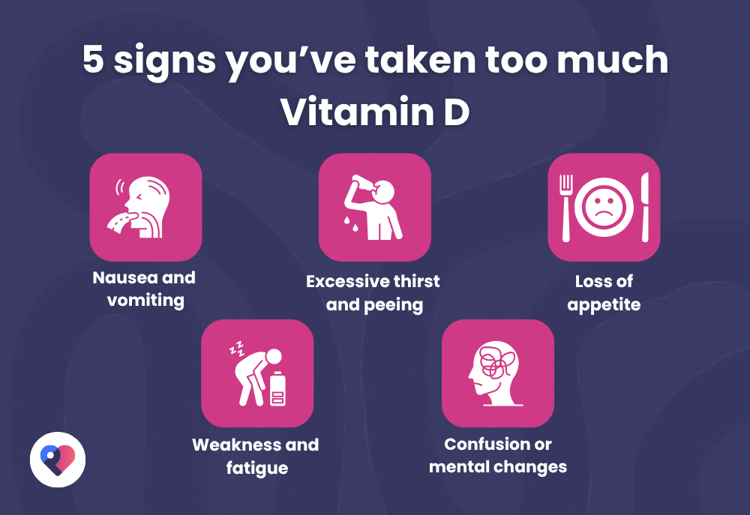
2) You feel nauseated or lose your appetite—like the stomach is refusing the “extra”
When vitamin D doses overshoot, gastrointestinal symptoms can surface. Nausea may creep in after meals. Appetite can dim, and even familiar foods can start tasting like an afterthought. Some people report constipation, bloating, or abdominal discomfort. These are not always dramatic signs; sometimes they are the kind that cause you to say, “I’m not sure what’s wrong, but something feels off.”
There’s a logic behind it. High calcium can alter digestive function and influence how the gut and nervous system communicate. Think of it as an orchestra where the brass section arrives too loudly—everything still plays, but the balance becomes unpleasant. Your body may respond by slowing down, turning down hunger cues, or triggering nausea to discourage further intake.
If you’ve recently increased your dose—especially without a lab-guided plan—this is a strong reason to pause and reassess. Persistent GI symptoms should never be shrugged away as “just stress,” particularly when paired with other changes.
3) Fatigue and weakness arrive—energy feels like it’s been unplugged
High-dose vitamin D can leave you feeling limp, unmotivated, and strangely weak. Not the productive tiredness of a long day. More like a low-voltage hum in your muscles and mind. Fatigue may be accompanied by muscle aches or a generalized “I can’t quite get going” feeling.
Why would vitamin D—so often marketed as a vitality partner—cause this? Excess calcium can influence neuromuscular function. When the ionic environment becomes skewed, nerves fire differently, muscles contract differently, and the body’s usual rhythm becomes unreliable. The result can be a paradox: you took something designed to support health, yet your body is signaling that internal conditions have drifted out of alignment.
This sign becomes especially compelling when fatigue co-occurs with hydration changes (thirst, urination) or gastrointestinal symptoms. A single complaint might be coincidence; a cluster reads like a pattern.
4) Kidney stress and hydration changes—your body tries to wash away what it can’t store
The kidneys are the body’s sophisticated filter systems. When calcium climbs too high, the kidneys may work harder. One common sign is frequent urination or needing to wake up more often to urinate. Thirst can increase, not because you suddenly crave water, but because your body is trying to restore equilibrium.
In more significant cases, there may be discomfort in the flank area, or a general sense of “internal agitation.” Some people worry about stones. Kidney stone risk can rise when calcium and related factors are elevated. That doesn’t mean everyone on high doses will develop stones—but it does mean the terrain becomes more stone-friendly.
Hydration changes should be taken seriously, particularly if they appear shortly after increasing vitamin D intake. Pay attention to the timeline. Your body frequently tells the story in chronology: dose up, symptoms up.
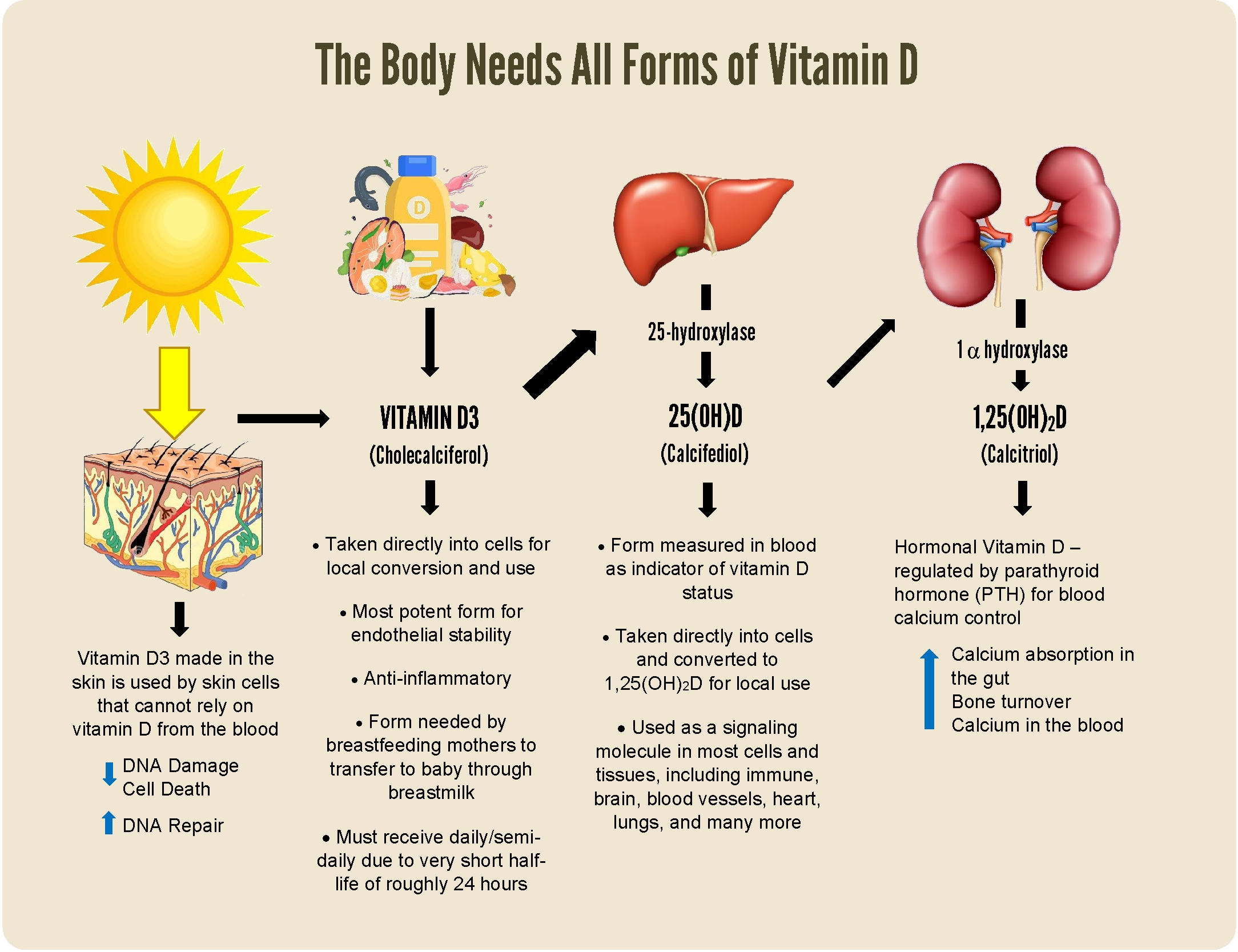
5) Mood changes, confusion, and “uncharacteristic” behavior—your brain feels chemically off
Calcium is not just for bones. It plays a role in nerve activity and cellular signaling. When vitamin D doses push calcium levels too high, the brain can feel the consequence. Mood changes can range from irritability to a more pronounced cognitive disturbance—confusion, difficulty concentrating, or a foggy, detached feeling.
People sometimes describe it as “not myself,” which can be unnerving. The subtlety is what makes it dangerous: you might keep working, driving, and speaking as usual—yet feel slower, less steady, and more mentally scattered. That’s why unusual neurologic or emotional symptoms, especially when they appear after escalating supplementation, deserve timely attention.
High-dose vitamin D is sometimes taken with the expectation of quick benefits. But the brain doesn’t always wait for the “after effects” of your schedule. If hydration, GI symptoms, fatigue, and cognitive changes are occurring together, the possibility of excess vitamin D–related physiology becomes more than a theory.
When to treat this as a red flag (and what to do next)
Consider these five signs as a set rather than isolated items. The “signature” of vitamin D excess often includes some combination of: increased thirst and urination, gastrointestinal upset, weakness/fatigue, possible kidney strain, and cognitive or mood changes. If you recognize multiple signs—especially after raising your dose—stop increasing supplementation and seek medical guidance.
Proper next steps typically involve blood tests (calcium, vitamin D metabolites, and kidney function markers) and sometimes urine evaluation depending on the situation. This is not about fear; it’s about precision. Your body is a complex instrument, and supplementation is a volume knob. Use it carefully.
Also remember that vitamin D rarely exists alone. Magnesium status, concurrent supplements, calcium intake, and underlying medical conditions can influence how your body responds. A dose that is reasonable for one person can become excessive for another, like the difference between a small campfire and a controlled burn.
Final thought: aim for balance, not intensity
Vitamin D can be a helpful ally when used thoughtfully—particularly when deficiency is confirmed and dosing is guided. But high-dose vitamin D can tip from support into overload. Your body’s clues are not random; they are signals encoded in thirst, fatigue, digestion, kidneys, and cognition.
Listen to those signals. Let labs, symptoms, and professional evaluation work together. Balance is not the absence of action—it is intelligent action, performed with restraint.