Have you ever wondered why two perfectly reasonable blood reports—pulled on the same day, for the same patient, with the same glowing optimism—can disagree about whether vitamin D is “low,” “borderline,” or “healthy”? It’s a small administrative twist that can feel oddly personal. And once the label appears, it tends to linger like a sticker on a laptop: easy to ignore, surprisingly hard to forget. Today’s question is playful on the surface, but the implications are real: what if your vitamin D status depends less on your body and more on the lab’s mood?
Why “Normal” Isn’t Always Normal
Vitamin D blood testing often seems straightforward: measure 25-hydroxyvitamin D (the usual biomarker), compare it to a reference range, and interpret the result. But “reference range” is not a universal law of physics. It’s more like a locally drafted constitution—still authoritative, but shaped by specific assumptions. Different laboratories may use different analytical platforms, calibration strategies, and population samples to define what they consider normal.
So, the controversy isn’t simply about accuracy; it’s about interpretation. One lab’s “sufficient” might be another lab’s “insufficient.” That mismatch can create a bureaucratic mirage: the same number, two narratives.
The Controversy Starts With the Assay
At the heart of most discrepancies is the assay—the testing method. Laboratories can use different immunoassays or employ different mechanisms to quantify 25(OH)D. Even when both methods target the same compound, they can behave differently under real-world constraints: cross-reactivity with related metabolites, matrix effects from serum composition, and calibration variability over time.
Some assays may be more sensitive at the lower ends of concentration. Others may have better performance in the midrange. None of this necessarily means a lab is “wrong.” It means precision and measurement characteristics can diverge.
Here’s the challenge: a result that lands near a lab’s threshold is more likely to appear as one category in one facility and another category elsewhere. The closer you are to the boundary, the more your outcome can resemble a coin toss—albeit one powered by instrumentation.

Reference Ranges: The Quiet Source of Loud Confusion
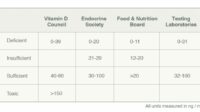
Reference ranges are not only defined by scientific reasoning; they’re also influenced by pragmatic considerations. Labs may set cutoffs based on outcomes in specific populations or on the distribution of vitamin D levels in reference groups. That means two labs can look at two different “normal” samples and decide that different thresholds best reflect sufficiency.
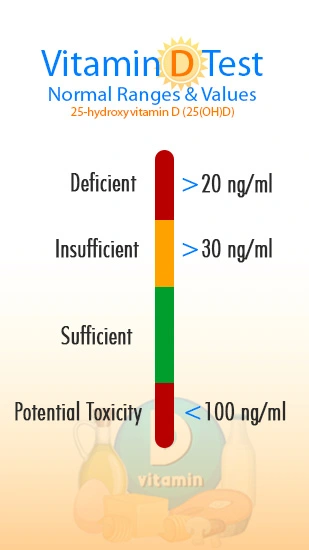
Common cut points you may encounter include:
Deficient (often below 20 ng/mL or 50 nmol/L, depending on the lab)
Insufficient (a middle zone)
Sufficient (where stores are considered adequate)
Potentially high (sometimes prompting caution at very elevated levels)
But notice what’s missing: a single global standard that all laboratories must follow with religious consistency. Instead, you’ll see ranges that are method-specific and policy-influenced. The result? A patient could be told they’re adequate in one report and insufficient in another—despite identical or nearly identical physiology.
Units, Conversions, and the Decimal-Minute Trap
Another layer of the paradox: units. Vitamin D results may be reported as ng/mL or nmol/L. Many clinicians and patients understand the general relationship, but conversions can become a source of confusion—especially when a decimal or rounding choice changes whether someone crosses a threshold.
When labs round differently, or when one report displays one decimal place and another displays none, the number can shift just enough to matter. A person might see a label change with a value that is, biologically, essentially the same.
It’s not that rounding is careless. It’s that thresholds behave like gates: if the number is near the doorway, even a small “housekeeping” decision can determine whether you’re waved through or asked to wait.
Symptoms, Risk, and the “Interpretation Gap”
Vitamin D testing is often driven by symptoms, risk factors, or screening protocols: limited sun exposure, darker skin, older age, malabsorption conditions, certain medications, or a history of osteoporosis. But symptoms are not a perfect mirror of blood levels. Some people with low vitamin D feel fine. Others experience vague issues that may have multiple causes.
This creates an interpretation gap. A lab range tells you how the measurement compares to a reference distribution. It doesn’t automatically tell you what your body is doing in tissues, how your parathyroid system is responding, or whether other nutrients are influencing outcomes.
That’s why vitamin D should be interpreted alongside clinical context—dietary pattern, calcium status, kidney function, and sometimes markers like PTH (parathyroid hormone) or ALP (alkaline phosphatase). Without that contextual scaffolding, a lab label can become an overconfident narrator.

Does Lab-to-Lab Variation Mean One Lab Is Lying?
No—at least not in any ordinary sense. Most labs strive for robust quality control. Variation is common across medicine: think blood count differentials, thyroid panels, and inflammatory markers. Vitamin D is simply a particularly sensitive case because the reference thresholds tend to have strong clinical influence.
The controversy is better understood as a calibration and policy issue rather than a morality issue. When assays and cutoffs differ, even accurate measurement can map to different categorical statements.
So the question becomes: how much difference is clinically meaningful? That’s a subtler inquiry than it sounds. Sometimes a shift in category changes management decisions; sometimes it doesn’t. The best approach is to treat changes in context and trend as primary evidence, not a single snapshot.
A Practical Challenge: What Should You Do With Two Conflicting Reports?
Here’s the playful challenge—one worth taking seriously: imagine you receive two vitamin D results from different labs, and they don’t agree. What then?
First, compare the raw value and the units, not just the category labels. Second, consider whether both tests were done with compatible methods or simply in different facilities with different reference logic. Third, ask whether additional markers (like PTH) were assessed, especially if the result is borderline or unexpected.
Finally, consider retesting strategy. If your clinician aims to clarify status, repeating the test—ideally at the same lab—can reduce interpretive noise. Consistency is an antidote to confusion.
Trend beats narrative. A single lab label can be a moment in time. A trajectory over months can show whether supplementation, lifestyle changes, or underlying conditions are truly moving the needle.
The Bigger Picture: Why Standards Are Still Evolving
Vitamin D research continues to evolve, and with it, the criteria for adequacy. Some guidelines emphasize bone health and established biochemical thresholds. Others consider broader outcomes and the plausibility of vitamin D’s roles in immune modulation and cellular processes. As evidence matures, cutoffs and interpretation may shift.
That doesn’t make clinicians or labs incompetent. It means medicine is a living discipline—more like a weather system than a fixed rulebook. The “controversy” is partly a symptom of ongoing scientific refinement.
In the meantime, patients deserve clarity. The most meaningful clarity comes from asking: What does this number mean for my health, and how does it compare to previous measurements?
Closing Thought: Your Body Isn’t a Spreadsheet
Vitamin D testing can feel like reading a scorecard from a game you didn’t know had multiple rulebooks. Different labs can generate different ranges, and sometimes those differences steer interpretations in conflicting directions. Yet your biology is not bound to lab policy. It’s bound to physiology, context, and trends.
So, keep your curiosity—and your questions. The next time a report uses a category label, treat it as a helpful suggestion, not a verdict. And if the results conflict, don’t panic. Investigate the units, consider the lab method, look for the broader clinical picture, and—when possible—retest consistently.