Prolonged rainy weather has a way of moving through a town like a slow tide—quiet at first, then steadily insistent. Days blur into one another, the light feels muffled, and the air seems to carry a peculiar emotional pressure. And when low visibility stacks on top of relentless clouds, the mind doesn’t merely “notice” the weather. It interprets it. It translates damp skies into inner weather, turning attention inward and rhythm outward. What follows is not just sadness in the casual sense, but a complex psychological choreography—part biology, part cognition, part culture, and part personal history.
1) The Sky as a Dimming Lens: How Light Shapes Thought
Light is not only illumination; it is psychological punctuation. When sunlight recedes for days, the brain receives fewer signals that typically reinforce alertness and a sense of safety. The result can feel like living inside a softened photograph—details exist, but they’re harder to read. Many people describe a low, leaden clarity. Short tempers appear. Motivation becomes slippery. Even decision-making can slow down, as though the mind is moving through syrup.
Seasonal patterns may offer a baseline expectation, but prolonged rainy stretches can create an unusual duration effect—like a song you don’t realize is looping until you suddenly can’t hear anything else. This repetition can encourage rumination. Rumination is a mental spiral: you return to the same thought, not to solve it, but to re-experience it. Reduced brightness can make that loop feel stickier.

2) Circadian Drift: When Time Feels Unreliable
Our bodies run on circadian timing, an internal clock that organizes sleep, energy, and hormone patterns. Low light and persistent rain can blur morning cues and weaken the brain’s sense of “start.” Over time, this may manifest as sleep that isn’t fully restorative, early fatigue, or a creeping insomnia that doesn’t look dramatic—but behaves like a slow leak.
There’s also an emotional consequence: uncertainty. When time feels unstable, the mind seeks anchors. It may anchor on worries. It may over-check plans. It may interpret ordinary delays as ominous signals. The psychological phenomenon is subtle but powerful: ambient uncertainty encourages hypervigilance, even in people who are otherwise calm.
3) Mood as Weather: Emotional Contagion from the Environment
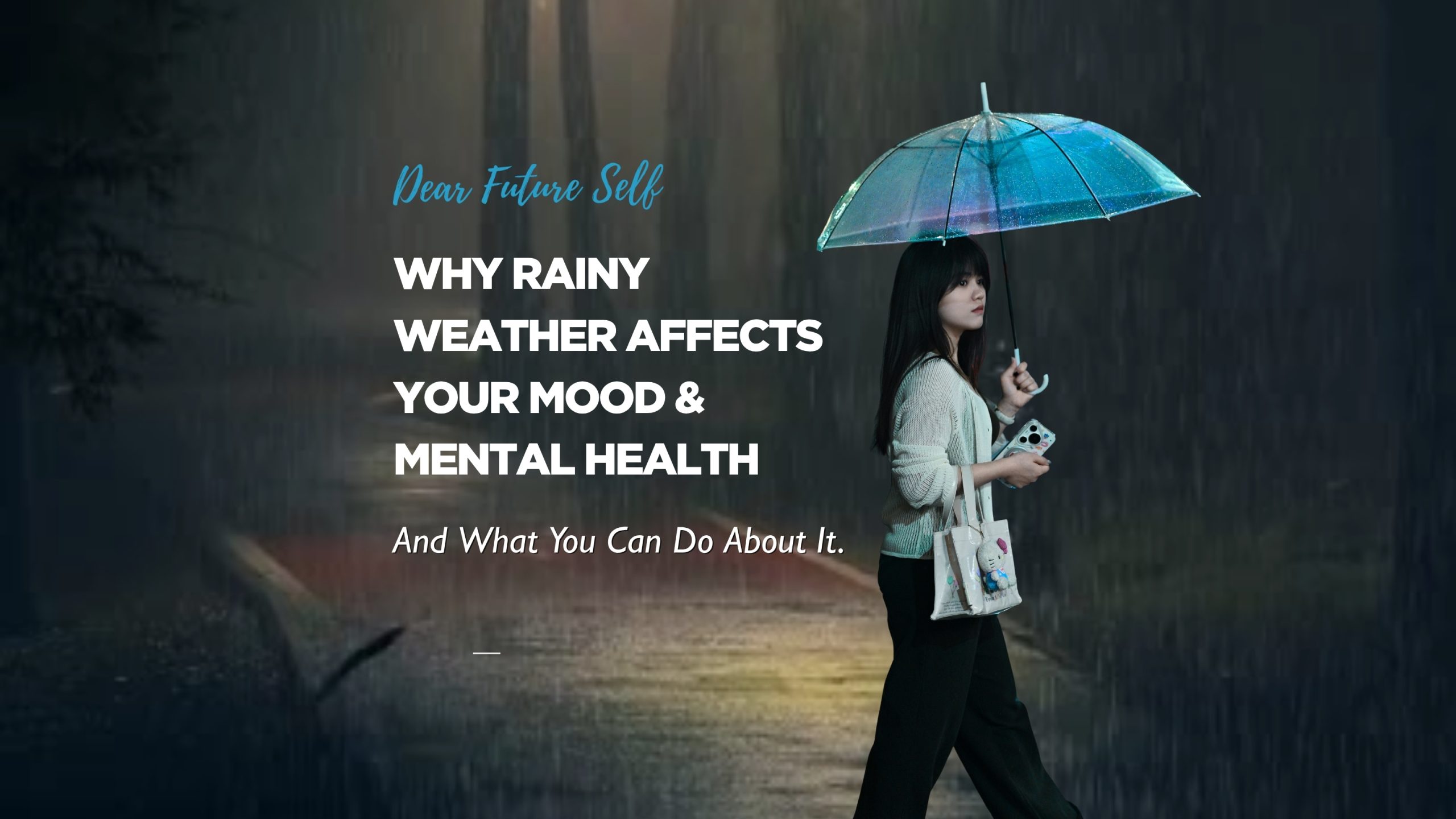
Humans are pattern-finders. We read atmosphere as if it were a language. A stormy horizon can “say” gloom, and the mind may respond by matching the tone. This isn’t weakness; it’s social cognition turned inward. Your thoughts borrow the mood your surroundings seem to broadcast.
Prolonged rain can therefore amplify emotional contagion—your internal state begins to echo external cues. If you spend days inside, you may also become more sensitive to minor irritations. Small frictions—an overdue message, a sticky door handle, a delayed commute—can hit harder because the baseline emotional capacity has been reduced.
There’s a metaphor here that rings true: rain is a curtain drawn across the stage of your attention. The play continues, but you’re watching through fabric. When visibility drops, the mind leans on interpretation. That interpretation may skew toward negative meaning, especially for those already prone to anxiety or depressive thinking.
4) The Gravity of Inactivity: How Less Movement Reshapes the Mind
Rain often shrinks the radius of daily life. Walks become shorter, errands stack up, and outdoor hobbies feel less inviting. Physical activity—whether formal exercise or casual movement—has a direct psychological dividend. It helps regulate stress hormones, supports sleep quality, and fosters cognitive flexibility.
When rainy days reduce motion, the mind can become more rigid. Thoughts line up in defensive order. Planning can feel heavier. Creativity can stall. You might still have ideas, but they arrive without lift. This is why some people feel “stuck” long before they understand why.

5) Loneliness in the Listening Room: Social Effects of Persistent Dampness
Rain can confine not just bodies, but interactions. Cancelled plans, indoor gatherings, and more time alone can accumulate quietly. Even if you’re not socially isolated, the texture of connection may feel thinner.
Loneliness isn’t always about being alone. Sometimes it’s about perceiving that your experience is being diminished—like trying to tell a story while rain drowns the microphone. The result can be emotional withholding. People stop sharing early irritations because it feels pointless to describe what everyone already “knows” is happening. That withholding, over time, can deepen the sense of invisibility.
Prolonged rainy weather can therefore intensify social fatigue. The mind becomes less eager to reach out, not necessarily because you don’t care—but because energy feels scarce and effort feels larger than it used to.
6) Anxiety and Cognitive Load: When Everything Takes More Effort
Low visibility, slick surfaces, and constant gloom increase cognitive load. Even if you’re not consciously fearful, your brain may run more background calculations: “Will I slip? Will I arrive late? Will the rain worsen?” That continuous processing can drain mental bandwidth.
Reduced bandwidth can lower tolerance for uncertainty and increase catastrophizing—the tendency to imagine the worst plausible outcome. Catastrophizing is a false prophet. It speaks quickly, insists it’s protecting you, and yet it usually amplifies distress rather than preventing danger.
Another element is attention fragmentation. When days are visually repetitive—gray, damp, similar—your brain may lose novelty. Less novelty can produce a mild “sensorial boredom,” and boredom is not neutral. It can morph into restlessness, then into anxious spirals.
7) The Biology-Behavior Bridge: Stress Systems and Reward Pathways
Psychological effects are rarely purely psychological. Rain can influence physiological systems that govern stress and reward. Poor sleep can blunt emotional regulation. Lower light can alter circadian and hormonal patterns. Reduced activity can weaken the brain’s incentive circuitry, making everyday joys feel muted.
Meanwhile, stress systems may become more reactive. Cortisol—often discussed as a stress marker—can rise when the body perceives persistent load. Even when you don’t feel “panicky,” the chronic sense of being under a dim cloud can be enough to shift how you interpret your own thoughts. The mind then becomes less forgiving, less optimistic, and more likely to scan for threat.
8) Longevity Myth vs. Longevity Reality: What Weather Really Does Over Time
Low light and persistent rain do not automatically shorten life, but they can indirectly influence factors linked to long-term well-being. For instance, prolonged low mood may reduce physical activity, worsen sleep, and alter eating habits. Stress can linger. Social routines can thin. These changes create a chain reaction.
In a way, weather becomes a long-handed influence. It doesn’t only color the day; it shapes the habits that build months and years. That is why the psychological effects matter beyond immediate feelings. Mental health isn’t merely an emotional dashboard—it’s a steering system. When it’s miscalibrated by bad environmental rhythm, the whole vehicle of daily life can drift.
Still, there’s hope embedded here. A chain reaction can also be a chain correction. Small, consistent countermeasures can interrupt the spiral.
9) Metaphors that Offer Exit Routes: “Find the Window” and “Borrow the Sun”
Metaphors are not decoration; they can be mental tools. Consider the phrase “find the window.” Even on the rainiest days, windows exist—literal or metaphorical. They might be a break in the clouds, a patch of daylight near midday, or a moment of indoor brightness near a lamp. Your brain learns through repeated cues. Give it a cue that says: the day still has texture.
“Borrow the sun” is another helpful image. You don’t need perfect weather to receive psychological light. You can borrow it through routines—morning exposure to any ambient brightness, scheduled movement breaks, and deliberate social connection. A little structure can behave like an umbrella for the mind.
10) Practical Resilience: Turning Rain into a Manageable Season
Resilience during prolonged rainy stretches is less about sudden motivation and more about intentional calibration. Aim for small anchors: consistent wake time, brief movement even indoors, and a light plan that doesn’t wait for clear skies. Try “micro-outings” when feasible—short walks in breaks of rain, or supervised outdoor time with waterproof gear. The goal is not heroism. The goal is feedback to the body: we still move; the world still reaches us.
Emotional regulation also benefits from language. Name what’s happening: “I’m feeling low because the days are dim.” Naming reduces confusion. Confusion is fuel for spirals.
Finally, protect social temperature. Send messages that are simple, not performative. Share a mundane update. Invite a low-pressure connection. When rainy weather compresses life, companionship expands it.
Prolonged rainy weather may cast a long shadow, but it doesn’t get the final word. The mind can learn new rhythms. The clouds can be endured without surrendering your interior brightness.