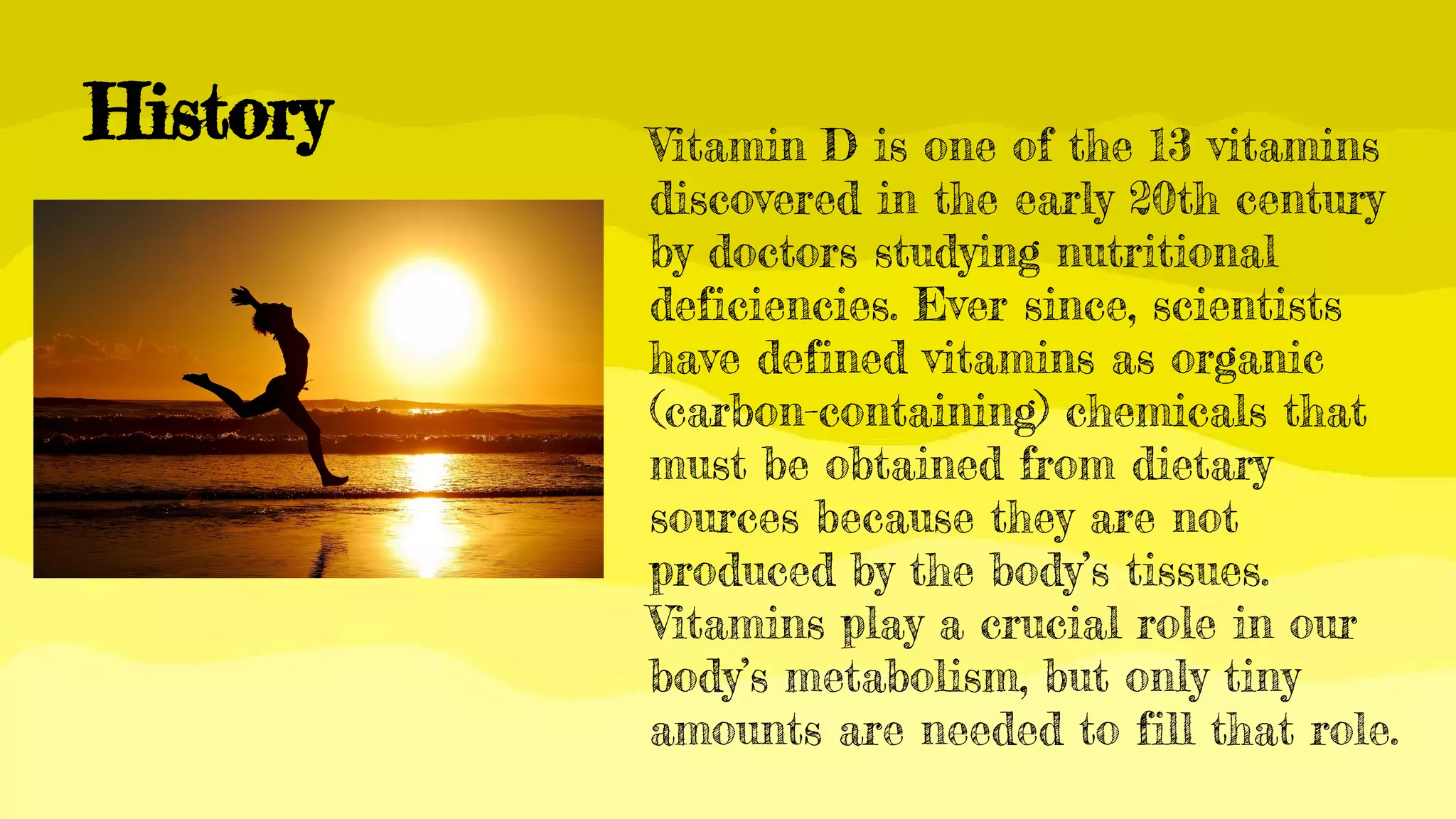
It’s a curious thought: for a vitamin, one of the oldest “delivery systems” isn’t a pill at all—it’s sunlight. Long before people had language for calciferol or a concept of ultraviolet (UV) spectrum, the human body had already been running an experiment outdoors. Yet the fascination didn’t come from the sky alone. It came from the mismatch between what was easy to observe—healthful skin, active days, seasonal changes—and what science later had to explain: why the same sun that seemed beneficial could, under other conditions, correspond with deficiency.
The First Clues: Sunlight, Skin, and the Body’s Silent Chemistry
In everyday life, people noticed patterns. Winters felt heavier. Children seemed less robust. Certain communities appeared more vulnerable when days shortened or winters lingered. These were not abstract medical conclusions; they were lived experiences—an intuition sharpened by repetition.
Skin, too, offered a visible clue. More melanin meant more shade, and more shade meant less light “getting through” to the layers where transformation could occur. This was observed without molecular vocabulary. Still, the practical implication was unmistakable: sunlight correlated with well-being, and the absence of it correlated with troubles.
What made the observation so compelling was its paradoxical nature. Sunlight could feel like warmth and vitality, yet it also carried risk—burns, aging, and a harsh insistence on moderation. The story of vitamin D begins here: at the edge of comfort, where people sensed that light was both ally and hazard.

Rickets and the Age-Old Pattern of Deficiency
As societies industrialized, more people—especially children—spent hours indoors. This wasn’t merely a lifestyle shift; it changed exposure. Cramped cities, soot-darkened streets, and crowded housing created a startling environmental gradient: fewer sunbeams, more disease.
One of the most notorious outcomes was rickets, a condition tied to impaired bone mineralization. The public could often recognize the symptoms—soft bones, skeletal deformities, delayed growth—even if they couldn’t explain the biochemical mechanism.
Here the common observation becomes sharper: children were not “failing to thrive” in an abstract sense. Their bones were under-built. That distinction matters. It hinted that nutrition, not just mood or general care, was involved—and that something in sunlight had nutritional value.
And yet the deeper reason for continued fascination is that the deficit could appear even when people ate “enough.” Something was missing that wasn’t simply calories or protein. It pointed toward a hidden dependency, one that lived at the boundary between environment and metabolism.
From Folk Wisdom to Laboratory Logic
For centuries, sunlight had been interpreted through a mixture of myth, empiricism, and household medicine. Early attempts to prevent bone problems leaned on intuitive remedies: diets rich in certain foods, exposure to outdoor air, and a belief that nature could “restore balance.” These weren’t foolish ideas. They were early versions of a hypothesis.
Eventually, the scientific mindset arrived with new instruments and sharper questions. Researchers began asking: if sunlight improves bone health, what is the mechanism? The question was not merely intellectual. It was pragmatic—if the process could be identified, deficiency could be prevented reliably.
This period marked a transformation in how people understood the vitamin itself. The “sunshine vitamin” wasn’t a metaphor anymore; it became a biochemical event. Sunlight began to look less like scenery and more like a chemical trigger.
The Photochemical Turning Point: How Sun Becomes Vitamin D
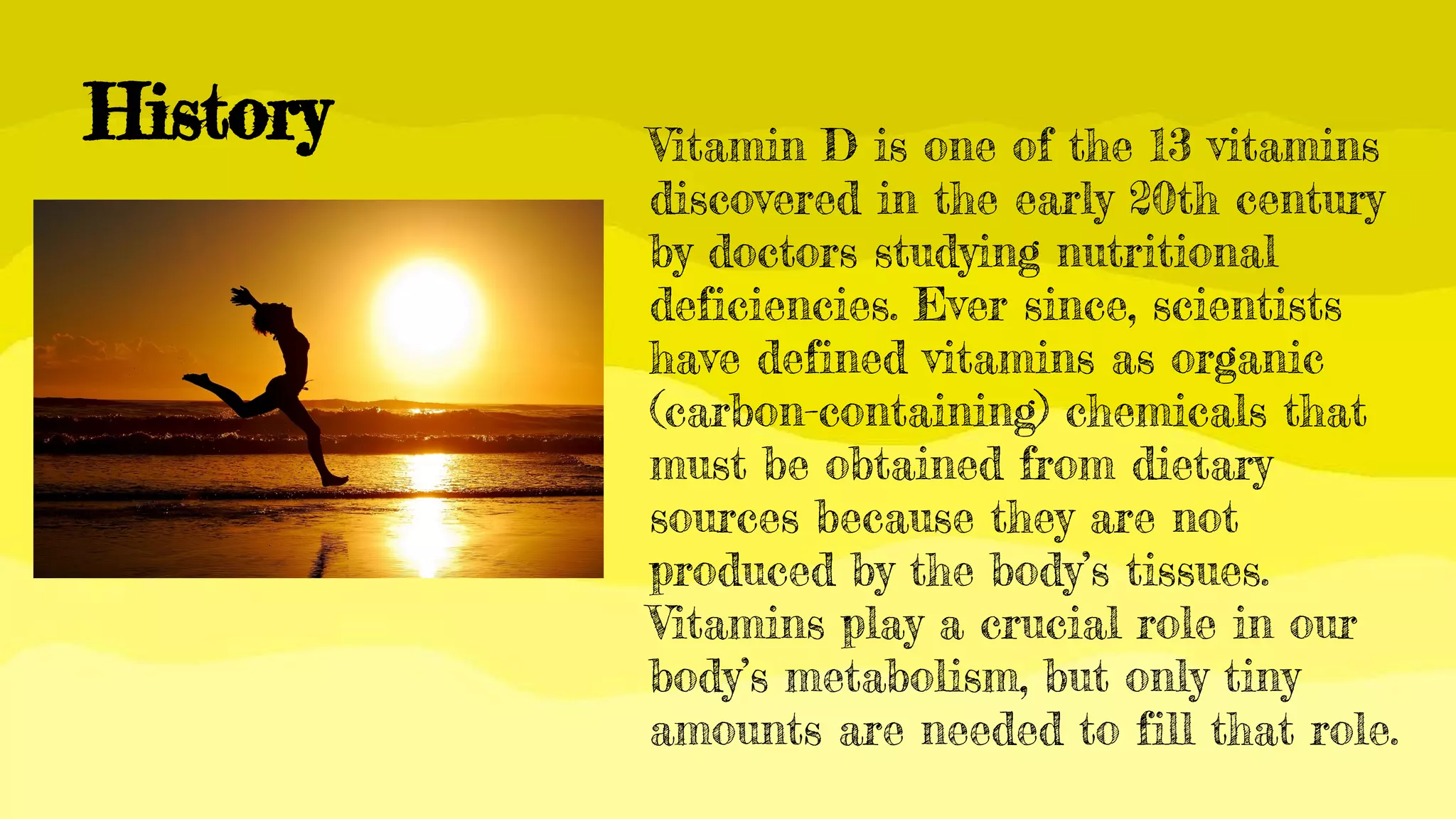
The key insight was that the body can manufacture vitamin D when certain wavelengths of UV light contact the skin. That is the narrative crux: sunlight isn’t only supporting life through warmth or visibility. It performs work.
In broad strokes, a cholesterol-derived precursor in the skin absorbs ultraviolet energy and undergoes a conversion. The product then travels through the body’s subsequent steps, where it is transformed into its active forms—molecules capable of influencing calcium and phosphate balance.
It’s a rare kind of biological elegance. The body is not passive here. It is a converter, a small-scale photochemical workshop running without batteries or instructions. Fascination grows because it makes human physiology feel both simple and mysteriously sophisticated at once.

Why the “Same Sun” Doesn’t Produce the Same Result
A common observation is that sunlight seems consistent—blue sky is blue sky, right? But vitamin D synthesis is exquisitely sensitive to context. A bright day in one location may behave differently in another due to latitude, season, and atmospheric filtering.
Cloud cover matters. Skin pigmentation matters. Age matters. Even clothing changes the equation by limiting UV reach to the skin. These variables explain why people can live in the same general region yet experience different vitamin D status.
Here’s the deeper reason the subject remains captivating: the body’s vitamin D production is not a guarantee. It’s a negotiation. The sun provides the energy; the environment calibrates how much reaches the skin; biology decides how efficiently the transformation proceeds.
So the “sunlight solves everything” idea—tempting as it is—collapses into a more nuanced reality. Sunlight helps, but it doesn’t eliminate uncertainty.
Migration, Modernity, and the New Geography of Deficiency
Once vitamin D became recognized as sunlight-dependent, a new kind of map emerged—one drawn with lifestyle and mobility rather than only geography. Urbanization reduced outdoor time. Desk work replaced play. Indoor culture spread. Migration sometimes introduced people to radically different sunlight patterns, and the transition wasn’t always accompanied by adequate dietary or supplemental strategies.
This is where history intersects with contemporary life. The same society that can access food globally still can’t easily access UV exposure in a reliable, daily, measurable way. Nutritional systems matured, but the light-based system remained partially outside policy and planning.
The result was a paradox: modern convenience reduced risk of many problems, yet it increased risk of deficiency in others. People could feel healthier overall while still missing a critical biochemical input.
The Nutritional Bridge: Foods, Fortification, and Secondary Sources
As scientists illuminated sunlight’s role, nutrition didn’t become irrelevant—it became complementary. Certain foods naturally contain vitamin D, and others can be fortified to improve baseline intake. This created a pragmatic safety net for those with limited sun exposure.
Still, the historical story remains anchored in the original source. Sunlight provided the discovery path, the conceptual framework, and the reason the vitamin earned its familiar nickname. Food-based approaches often work as scaffolding, not the primary architectural design.
And yet, fascination endures because the story is not simply “eat this” or “stand outside.” It is an intertwined system: environmental light, skin chemistry, metabolism, and lifestyle habits composing a complex timeline.
What We Learned About Bones, Immunity, and Beyond
Historically, the spotlight fell on bones because rickets made the consequences dramatically visible. But as research expanded, vitamin D’s roles broadened. It became associated with calcium regulation and, more widely, with processes that influence immune behavior and cellular signaling.
This broader view deepened the fascination. If sunlight can influence more than skeleton integrity—if it can shape how the body communicates internally—then vitamin D becomes a messenger of environmental information.
That concept is profoundly human. It suggests that the outdoors is not just a setting for exercise and mood; it is part of an invisible feedback loop between the planet and physiology.
The Ongoing Charm of a Simple Element: Light with Complex Consequences
Vitamin D’s history is, in many ways, a story about turning a common observation into a mechanistic explanation. People saw sunlight help and deficiency follow. Scientists then asked what, exactly, sunlight was doing. The answer—photochemical conversion in skin—converted intuition into certainty.
But the narrative never became boring, because the system remains delicate. The body can create vitamin D, yet it depends on timing, exposure, skin properties, and environmental factors. That dependence keeps vitamin D in conversation across decades.
In the end, sunlight was the original source, but not the final story. The fascination lies in how a single natural input becomes a multi-step biological transformation—one that links atmosphere, skin, and metabolism into a unified historical lesson.