Vitamin D is often described as a quiet guardian—helping bones mineralize, muscles contract with steadier grace, and the immune system respond with calibrated restraint. Yet in real-world clinical narratives, the story sometimes bends. Adults are sometimes “oversupplied” with vitamin D through well‑intentioned supplementation or misread laboratory signals, and toxicity follows with a pace that can feel surprisingly abrupt. Case reports reveal not only what went wrong, but why so many people—clinicians included—can be drawn into an almost spellbinding certainty that “more” must mean “better.”
Vitamin D toxicity: when a nutrient behaves like a toxin
Vitamin D is fat‑soluble, meaning it can accumulate rather than flush out quickly. That single biological feature is the cornerstone of toxicity risk. When intake persistently exceeds what the body can safely accommodate, serum 25‑hydroxyvitamin D rises, calcium absorption increases, and hypercalcemia may emerge. Hypercalcemia then propagates a cascade: kidneys may struggle to concentrate or excrete calcium, the cardiovascular system can become irritable, and the nervous system may feel “off,” as if the body’s usual rhythm has been replaced with static.
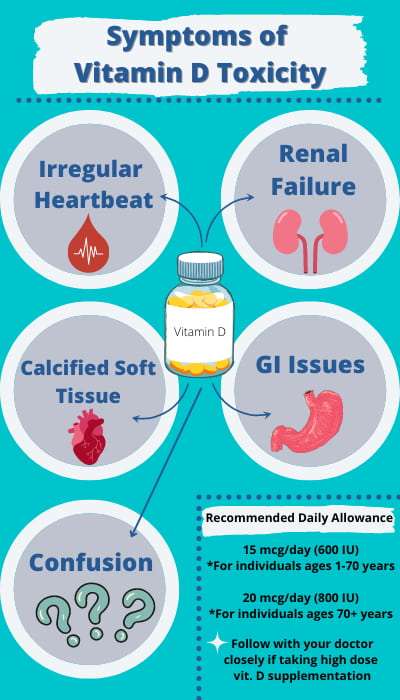
What makes these cases especially instructive is that symptoms may not point immediately to vitamin D. People often present with fatigue, nausea, constipation, excessive thirst (polydipsia), increased urination (polyuria), muscle weakness, confusion, or even dehydration. Short sentences can mislead the mind: “It’s probably stress.” “It’s probably a stomach bug.” But clinicians who later identify the biochemical pattern often describe a different kind of surprise—how quickly mundane complaints can map onto a dangerous physiology.

The common observation: “I was only taking what the label recommended”
A recurrent theme in adult case narratives is the mismatch between the perceived and actual dose. Many individuals begin supplementation with a dose they believe is modest—perhaps 1,000 IU daily, 2,000 IU daily, or a regimen suggested after a low lab result. Over time, that “modest” amount may drift: extra capsules added during winter, repeat courses, or product substitutions without recognizing equivalent potency. Sometimes the container is read carefully, yet the effective dose changes through misunderstanding of IU strength, drop sizes, or compounded formulations.
Another frequent turning point is the interpretation of bloodwork. A person may learn their vitamin D level is “low,” and therefore may assume any correction is inherently safe. The deeper reason this fascination persists is psychological: deficiency feels like a villain, and supplementation feels like a rescue mission. Yet the body isn’t a passive target. It’s a living regulator with thresholds, feedback loops, and a storage reservoir that can turn protective intent into overshoot.
Case reports often highlight a few repeating pathways
Although every case has its peculiarities, the underlying routes to toxicity often rhyme. First is prolonged high-dose intake—sometimes far above maintenance ranges—often fueled by self-directed therapy or prolonged clinician-guided repletion without timely reassessment. Second is dosing errors: transcription mistakes, confusing micrograms with IU, misreading concentration (especially with drops), or repeating a “loading” plan longer than intended. Third is the presence of kidney vulnerability—where clearance of calcium and metabolic handling of vitamin D are less forgiving.
Some narratives also involve unrecognized interacting factors. Thiazide diuretics can reduce urinary calcium excretion, while lithium alters certain signaling pathways. Sarcoidosis and other granulomatous diseases may increase extra‑renal activation of vitamin D, magnifying the effect of supplements. Even high calcium intake through diet or additional supplements can turn a borderline scenario into a full cascade.
In short, toxicity is rarely a solitary accident. It is usually a convergent episode—dose, timing, biology, and interpretation aligning like a poorly rehearsed ensemble.
Symptoms that can masquerade as ordinary illness
Adults with vitamin D toxicity may initially appear to have something more common: gastrointestinal upset, dehydration, constipation, or generalized aches. The masquerade is effective because early hypercalcemia can irritate multiple systems in ways people often attribute to everyday causes.
Neurologically, confusion or lethargy can develop. Muscularly, weakness may appear, sometimes progressing to more concerning debility. Cardiovascularly, abnormal heart rhythms can occur in severe cases. Renally, kidney stones or acute kidney injury may surface. And because these symptoms are broad, a patient may undergo testing that doesn’t immediately connect the dots—until a metabolic panel reveals the calcium signal and the vitamin D level explains it.
Long sentences sometimes match the complexity clinicians see. A short one often becomes the lesson: “Don’t dismiss the biochemical pattern.”

Why the body overshoots: storage, activation, and feedback loops
The fascination with vitamin D comes partly from the sense that it is straightforward: check the lab, supplement, normalize, move on. But vitamin D’s physiology is layered. After ingestion, vitamin D is converted into circulating forms, including 25‑hydroxyvitamin D in blood. Then—depending on tissue demands—an activated form may be synthesized. This “activation” can be influenced by disease states, medications, and kidney function.
Feedback control exists, but it isn’t always sufficient against chronic, high intake. If storage is continually refilled, circulating levels can climb and calcium absorption can exceed the body’s capacity for steady balance. Over time, the system becomes less like a seesaw and more like a ramp.
Some deeper explanations, seen indirectly across case stories, involve the duration of supplementation. Even if a dose seems reasonable, the length of time can transform a safe plan into a risky one. There’s also the reality of individual variability—genetic differences, body fat composition, baseline physiology, and coexisting illnesses. In other words: two adults with “the same dose” may not have the same risk.
Laboratory “red flags” clinicians watch for
When vitamin D toxicity is suspected, calcium and related markers become decisive. Hypercalcemia—often with elevated or inappropriately high vitamin D metabolites—forms the biochemical backbone of the diagnosis. Parathyroid hormone (PTH) levels may be suppressed, reflecting calcium-driven feedback. Kidney markers such as creatinine or reduced estimated glomerular filtration rate may indicate renal stress. Additional labs may include phosphate levels and markers of hydration status.
Notably, a single lab test in isolation can mislead. If measurement is taken after symptom onset, levels may already be peaking. Timing matters. Clinicians often emphasize patterns: rising calcium, suppressed PTH, and vitamin D elevations that correspond with supplementation history. A chart becomes a narrative, and the narrative becomes a warning.

Who is most vulnerable to toxicity in adulthood?
Toxicity can occur in any adult, but vulnerability clusters in predictable areas. Those with chronic kidney disease may struggle with calcium handling. People with granulomatous disorders may have enhanced vitamin D activation. Individuals taking thiazide diuretics or lithium may experience altered calcium dynamics. The risk also rises for those using compounded products, high‑potency preparations, or multiple supplements containing vitamin D simultaneously.
There is also a subtler vulnerability: delayed follow-up. If vitamin D is rechecked too late—or not at all—an overshoot may continue unrecognized. A person can feel better in the short term due to nonspecific improvements such as placebo effects, seasonal mood shifts, or concurrent changes in diet. But toxicity unfolds by physiology, not by intuition.
Management and recovery: what typically happens next
When toxicity is confirmed or strongly suspected, management generally shifts from supplementation to stabilization. Vitamin D and calcium intake are stopped. Hydration is often used to support renal calcium excretion. In more severe cases, medications that reduce calcium levels may be considered under medical supervision. Monitoring continues, sometimes over days to weeks, because the fat‑soluble nature of vitamin D can prolong the course.
Recovery tends to be steady when the trigger is removed early. Yet delayed diagnosis can extend symptoms and increase the risk of complications. Case narratives frequently stress observation—repeating labs, assessing kidney function, and ensuring that calcium levels return to baseline rather than merely improving for a day.
One long lesson threads through these stories: toxicity is manageable, but it is not casual.
Practical warnings for readers: how to supplement without inviting catastrophe
Adults considering vitamin D can reduce risk with a few grounded habits. First, avoid stacking multiple vitamin D products unknowingly. Check labels for IU amounts and serving sizes. Second, be cautious with “loading” regimens unless guided by a clinician with a defined duration and a follow-up plan. Third, recheck labs when a clinician recommends it—especially if starting after a confirmed deficiency. Fourth, disclose all supplements and medications so interactions can be assessed.
Watch for symptoms that could align with hypercalcemia—new thirst, frequent urination, constipation that won’t settle, persistent nausea, confusion, unusual muscle weakness. If such symptoms appear during high-dose supplementation, prompt medical evaluation matters. A single sentence can anchor the decision: “Don’t wait for symptoms to justify the lab.”
The lingering fascination: why “more vitamin D” feels intuitively irresistible
Vitamin D has become a modern icon—part health marketing mascot, part seasonal remedy. Deficiency stories are widely shared, and success stories circulate like glowing testimonials. The human brain loves linear progress: low number, take supplement, fix achieved. But biology is not linear. It’s probabilistic, regulated, and sometimes stubbornly nonlinear when storage and activation pathways interact.
Case reports and clinical warnings hold a quiet intrigue: they show how certainty can slip. A person can begin with careful intent and end in danger through a chain of small misalignments—time, dose, product variability, interaction, and the illusion that correction can’t overshoot. That is why these narratives endure: they are not simply medical documents; they are reminders that fascination should be paired with measurement, and optimism should be tempered with vigilance.
Vitamin D can be beneficial. It can also become a hazard when the boundary between supplementation and excess is blurred. The most protective habit is not fear—it’s thoughtful dosing, periodic reassessment, and respect for the body’s intricate equilibrium.