Have you ever watched a child run—pure, spring-loaded joy—and wondered what’s happening beneath that laughter? Bones aren’t just scaffolding; they’re living architecture. And among the quiet architects, vitamin D plays a starring role. Without enough of it, even the most energetic kid can face weaker bone mineralization. With enough of it, the body can build a sturdier foundation—one that helps children “peak higher” as they grow older, when bone strength becomes increasingly precious.
Why Children’s Bone Health Is a Long-Game Story
Childhood isn’t merely a prelude to adulthood; it’s the rehearsal stage for decades. Bones grow in height and density through a dynamic process: osteoblasts build, osteoclasts remodel, and the whole system keeps calibrating. Vitamin D doesn’t create bone on its own, but it helps the body absorb key materials—especially calcium and phosphorus—that bones need to harden and strengthen.
Think of vitamin D as the “logistics manager” of bone-building. If the supply chain is disrupted—by low sunlight exposure, limited dietary intake, or certain health factors—calcium absorption can drop. Then mineralization may lag, and the skeleton may not reach its optimal “peak bone mass,” which later determines how resilient bones remain.
Here’s the playful question: if bones are the body’s bank, why are we depositing so little when kids are still young?
The Peak Bone Mass Concept (And the Challenge No One Mentions)
Peak bone mass is the highest level of bone density someone reaches, typically in late adolescence and early adulthood. Achieving a higher peak provides a larger buffer against age-related bone loss later on. When peak bone mass is lower, the “gap” widens sooner, increasing the probability of osteopenia and osteoporosis as the years advance.
So what’s the potential challenge? It’s that bone health problems are often invisible early. A child may appear perfectly healthy, yet their bones may not be accumulating strength efficiently. This delayed discovery can make prevention feel like a guessing game.
Vitamin D status can be a hidden variable in that puzzle—quietly influencing growth, remodeling, and mineral availability while daily life continues at full speed: school, playgrounds, and sports.
Vitamin D’s Core Job: Calcium Absorption and Mineralization
Vitamin D helps the intestines absorb calcium more effectively. Calcium is the structural substance that allows bone to mineralize properly. When vitamin D levels are insufficient, the body may respond by pulling calcium from bones to maintain blood calcium within a narrow range. Over time, this strategy can undermine long-term bone strength.
Vitamin D also supports phosphorus balance, another essential mineral for mineralized tissue. In other words, it’s not only about calcium. It’s about the harmony between calcium and phosphorus—the paired instruments that allow the bone to form a stable, resilient composite.
For children, this matters even more because bones are still expanding and reshaping. The stakes are higher: the body is simultaneously growing taller, thickening, and preparing the future.
Sunlight, Diet, and the “Modern Lifestyle” Factor
Children used to spend more time outdoors—sun exposure supports vitamin D synthesis in the skin. Today, schedules can be busy, outdoor time may be limited, and sun safety practices—while important—can reduce vitamin D production. Geography also matters: higher latitudes receive less ultraviolet B radiation, especially during darker months.
Diet plays a second role, but vitamin D is naturally scarce in many foods. Some foods are fortified, such as certain dairy products, yogurts, and plant-based alternatives. Fatty fish (like salmon and sardines) can contribute, but not every child eats them regularly.
So the “playful question” becomes sharper: if daylight is blocked, sunscreen is applied, and certain foods are skipped—where does vitamin D come from? For some children, the answer may require deliberate supplementation, guided by a clinician.
Signs and Risks: When Low Vitamin D Shows Up
Low vitamin D doesn’t always announce itself immediately. Some children may have no obvious symptoms, which is part of the difficulty. However, when deficiency becomes significant, it can contribute to bone softening conditions such as rickets, characterized by impaired mineralization, skeletal deformities, and growth abnormalities.
Other potential clues can include muscle weakness or delayed motor milestones. Fatigue can occur too, though it is nonspecific and overlaps with many childhood conditions.
Risk can be elevated by darker skin pigmentation, limited sun exposure, darker indoor lifestyles, malabsorption disorders, obesity, and certain medications. Children with chronic gastrointestinal conditions may struggle to absorb nutrients efficiently, including vitamin D and calcium.
How Vitamin D Supports Healthy Growth and Development
Bone health in childhood is not only about density; it’s also about proper shaping. During growth spurts, the skeleton undergoes rapid modeling and remodeling. Vitamin D helps ensure that the building materials and biological signals remain aligned.
Beyond bones, vitamin D interacts with muscle function and inflammation-related pathways. Strong muscles also support skeletal integrity by stabilizing joints and improving movement mechanics. That means vitamin D can indirectly contribute to better balance, coordination, and injury resilience.
In short: vitamin D helps children become more than tall—they can become sturdier, steadier, and more capable of the active play that promotes overall health.
Choosing the Right Approach: Food, Sun, and Supplements
A balanced strategy often combines sensible sun exposure, nutrient-rich foods, and supplementation when needed. Sun exposure should be age-appropriate and safety-conscious. For many families, the goal is not “no sunscreen,” but smart timing and limited exposure, especially when UV index is high.
Dietary options can include fortified milk, fortified plant milks, fortified yogurts, eggs, and fatty fish. Still, food alone may not always achieve optimal vitamin D levels, particularly in winter or in children with minimal outdoor time.
Supplementation may be appropriate when intake is low or blood tests suggest deficiency. Dosing should be personalized—too little is unhelpful, and excessive dosing can be harmful. A clinician can guide this with age, weight, diet patterns, and lab results.
Encouraging Habits That Build Strong Bones Every Day
Think of bone health as a daily practice, like brushing teeth. Vitamin D is a key ingredient, but it pairs with other “bone-friendly behaviors.” Calcium intake matters: dairy, fortified alternatives, yogurt, cheese, and leafy greens can contribute. Protein supports tissue growth. Weight-bearing activity—running, jumping, climbing, sports—stimulates bone formation by applying gentle mechanical stress.
Sleep and overall nutrition also influence growth hormones and metabolic functions that support development. Even posture and movement quality can affect the skeletal loading pattern.
If you want to make it memorable, frame it as a “strength quest” for kids: vitamin D as the sunlight-and-nutrients booster, calcium as the building stone, and exercise as the hammering rhythm that encourages bones to adapt and grow stronger.
Seasonal Planning: Preventing Winter Vitamin D Slumps
Vitamin D levels often dip during months when sunlight is limited. This can be a quiet risk window. Families can plan ahead: review outdoor routines, consider vitamin D–fortified foods, and discuss supplementation with a healthcare professional if winter patterns repeatedly lead to low levels.
Because bone modeling continues throughout childhood, it’s best not to treat vitamin D as a “sometimes” concern. Consistency matters. Shortfalls can accumulate like a slow leak, not a sudden break.
With the right approach, winter can become a strong season for bone planning rather than a period of nutritional compromise.
What About After 40? Why Kids Should Care Now
Here’s where the promise turns practical. When children maximize peak bone mass, they create a higher starting point for later life. By the time adults reach their 40s and beyond, bone turnover patterns shift. The body may reabsorb bone faster than it can rebuild, particularly as estrogen and testosterone dynamics change. A higher peak offers a sturdier reservoir.
So yes—“So they peak higher after 40” isn’t just motivational. It’s physiological. The long-term outcome depends on early inputs, including vitamin D sufficiency during growth years.
In a way, vitamin D is less about today’s strength and more about tomorrow’s endurance. It’s an investment that compounds over time.
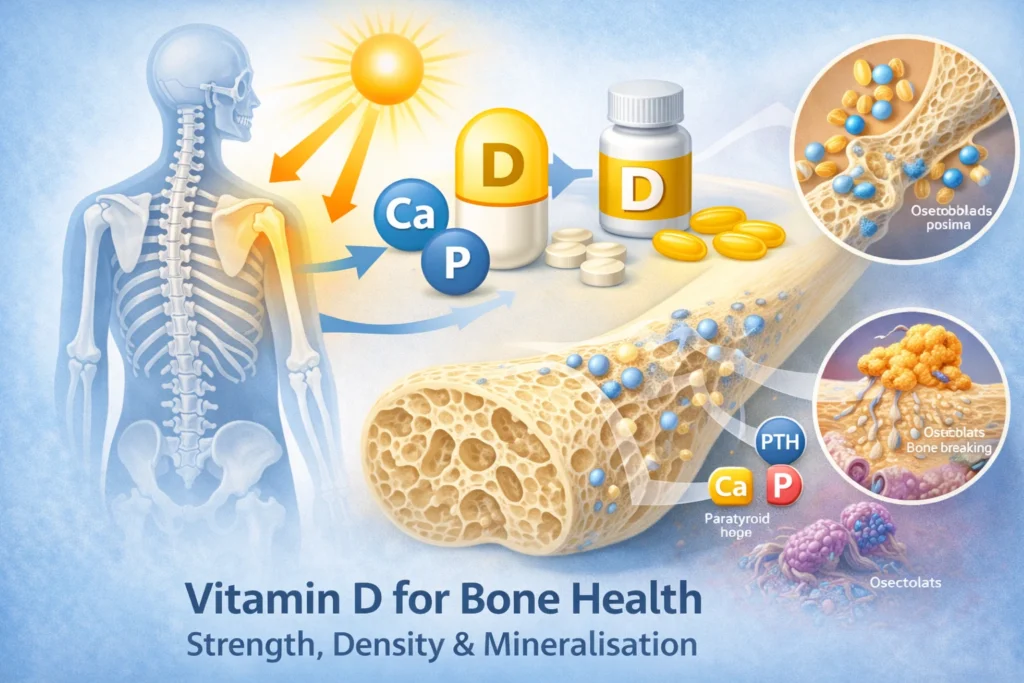
Visual Reminder: Vitamin D and Bone Health
When vitamin D is adequate, bone mineralization can proceed efficiently—supporting stronger structure and healthier growth. When it’s inadequate, the body may struggle to absorb calcium properly, increasing the risk of weakened bones over time.


A Final Take: Make Bone Strength a Family Priority
Vitamin D for children isn’t a niche topic—it’s a cornerstone. It supports calcium absorption, helps bones mineralize correctly, and plays a role in long-term skeletal resilience. And because the early years can shape outcomes decades later, it deserves proactive attention rather than last-minute reaction.
So take a breath, look at the routines you already have, and ask the honest question: are your child’s bones getting the support they need to build that higher peak?