Asthma can feel like a weather system lodged in the chest—one that flares without invitation, tightening airways the way a sudden storm squeezes a shoreline. In the search for steadier skies, vitamin D has emerged as a curious candidate. Not a quick-fix mist, not a dramatic rescue inhaler—more like background infrastructure for immune regulation. The question many people ask is simple, even hopeful: Does vitamin D supplementation truly reduce asthma attacks? The answer is layered. Some studies suggest fewer exacerbations, while others find subtler effects or benefits limited to particular groups. Still, the intrigue remains, because vitamin D is more than a bone nutrient. It is a molecular switch that can influence how the immune system speaks, listens, and adapts.
Vitamin D as a “molecular conductor” for immune rhythm
To understand vitamin D’s potential role in asthma, imagine your immune system as an orchestra. In asthma, the ensemble can fall out of tempo: inflammation rises, airway responsiveness increases, and the “music” of breathing becomes erratic. Vitamin D—specifically its active form, calcitriol—can act like a conductor, guiding immune cells toward a calmer, more balanced performance. It interacts with receptors present on immune cells, influencing cytokine production and potentially shaping inflammatory pathways.
That metaphor is not just poetic. It captures why researchers pay attention to vitamin D in chronic respiratory conditions. Asthma is not only about the airways narrowing; it is also about inflammatory signaling, immune dysregulation, and the body’s readiness to overreact. Vitamin D, therefore, is considered a plausible modulator of those processes.
Asthma exacerbations: what “reduction” really means
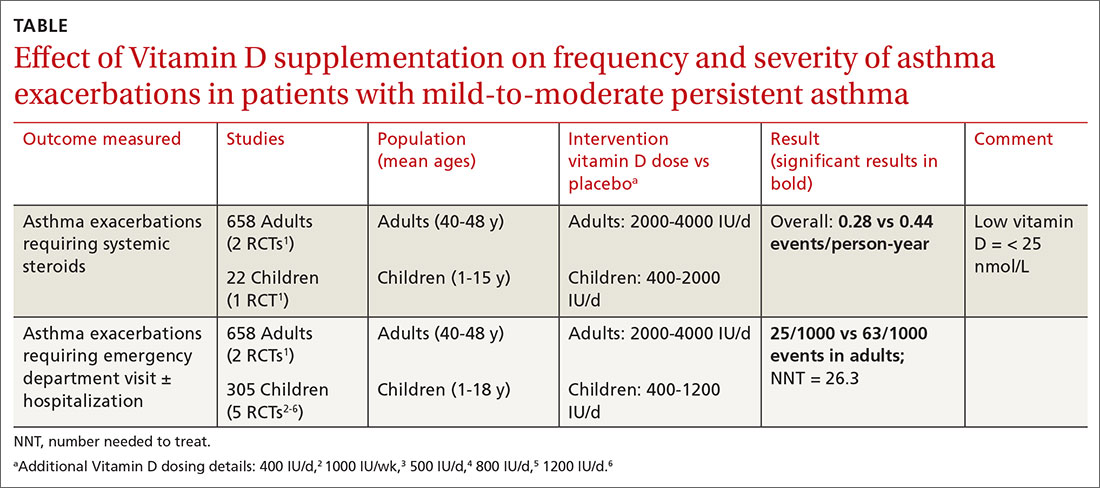
When people say “reduce asthma attacks,” they may picture a dramatic day-to-day difference. Yet clinical studies often evaluate exacerbations in specific ways: episodes requiring systemic corticosteroids, urgent care visits, emergency department treatment, or hospitalizations. In other words, “benefit” may look like fewer severe flare-ups rather than fewer mild symptoms.
Short, restrained relief can still matter. A reduction in exacerbations can mean less disruption to work and sleep, fewer missed school days, and fewer occasions where the lungs feel like they are negotiating with a narrowing corridor.
Still, not all asthma is identical. A person with allergic asthma might respond differently than someone with nonallergic triggers. The magnitude of benefit—if it exists—may vary depending on baseline vitamin D status, age, severity, and environmental factors.
What the research suggests: promising signals, uneven results
Research on vitamin D and asthma has produced a patchwork of findings rather than a single universal conclusion. Some investigations report that supplementation lowers the frequency of exacerbations, while others find no meaningful difference. The most interesting patterns often come from subgroup observations—instances where vitamin D-deficient individuals show more noticeable improvement, or where adherence and dosing align with the body’s needs.
This inconsistency does not necessarily mean vitamin D is ineffective. It can also mean that asthma is a heterogeneous condition, and vitamin D is a tool that may help most when the underlying “deficit” is real. If vitamin D is low, supplementing can bring the immune environment closer to equilibrium. If vitamin D is already sufficient, the incremental change may be smaller.
Vitamin D deficiency and the logic of “starting from low”
Many people have limited sun exposure, darker skin pigmentation, higher latitudes, indoor lifestyles, or dietary patterns that do not supply adequate vitamin D. Deficiency is therefore common, and asthma may be more vulnerable in that context. If vitamin D participates in immune calibration, then low levels could leave the system slightly mis-tuned—like a thermostat that reads the room incorrectly.
In such cases, supplementation might function less like a medicine that creates a new effect and more like a correction that restores an appropriate baseline. That’s a unique appeal: vitamin D can plausibly act at the level of immune readiness rather than merely masking symptoms.
How supplementation may work in the airways
Airway inflammation is a multi-actor drama involving epithelial cells, eosinophils, mast cells, macrophages, and signaling molecules. Vitamin D’s influence may intersect with several nodes in that network: it can affect barrier functions, reduce certain inflammatory signals, and modulate immune cell behavior. Some studies propose a connection to reduced airway hyperresponsiveness, though the evidence varies.
Picture the airways as a complex set of doors. Asthma doesn’t just close the doors—it also makes the hinges hypersensitive. Vitamin D could, in theory, soften that hypersensitivity by steering immune signaling toward a less reactive state.
Who might benefit most?
While definitive answers remain elusive, the “most likely” recipients of vitamin D’s potential benefit often include those with low baseline levels. Additionally, some evidence suggests benefits may be more apparent in children or in individuals with a history of exacerbations. Seasonal variation can also play a role: vitamin D levels often drop in winter, which can coincide with higher respiratory illness rates.
There is also the matter of co-factors. Vitamin D does not operate in isolation. Nutrition, microbiome composition, physical activity, allergen exposure, and adherence to controller medications all shape asthma outcomes. In practice, vitamin D may be a supportive piece of a broader management puzzle rather than the single keystone.
Dosage, safety, and the line between helpful and excessive
Vitamin D supplementation should be approached with care. Vitamin D is fat-soluble, meaning it can accumulate. Too little may fail to correct any deficiency; too much can raise blood calcium levels and create risks such as hypercalcemia, kidney stress, and other complications. That is why testing can be useful. Measuring 25-hydroxyvitamin D provides a clearer view of whether supplementation is likely to matter.
Typical regimens vary by clinician practice, vitamin D level, and patient characteristics. The unique appeal here is also the unique responsibility: vitamin D can be beneficial, but it is not wise to treat it as an unlimited “natural” supplement. The safest strategy is guided dosing aligned with lab results and medical advice.
For many people, modest supplementation with monitoring offers the most rational path—especially when symptoms flare during seasons associated with lower vitamin D levels.
Beyond supplements: food, sunlight, and supportive habits
Vitamin D can be obtained through diet (fortified foods and fatty fish) and synthesized in the skin via sunlight. Yet lifestyle constraints—work schedules, climate, skin coverage, and cultural practices—make consistent sun exposure difficult. Therefore, supplementation often becomes the practical bridge between potential deficiency and immune stability.
Still, supplementation is only one chapter. Asthma resilience improves when daily controller medications are used correctly, triggers are reduced, and the airway environment is protected from smoke, allergens, and viral irritants. Vitamin D might be a beneficial background ally, but it cannot replace established asthma therapies.
Where imagery meets imagination: envisioning vitamin D’s role
Sometimes visuals help translate biology into intuition. Vitamin D’s influence can be imagined as a dimmer switch in a lighting rig: not turning everything off, but lowering the intensity of inflammatory glare. The goal is steadiness, less sudden flare energy.


Bottom line: is vitamin D a flare-reducer?
Vitamin D stands out as intriguing because it sits at the crossroads of immune regulation and chronic inflammation—two themes central to asthma. Some evidence suggests supplementation may reduce asthma exacerbations, particularly in people who are deficient or otherwise vulnerable to low vitamin D levels. But the findings are not uniformly consistent, and asthma’s complexity means individual outcomes can vary.
Rather than promising a single guaranteed outcome, vitamin D offers a measured possibility: a supportive intervention that may reduce the frequency of severe flare-ups for some patients, especially when guided by appropriate dosing and, ideally, blood testing.
If asthma feels like a recurring storm, vitamin D may not be the lightning rod—but it could be part of the weatherproofing. With careful integration into a clinician-informed plan, it may help keep the airways calmer when they otherwise might tighten and turn unpredictable.