Imagine this: you’re doing everything “right,” yet your child seems perpetually tired, a little listless, or simply doesn’t bounce with the same spring as before. Now consider a quieter possibility—one that lives at the intersection of sunlight, gut function, and the kind of fats children actually enjoy. Vitamin D isn’t merely a nutrient. It’s an active partner in bone remodeling, immune calibration, and even the brain’s fine-tuning. And when it comes to vitamin D absorption, perspective shifts everything: the journey doesn’t begin with supplements. It begins with food—especially the fatty foods that make absorption feel almost inevitable.
Why Vitamin D Absorption Is More Than “Just Vitamin D”
Vitamin D works differently than many nutrients. It’s fat-soluble, meaning your child’s body prefers to handle it with the help of dietary lipids. Think of vitamin D as a traveler. Without the right “carrier,” it may struggle to move into the places where it needs to function. With fats, the journey becomes smoother.
In children, this matters even more because their bodies are building rapidly—bones lengthen, muscles strengthen, and systems refine. If absorption is inefficient, the symptoms may not shout. They may whisper: slower growth momentum, frequent aches, or an overly frequent “off” mood after busy days.
The Sunlight-Surprise: Food Can Still Be the Missing Link
Yes, sunlight helps the body create vitamin D. But modern life often mutes that contribution: indoor school hours, heavy sunscreen habits, shorter winter days, and cloud cover. Even children who play outside may not get enough effective exposure consistently. This is where food becomes a dependable rhythm instead of a gamble.
Rather than treating vitamin D as something that “shows up” magically, consider it as something that can be supported through meals. That mindset feels empowering—because meals are scheduled, repeatable, and quietly influential.
Fat: The Unsung Transportation System
Dietary fat doesn’t just add calories. It acts like a facilitator for fat-soluble vitamins. When children eat vitamin D alongside fat, digestion and absorption processes gain momentum. Bile production and micelle formation help package vitamin D for entry into the bloodstream. That’s the biological logistics your child’s body is already optimized to perform—if you give it the right inputs.
Here’s the curiosity spark: not all fats work equally for everyone. Some children eat “low-fat” foods that look healthy on paper, yet their bodies may absorb vitamin D less efficiently. It’s not that low-fat foods are “bad.” It’s that vitamin D absorption may be a little less cooperative without enough dietary fat to escort it.
Best Fatty Foods Children Actually Eat (and Will Keep Eating)
Consider these foods as absorption-friendly companions. The goal isn’t to drown meals in richness; it’s to choose fats that are appealing, practical, and consistently present.
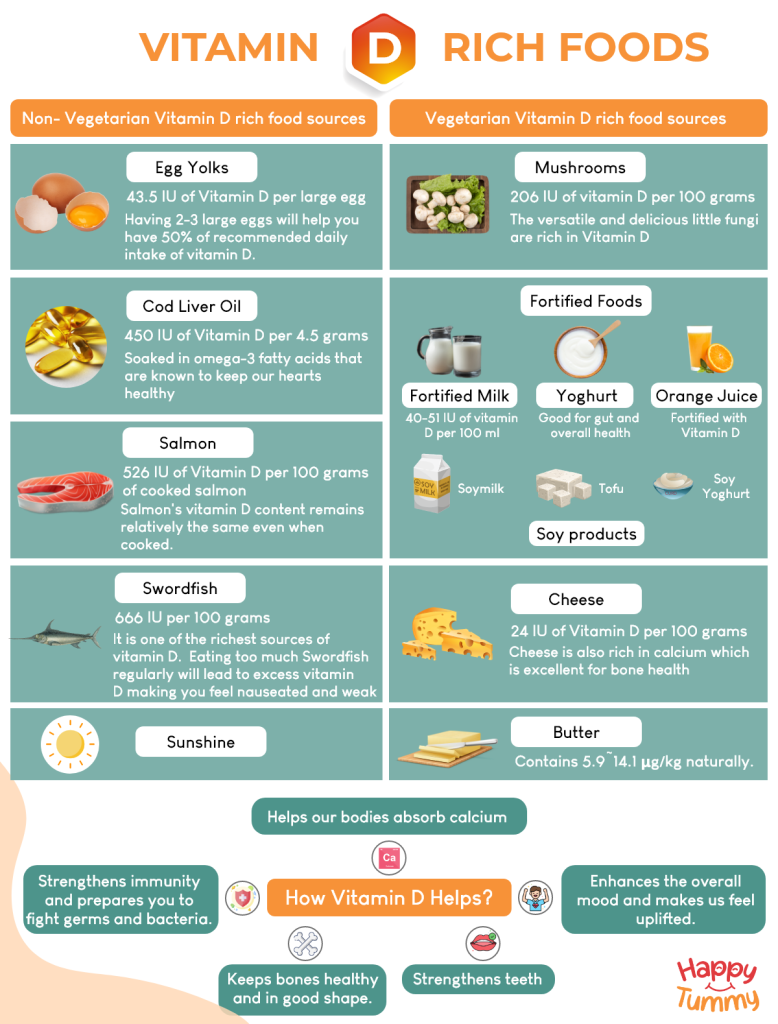
1) Fatty fish
Salmon, sardines, mackerel—these are vitamin D powerhouses. Pair them with rice, pasta, or in a simple patty form. Many kids accept “shapes” more easily than “fillets.”
2) Eggs
Egg yolks bring both nutrients and fats. Scrambled eggs with a sprinkle of cheese, omelet-style fillings, or egg-based muffins can feel like a fun food rather than a nutritional assignment.
3) Fortified dairy and alternatives
Milk, yogurt, or plant-based options fortified with vitamin D can be easier than chasing fish schedules. Choose varieties with appropriate fat content for your child’s age and dietary needs.
4) Cheese and yogurt
Calcium is the headline, but fats help vitamin D absorption do its job more smoothly. Try yogurt parfaits, cheese quesadillas, or creamy sauces for vegetables.
5) Nut butters
Peanut butter, almond butter, and tahini can support fat intake in a way children often love—especially when stirred into smoothies or spread on toast.
Curiously, the best choice is often the one your child will eat tomorrow. Consistency is the secret ingredient.
Timing Matters: The Meal Pairing Strategy
Absorption is not only about the ingredient; it’s about the pairing. Serving vitamin D-rich foods with a source of dietary fat can enhance how effectively the body takes it up. For example, pair a vitamin D-rich egg dish with a little olive oil, cheese, or a side of avocado.
Think in terms of “absorption choreography.” The gut digests. Bile mobilizes. Micelles deliver. Your meal arrangement influences each step. Even one small tweak—like choosing whole-milk yogurt instead of a fat-free version—can shift the outcome.
Short sentences work here: don’t overcomplicate. Decide. Pair. Repeat.
How to Make Fatty Foods Feel Friendly (Texture, Flavor, and Repetition)
Children are often texture detectives. A list of healthy foods is less valuable than food that fits their preferences. The trick is to engineer familiarity: blend fish into mild flavors, incorporate eggs into savory muffins, and fold yogurt into smoothies or fruit dips.
Long-term success comes from repetition without pressure. Offer the same food in small portions. Let curiosity approach at its own pace. A child who refuses today may accept next month.
Some foods can be “invisible.” Salmon in a creamy pasta. Sardines spread on toast with a citrusy squeeze. Fortified yogurt blended into a smoothie. The absorption benefit stays intact, while the child feels like they’re just eating something delicious.

Age, Appetite, and Safety: Get the Balance Right
Children’s nutritional needs vary with age, growth rate, and activity level. Fat intake should align with pediatric guidance, especially for younger children. The aim is not to push heavy meals, but to choose nutrient-dense options that naturally include beneficial fats.
If your child is underweight, very picky, or has digestive challenges, absorption may be affected by factors beyond food choice—such as gut health, bile flow, or malabsorption conditions. In those cases, it’s worth discussing strategies with a qualified clinician rather than guessing.
Promise to yourself: support will be personalized. Health isn’t one-size-fits-all, and neither is nutrition.
When Vitamin D Needs More Than Food (And How to Know)
Food can be powerful, yet some children still need additional vitamin D support due to limited sunlight exposure, darker skin pigmentation, geographic location, seasonal variation, or certain medical considerations.
Look for pattern clues rather than single-day signals: repeated fatigue, slow growth concerns, frequent musculoskeletal discomfort, or low vitamin D levels on lab tests. If bloodwork shows deficiency, dietary changes become a foundation, not the entire structure.
There’s a mindset shift worth keeping: supplements are not the enemy. They’re a tool—often most effective when paired with a diet that supports absorption.
:max_bytes(150000):strip_icc()/vitamin-d-foods-edit-626c0fc968b642d9a1c2935a10cb1e9e.jpg)
Practical Meal Ideas That Turn Vitamin D Absorption Into a Habit
Try building “repeatable wins.”
Breakfast: scrambled eggs with cheese; yogurt parfait with fortified yogurt; smoothie with nut butter and fortified milk.
Lunch: tuna or salmon rice bowls; cheese quesadilla with avocado; pasta with creamy sauce using fortified milk or yogurt.
Dinner: baked salmon with olive oil roasted vegetables; sardine toast plus fruit; hearty lentil curry finished with a yogurt swirl (for a comfort-food twist).
Short on time? Use convenience strategically: choose fortified dairy, keep eggs and yogurt on hand, and plan one fish meal per week. The body prefers patterns. Your child’s gut learns them.
The Bigger Picture: Empower Curiosity, Not Perfection
When parents shift their perspective, everything changes. Vitamin D absorption becomes less of a mystery and more of a story you can influence—through food choices, meal pairing, and the fats that make absorption feel like a well-designed route.
Children don’t need perfection. They need access to supportive meals and the patience to explore. Offer fatty, vitamin D-rich foods with calm confidence. Let taste, texture, and repetition do their slow magic. Over time, the quiet work of absorption turns into a visible form of well-being—steady energy, resilient bones, and a body that feels more fully “in rhythm.”