It’s a familiar scene: a modest bottle of high-potency vitamin D, purchased without fanfare, tucked beside a busy morning routine. People want one thing—support for bones, mood, immunity, and the quiet reassurance of “more is better.” Yet vitamin D behaves more like a hormone coordinator than a simple nutrient. When doses climb beyond what the body can metabolize comfortably, vitamin D toxicity can emerge—sometimes slowly, sometimes suddenly, and often with symptoms that look deceptively ordinary.
To many, the fascination is understandable. Vitamin D has a reputation for being “natural,” and over-the-counter options feel safe because they’re widely available. Still, the deeper story is more complicated: absorption varies, dosing instructions can be misread, medical conditions can change the body’s threshold, and the line between therapeutic supplementation and metabolic overload can become blurry.
Why Vitamin D Toxicity Can Catch People Off Guard
A common observation is that vitamin D is fat-soluble, so people assume it will “store harmlessly.” Fat-soluble storage is real—but storage is not the same as safety. Vitamin D and its metabolites accumulate over time, and when the reservoir exceeds capacity, calcium regulation can tilt out of balance.
The body normally maintains serum calcium in a narrow range using a sophisticated endocrine feedback loop. Vitamin D increases intestinal calcium absorption. When vitamin D levels are too high, the feedback loop can be overwhelmed, causing hypercalcemia—an elevated calcium state that affects kidneys, nerves, muscles, and the digestive system.
Even if the initial dose seems reasonable, potency changes the math. “High potency” products can deliver large amounts per tablet or drop, and small dosing habits—like doubling up on top of a multivitamin—can transform a supportive regimen into a chronic oversupply.
The Hidden Mechanics: Fat Solubility and Cumulative Dosing
Fat-soluble vitamins travel through lipid pathways and linger. That persistence is part of why vitamin D supplementation can be effective during deficiency. It is also why toxicity can develop without immediate warning.
Consider this: a single day of extra vitamin D rarely causes catastrophe. Toxicity tends to be cumulative. If someone takes a high dose daily for weeks or months—especially with inconsistent awareness of total intake—blood levels can gradually rise until physiological equilibrium breaks.
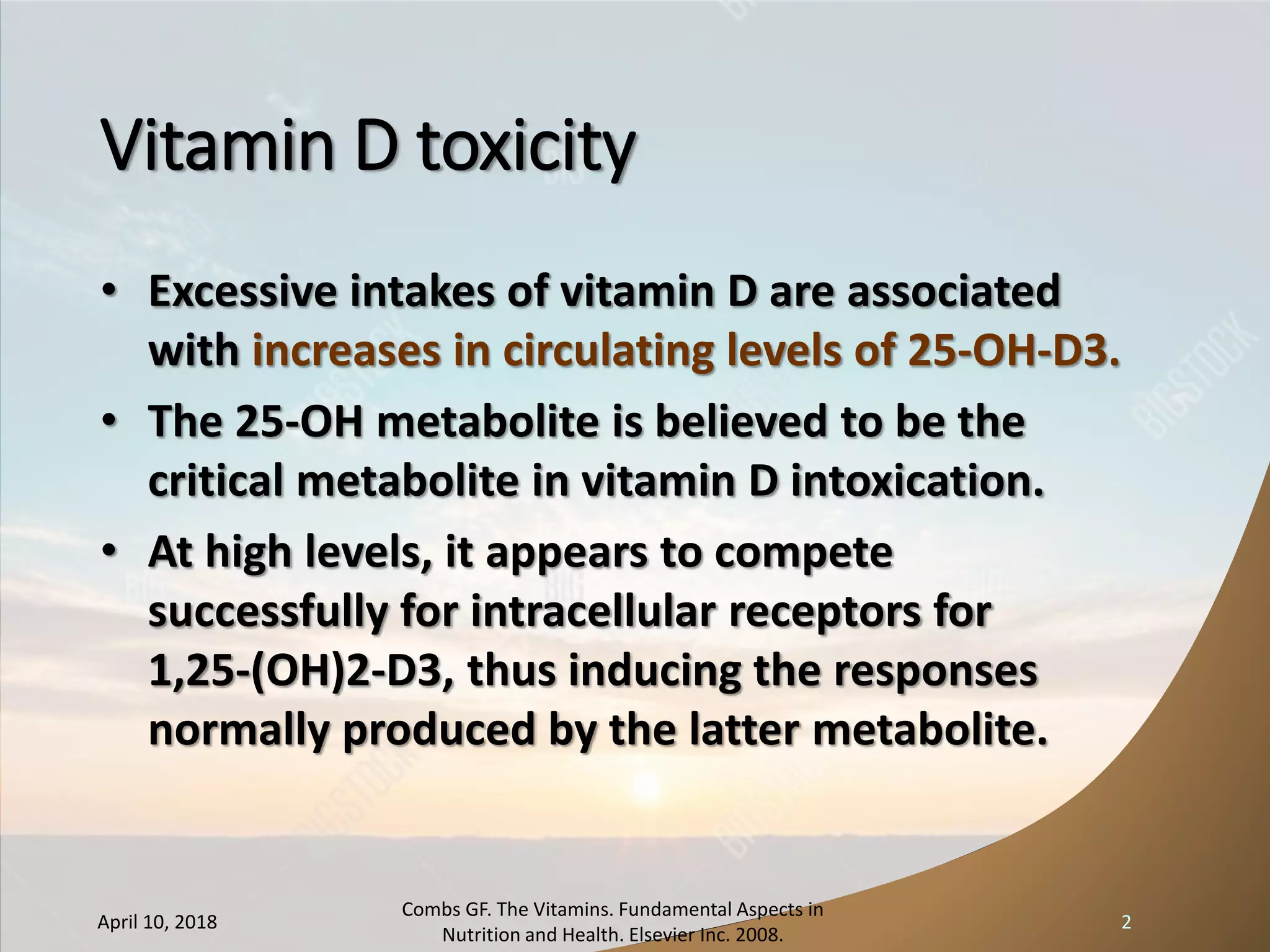
Uncommon terminology helps describe this: the body’s “buffering capacity” for vitamin D metabolites is finite. Once that buffer is saturated, calcium absorption can overshoot, and the kidneys may struggle to keep up. In other words, storage becomes a reservoir of risk rather than a reservoir of resilience.
Recognizing Early Symptoms: When “Just Feeling Off” Becomes a Pattern
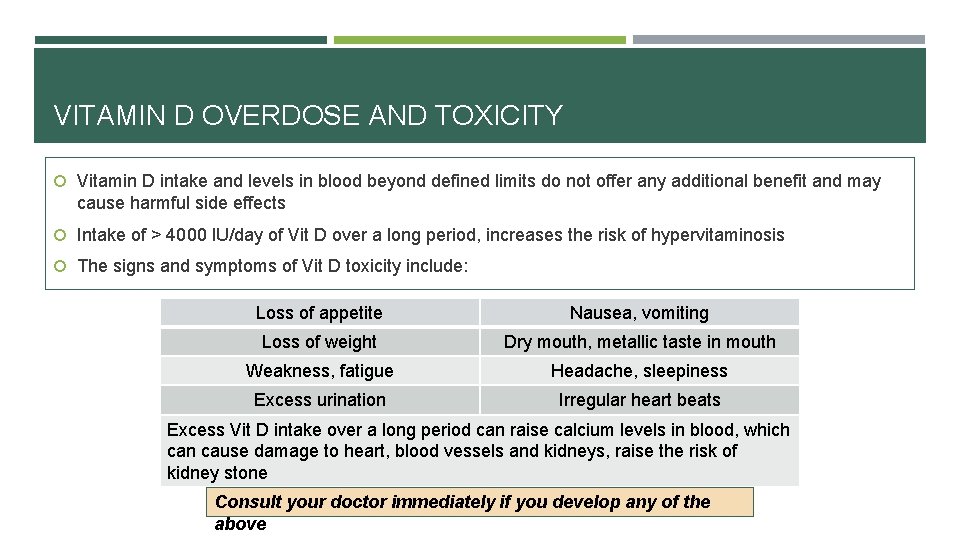
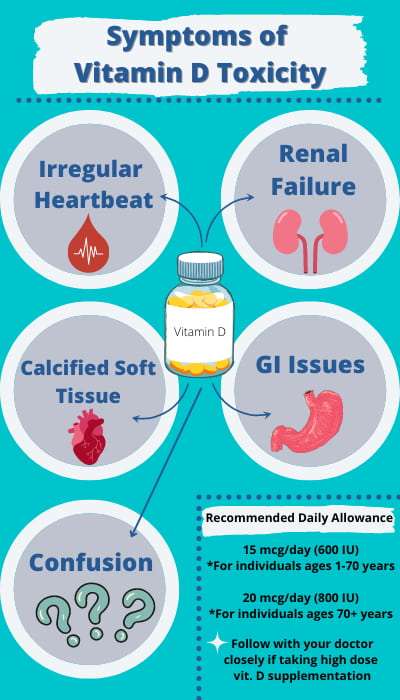
Early signs of vitamin D toxicity are notoriously non-specific. People often describe fatigue, nausea, constipation, loss of appetite, and increased thirst. They may blame stress, diet changes, dehydration, or a “stomach bug.” A deeper pattern is often the key: symptoms that cluster together, persist, or worsen over time.
Neuromuscular complaints can appear too—weakness, muscle aches, and sometimes confusion. Elevated calcium can irritate the nervous system and alter electrical signaling. Meanwhile, the gastrointestinal tract may react as calcium levels rise, leading to constipation or abdominal discomfort.
The deeper reason these symptoms mislead is cultural and psychological. Many individuals expect nutrients to work like gentle light switches: either helpful or neutral. Vitamin D toxicity is more like a dimmer switch stuck at high brightness—subtle at first, then impossible to ignore.

Why Over-the-Counter “High Potency” Labels Can Be Misread
Over-the-counter supplements often aim for clarity, but the human tendency to skim labels is powerful. “High potency” can be interpreted as “high value.” Yet potency refers to quantity—not necessarily to appropriateness.
Some products list vitamin D in International Units (IU), which can be difficult to conceptualize. A supplement might claim, for example, that it provides 5,000 IU per serving. Another routine might include a multivitamin with additional IU. Without tallying all sources, a person can unknowingly move from maintenance to accumulation.
Timing can complicate things as well. Some people take vitamin D with other fat-containing supplements or meals rich in lipids, increasing absorption. That isn’t automatically bad—until the total intake becomes excessive. The body absorbs what it can, and it does not always “choose” moderation.
Fascination, Not Folklore: The Psychology Behind “More Than Needed”
People aren’t simply careless. There’s a reason fascination grows around vitamin D. The nutrient occupies a powerful narrative space: sunshine, winter fatigue, immune protection, and bone health. When people feel sluggish, the mind reaches for a satisfying explanation. A supplement becomes a concrete action, a ritual that promises immediate agency.
There’s also the allure of “stacking”—combining vitamin D with magnesium, calcium, or K2, often encouraged by online communities and well-meaning health advice. Stacking can be beneficial in the right context, but it can also become a compounding effect. A person may take vitamin D for one reason while simultaneously increasing calcium intake, then add other supplements that shift the same metabolic pathway.
In short, fascination is fuel. It turns vague intentions into persistent dosing. The deeper reason toxicity occurs is that the human loop—hope, habit, repetition—outpaces the body’s ability to safely absorb and process excess.
Who Is at Higher Risk: Beyond Personal Choice
While anyone can overdo vitamin D, certain groups face a narrower safety margin. People with kidney disease require special caution because calcium handling becomes less efficient. Others with conditions affecting metabolism may experience altered vitamin D processing.
Sarcoidosis and certain granulomatous disorders can increase conversion of vitamin D metabolites, effectively raising active levels. Some lymphomas and other diseases can also influence vitamin D metabolism. In these cases, “standard” dosing may become too aggressive even at doses that seem modest to the supplement-browsing mindset.
Medication interactions matter too. Thiazide diuretics can raise calcium. Some anticonvulsants can affect vitamin D metabolism. These factors don’t always feel urgent, so the risk becomes easy to miss.
How Toxicity Is Confirmed: Testing the Numbers, Not the Narratives
Symptoms can guide suspicion, but confirmation requires measurement. Clinicians typically evaluate blood calcium levels and vitamin D metabolites, often including 25-hydroxyvitamin D. Additional tests may assess kidney function and electrolyte balance.
The point is not to fear testing. It’s to replace assumptions with precision. The narrative about vitamin D “feeling helpful” can blur reality, especially because deficiency and toxicity can both coexist with fatigue—one from lack, the other from metabolic overload.
If a person is experiencing persistent symptoms after starting a high-potency regimen, testing transforms uncertainty into actionable clarity.
What to Do If Toxicity Is Suspected
When toxicity is suspected, the priority is to pause the oversupply and seek medical guidance. Stopping the supplement is not a substitute for evaluation, especially if symptoms include dehydration, confusion, severe constipation, or reduced urination.
Management often involves addressing hypercalcemia. The care plan may include hydration strategies, dietary adjustments, and in more severe cases, specific medical interventions under supervision.
Recovery can take time because vitamin D remains in the system. This is another reason toxicity is underestimated: the body doesn’t “reset overnight.” The metabolic timeline is measured in weeks, not moments.
Safer Supplementation: Returning to Balance Without Losing the Benefit
Safety begins with restraint. Choose a dose aligned with needs rather than enthusiasm. If deficiency is suspected, confirm with appropriate lab work before committing to long-term high potency.
Track total intake from all products. Multivitamins, fortified foods, and separate vitamin D drops can create inadvertent redundancy. A simple habit—reading every label and summing IU—can prevent a slow drift into excess.
Consider individualized guidance, particularly for people with kidney concerns, endocrine disorders, or conditions that alter vitamin D metabolism. Balance doesn’t require abstinence. It requires calibration.
Looking Beyond “More”: A More Mature View of Vitamin D
Vitamin D can be a genuine ally. The problem is not vitamin D itself; it’s the mismatch between human eagerness and biological tolerance. Toxicity is a reminder that nutrients are not always passive. They are signals. They communicate with calcium and calcium is not a casual mineral—it is the currency of contraction, nerve transmission, and cellular messaging.
When someone chooses high-potency vitamin D, the decision should be anchored in evidence, not reassurance. That shift—from fascination to informed stewardship—is where safety lives.