It’s a question that surfaces again and again—often after a sleepless night, an itchy rash, or the uncomfortable reminder that “viral” doesn’t always mean “over.” People ask whether vitamin D might help with shingles and herpes outbreaks. The observation is simple: some individuals notice fewer flares during sunnier months, or after improving their vitamin intake. But fascination grows when the biology beneath the surface appears to rhyme with the anecdote. Vitamin D isn’t a magic antidote; it’s more like a backstage regulator—an influence that may affect how the immune system interprets danger.
Shingles and herpes: why the timing feels so personal
Shingles (herpes zoster) and herpes outbreaks are caused by herpes-family viruses. The viruses don’t vanish after the initial infection. Instead, they settle into latency—dormant persistence inside nerve tissue—then reactivate when conditions become favorable. Those conditions vary: stress, illness, aging, immune dysregulation, and even seasonal changes. That seasonal angle is where vitamin D enters the conversation.
For many, the first clue is lived experience. A rash appears, discomfort follows, and then the episode resolves—only to return later. The recurrence can feel oddly cyclical, as if the body is following a calendar. While that calendar may not be explicitly caused by sunlight alone, vitamin D is a plausible piece of the puzzle because it rises after sun exposure and declines during darker months.

Vitamin D: a nutrient that behaves like an immune conductor
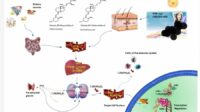
Vitamin D is often described as a vitamin, but functionally it behaves more like a hormonal signaling system. Once produced in the skin (or obtained from food), it is processed by the liver and kidneys into active forms that interact with vitamin D receptors on many immune cells. This matters because shingles and herpes reactivation are, at their core, immune events—episodes where viral containment loosens.
In broad strokes, vitamin D appears to help calibrate immune responses. It can influence both the innate immune system (the fast, generalized defenses) and adaptive immunity (the targeted, memory-based response). When the immune “software” becomes slightly misconfigured—due to age, chronic stress, low vitamin D levels, or other factors—latent viruses may gain an opportunity to reawaken.
So the core idea isn’t that vitamin D kills the virus directly. Instead, it may reduce the likelihood of reactivation by strengthening immune vigilance.
What studies suggest: the connection is intriguing, not absolute
Research has explored links between vitamin D status and herpes family illnesses, including associations with severity and frequency of symptoms. Some investigations find that people with lower vitamin D levels experience worse outcomes or are more likely to develop shingles. Others show mixed results, and not everyone benefits equally.
This doesn’t invalidate the hypothesis; it refines it. Immune behavior is rarely one-factor dependent. Vitamin D interacts with age, baseline immune function, nutrition quality, comorbidities, and even adherence to treatment. A low vitamin D level may be a marker of broader vulnerability rather than a sole driver of viral reactivation.
Still, the pattern remains compelling enough to justify practical attention—especially because deficiency is common and supplementation is relatively accessible.
The “common observation” people make—and what could underlie it
Many people notice that outbreaks cluster during winter or stressful seasons. That observation can be dismissed as coincidence—until you consider plausible pathways. Sunlight influences vitamin D. Vitamin D influences immune signaling. Immune signaling influences viral containment. Even if the chain isn’t perfectly linear for every individual, the mechanism offers a coherent explanation for the feeling that seasons matter.
There may also be subtler contributors: vitamin D can modulate inflammatory responses, and inflammation can shape how comfortable or hostile an environment feels to viral reactivation. Additionally, people with lower vitamin D might have less robust overall health behaviors—different diet patterns, less outdoor activity, or higher rates of sleep disruption. Those factors can amplify each other.
In other words, the fascination isn’t merely “sun equals cure.” It’s that sunlight may be nudging the immune system through an intermediary—vitamin D—while other seasonal variables ride along.
Does vitamin D prevent shingles or herpes? A cautious, realistic view
Prevention is where expectations should be calibrated. For shingles, vaccines exist and have strong evidence for reducing risk and severity. Vitamin D supplementation should not be treated as a substitute for vaccination or antiviral medication when clinically indicated.
However, vitamin D could function as a supportive layer—particularly for individuals with documented deficiency. If deficiency weakens immune regulation, correcting it may lower the probability of a flare. Think of it as reducing friction on the immune system’s machinery, not switching on a lightbulb that guarantees darkness never returns.
For herpes outbreaks (including recurrent oral or genital herpes), the evidence is less definitive, but the immune-calibration argument still applies. If vitamin D contributes to a healthier immune threshold, it might help some people experience fewer or less intense episodes—though response can vary.
How to approach vitamin D: testing, dosing, and safety
The most sensible starting point is measurement. A blood test for 25-hydroxyvitamin D provides clarity on deficiency or insufficiency. Without testing, it’s easy to overcorrect, especially when supplements and fortified foods accumulate.
Dosing should be personalized. Clinicians often recommend different strategies based on baseline levels, age, body weight, and medical conditions. Some people need short-term higher doses to replenish stores, followed by maintenance. Others may only require modest supplementation.
Safety matters because vitamin D is fat-soluble, meaning excess can accumulate. High doses over time can raise calcium levels, potentially causing symptoms such as nausea, constipation, confusion, or kidney-related problems. The safest path is guided supplementation—particularly for anyone with kidney disease, sarcoidosis, or other conditions affecting calcium metabolism.
Synergy with mainstream treatments: supplements as the sidekick, not the hero
When shingles symptoms begin—pain, burning sensations, or a developing rash—prompt antiviral treatment can reduce duration and complications. The same principle applies to herpes outbreaks where antivirals may shorten illness and reduce viral shedding. Vitamin D is not a replacement for these therapies.
Instead, consider supplementation as a potential partner to standard care. It may support overall immune tone, possibly affecting the context in which outbreaks occur. This is especially relevant for people who suffer recurrent episodes, or for those who live in low-sun environments and struggle to maintain adequate vitamin D levels.
Even when vitamin D doesn’t prevent recurrence, optimizing immune health can still influence recovery comfort—an outcome worth pursuing with a measured and evidence-informed approach.
Lifestyle factors that complement vitamin D’s potential effects
Vitamin D works best in a broader ecosystem. Sleep disruption can erode immune performance, and chronic stress can tilt immune responses toward dysfunction. Balanced nutrition—adequate protein, micronutrients, and hydration—helps the body sustain repair and regulation.
Gentle sun exposure may support vitamin D production, though safety must remain paramount. Overexposure carries risks, including skin damage. For those who avoid sun due to sensitivity or lifestyle constraints, food sources and supplements become more important.
Movement also matters. Regular physical activity is associated with improved immune resilience. It won’t guarantee an outbreak won’t occur, but it can reduce the odds that viral latency is reactivated under cumulative strain.
The deeper reason the topic feels so captivating
The question “Can vitamin D help with shingles and herpes outbreaks?” has a particular psychological pull. It offers something rare in medical conversations: a controllable variable. Instead of only waiting for a flare, people can consider a daily habit—sunlight, dietary intake, a supplement plan—and imagine influencing the outcome.
That doesn’t mean the outcome is guaranteed. Biology rarely grants simple promises. Yet the immune system is responsive to environment, and vitamin D sits at the intersection of environment and immunity. It’s not the virus’s master switch. It’s more like a thermostat.
When the thermostat is off—because of seasonal lack, dietary insufficiency, or limited sun—the immune “temperature” might drift. Correcting that drift may make reactivation less likely. For many, that possibility is enough to justify careful testing, safe supplementation, and a collaborative plan with healthcare guidance.
If you’re considering vitamin D for shingles or herpes concerns, the most effective route is practical: discuss symptoms with a clinician, confirm vitamin D status with a blood test, and treat acute outbreaks with evidence-based antiviral care when appropriate. Then, let vitamin D serve its best role—supporting immune steadiness rather than claiming to be a cure-all.