In the midst of COVID-19’s relentless waves, a familiar nutrient—vitamin D—returned to the spotlight with renewed urgency. Patients, clinicians, and researchers alike noticed an intriguing pattern: low vitamin D status appeared frequently among individuals with severe disease, and supplementation seemed, in some studies, to shift outcomes. Yet “seemed” is not enough. The question that lingers is sharper and more consequential: what happens when hospitalized patients receive high-dose vitamin D, and what does the accumulated evidence suggest across trials?
The Clinical Curiosity: Why Vitamin D Felt Like More Than a Vitamin
Vitamin D is often reduced to a bone-and-blood chemistry footnote. In reality, it behaves more like a biochemical dispatcher. It modulates innate immunity, shapes inflammatory signaling, and nudges the immune system away from an overreactive trajectory. When COVID-19 threatened to tip the body into cytokine-driven chaos, vitamin D’s immunoregulatory footprint looked oddly compatible.
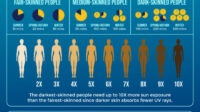
There’s also a more human, observational layer to the fascination. Many hospitalized patients arrive with multiple risk factors that correlate with vitamin D deficiency: limited sun exposure, darker skin pigmentation, older age, obesity, and chronic illness. These factors can also track with worse outcomes. That overlap can make vitamin D appear causally relevant—even when the relationship is partly entangled. Meta-analysis becomes the instrument that tries to disentangle signal from shadow.
High-dose strategies, in particular, represent a deliberate attempt to overcome baseline deficiency quickly. Rather than offering a gentle nudge that may take weeks, high-dose dosing aims for a rapid immunologic recalibration—an approach that invites both hope and skepticism.
Understanding “High-Dose” in a Hospital Setting
High-dose vitamin D is not a single, universal regimen. Trials vary in the magnitude of loading, the route (oral versus other forms), and the timing relative to symptom onset or hospital admission. Some protocols resemble a bolus—an attempt to correct quickly. Others spread doses to maintain elevated levels without overshooting.
In hospitalized patients, timing can be everything. COVID-19 is not a static illness; it has phases. Early infection often involves viral replication and immune activation, while later disease may feature dysregulated inflammation. If vitamin D primarily helps with immune harmonization, its benefit may depend on whether supplementation arrives early enough to influence the inflammatory pivot.
This temporal nuance is one of the reasons meta-analytic conclusions are particularly valuable. A single trial can be informative, but an ensemble of trials allows investigators to examine whether effects are consistent despite different dosing schemes and clinical contexts.
What Meta-Analysis Tries to Resolve: Consistency, Direction, and Magnitude
A meta-analysis aggregates results across multiple randomized studies, seeking answers to three practical questions. First: do high-dose vitamin D and control compare favorably in reducing adverse outcomes? Second: is any observed effect directionally consistent? Third: how large is the effect, and does it hold across subgroups?
Notably, meta-analysis also evaluates heterogeneity—differences between study outcomes that may reflect patient differences, dosing schedules, baseline vitamin D levels, or standards of care during the trial period. During the pandemic’s evolution, care protocols changed. Corticosteroid use, antiviral availability, and ventilation practices shifted over time. Those contextual changes can blur vitamin D’s apparent contribution if not carefully accounted for.
Another key theme is statistical nuance. Small trials can produce apparently large effects by chance. Meta-analysis helps dampen the noise, revealing whether the “signal” persists when evidence is pooled.
Potential Mechanisms: How Vitamin D Could Influence COVID-19 Trajectories
The fascination deepens when one considers how vitamin D might influence COVID-19 beyond correlation. Vitamin D acts through the vitamin D receptor, influencing gene transcription related to antimicrobial peptides and immune regulation. It can also temper excessive inflammatory responses—a feature that matters when severe COVID-19 sometimes behaves like a runaway immunological fire.
Imagine the immune system as an orchestra. In some patients, the performance becomes chaotic: sections play out of sync, volume rises, and the conductor struggles to correct. Vitamin D is thought to help restore rhythm by modulating cytokine production and promoting a more balanced immune response. If this framework is accurate, then the most meaningful clinical effects might emerge in outcomes tied to inflammation—such as progression to critical illness, respiratory decline, or systemic complications.
However, mechanisms do not guarantee clinical outcomes. The body’s response is multivariate; vitamin D interacts with comorbidities, baseline deficiency, and concurrent treatments. Meta-analysis, again, is the place where theory meets evidence.
What Clinical Outcomes Typically Get Measured
Hospitals care about endpoints that reflect both survival and disease severity. Trials often track mortality, need for intensive care, time to clinical improvement, oxygen requirements, length of stay, and markers of inflammation. A well-designed synthesis examines which endpoints move and which do not.
It is possible to observe modest effects on one endpoint—say, inflammatory markers—without a clear shift in mortality. Conversely, meaningful reductions in severe progression can occur even if short-term biochemical changes look inconsistent. High-dose vitamin D might act like a stabilizer rather than a cure, influencing trajectory more than immediate symptom relief.
When reading meta-analytic findings, attention should be paid not only to whether results reach statistical significance, but also to clinical relevance. A small relative risk reduction may translate into fewer severe events, yet still leave uncertainty for individual patients.
Baseline Vitamin D Status: The “Deficiency Amplifier” Idea
One of the more compelling considerations is whether high-dose vitamin D works best in people who start out deficient. This concept is sometimes called a deficiency amplifier: when the starting point is low, replenishment may exert a larger biological effect. In contrast, supplementation in already adequate individuals might offer diminishing returns.
Hospitalized COVID-19 cohorts are not uniform. Some patients may have very low serum 25(OH)D, while others are near sufficient. If vitamin D deficiency is common, the average treatment effect in meta-analysis may appear diluted by participants who have less need.
Subgroup analyses—when available—can illuminate this pattern. Even when a pooled effect is neutral, targeted benefits may appear in deficient strata. The scientific fascination lies in whether such stratification emerges with plausible consistency rather than sporadic coincidence.
Safety and Tolerability: A Practical Reassurance
High-dose vitamin D can raise legitimate questions about safety. Excess vitamin D can contribute to hypercalcemia and related complications. In the hospital environment, clinicians often monitor calcium levels, renal function, and overall metabolic status.
Meta-analytic safety assessment looks for adverse events such as hypercalcemia, kidney injury, and other treatment-related complications. The ideal outcome is a favorable risk-benefit balance: minimal harm with potential clinical upside.
Safety findings can be as important as efficacy. Even a modest improvement becomes more meaningful when the intervention is well-tolerated and easily integrated into care pathways.
The Deeper Reason for Fascination: Biology, Bias, and Timing
The continued attention to high-dose vitamin D is not merely scientific vanity; it reflects a pattern of converging plausibility. Still, the path from biological plausibility to definitive patient benefit is rarely straight.
Bias can intrude. Observational studies can overestimate causality when deficiency tracks with healthier behaviors or socioeconomic factors. Randomized trials reduce confounding, but they introduce other complexities: variations in dosing, adherence, baseline levels, and co-treatments. Timing also matters—administration early in disease may offer a different opportunity than supplementation after inflammatory escalation has already set the stage.
In this sense, the fascination is almost detective-like. Researchers keep returning because vitamin D sits at a crossroads of immune modulation, deficiency prevalence, and potential intervention practicality.

Interpreting Meta-Analytic Results Without Overclaiming
Meta-analysis can provide a clearer picture, but it still does not grant omniscience. Pooled estimates summarize the average effect across diverse trials, not the destiny of one specific patient. Confidence intervals matter. Heterogeneity matters. The presence or absence of subgroup signals matters.
A cautious interpretation approach looks at both the direction of effect and the consistency across studies. Even when pooled results are not strongly positive, they can inform clinical decision-making by identifying where benefit is more likely—such as in deficient populations or certain phases of illness.
Conversely, if pooled findings suggest benefit, it is still important to understand the magnitude and endpoint relevance. Clinical medicine rewards precision: what improvement occurs, for whom, and under what circumstances?
Practical Implications for Hospital Protocols
Clinicians ultimately need actionable guidance. If high-dose vitamin D shows benefit with acceptable safety, it may be considered as an adjunct—especially for patients with suspected deficiency. However, protocols should avoid one-size-fits-all dosing without regard to baseline levels and comorbidities.
Hospitals vary in laboratory capacity and monitoring practices. Some may measure serum 25(OH)D routinely; others may infer deficiency risk. Implementation should align with local feasibility, safety monitoring, and existing COVID-19 treatment standards.
Importantly, vitamin D should not be framed as a stand-alone substitute for evidence-based therapies. Its most defensible role is supportive: a biologically plausible immunomodulator that may influence severity, not replace antivirals, corticosteroids when indicated, or respiratory support when needed.
What Comes Next: Refining Trials and Personalizing Dosing
The most intriguing question is how to refine the intervention so that it stops averaging and starts targeting. Future research can focus on individualized dosing strategies, timing relative to symptom onset, and clearer stratification by baseline vitamin D levels. Better endpoint selection—such as progression markers closely tied to inflammatory phases—could reveal effects that are currently diluted.
Another frontier involves combining vitamin D with other interventions affecting immunity and coagulation, while maintaining rigorous study designs. The immune system is not a single pathway; it is a network. Vitamin D’s place in that network may become clearer when trials account for contemporaneous therapies and patient phenotypes.
The allure remains because the intervention is familiar, inexpensive, and biologically coherent. Yet the scientific responsibility is to honor uncertainty until evidence becomes both consistent and clinically consequential.
Conclusion: High-Dose Vitamin D as a Serious Question, Not a Simple Answer
High-dose vitamin D for hospitalized COVID-19 patients sits at a compelling intersection of immunology, real-world deficiency patterns, and the practical desire for accessible adjunctive therapies. Meta-analysis offers a way to weigh evidence across diverse trials and assess whether any beneficial effect holds under pooled scrutiny.
The enduring fascination is justified: vitamin D is not merely a nutrient; it is an immune signaling mediator. But the deeper discipline lies in interpretation—recognizing when findings point toward targeted benefit, when results remain equivocal, and how timing, baseline status, and clinical context shape outcomes.
Ultimately, the question is less “Does vitamin D work?” and more “When, for whom, and through what biological pathway?” That refined question is where the next generation of evidence—and the next meaningful clinical insight—can be expected to emerge.