Some questions about nutrition feel deceptively simple—until they meet the delicate reality of childhood. Vitamin D is one of those nutrients. It’s often discussed as a single recommendation, as if “vitamin D” were a uniform substance. Yet for parents and caregivers, the choice between D2 and D3 can feel like a maze: Which one is kinder to a growing body? Which one actually works when life gets busy and sun exposure becomes inconsistent? The answer isn’t about declaring one form “good” and the other “bad.” It’s about understanding how each behaves inside the body, how reliably it raises vitamin D status, and where safety lines truly sit.
Vitamin D in a Child’s World: Why the Choice Matters
Children are building more than bones—they’re assembling a foundation for immune resilience, muscle coordination, and healthy development. Vitamin D plays a quiet but pivotal role in calcium absorption and bone mineralization. When levels run low, the consequences can linger: slower growth trajectories, softer bones, and a greater susceptibility to certain health issues.
But there’s an additional nuance: a child’s vitamin D status can swing with seasons, latitude, skin pigmentation, clothing coverage, time indoors, and even lifestyle trends like screen-heavy routines. That variability turns the supplement question from “nice to have” into “strategic.”
D2 and D3 both belong to the vitamin D family, yet they’re not interchangeable in a straightforward, identical way. The differences begin at the molecular level and echo through the bloodstream, where the body “decides” how long and how effectively vitamin D can exert its effects.
D2 vs D3: A Perspective Shift From “Name” to “Behavior”
It’s tempting to treat vitamin D like a label—D2 or D3, choose one, move on. A more revealing approach is to watch how each form behaves after ingestion. Vitamin D must be converted in stages: first activated in the liver, then further processed in the kidneys and other tissues to support biological functions.
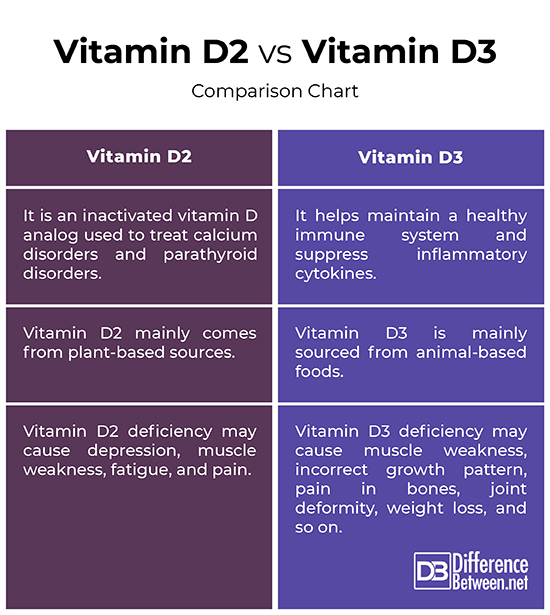
In general terms, D3 (cholecalciferol) is the form more commonly associated with robust vitamin D status in the body. D2 (ergocalciferol) is also effective, particularly in specific contexts. Still, the question parents really want answered is this: when a child’s levels need improvement, which form does it more reliably and with less “wasted effort”?
This is where the conversation shifts. Instead of asking “Which is better in theory?” the more practical question becomes “Which form tends to maintain steadier, adequate blood levels over time for children with real-world schedules?”

Effectiveness: How D3 Often Wins the Quiet Battle of Blood Levels
Effectiveness isn’t a single moment; it’s a pattern. After supplementation, vitamin D levels rise and then gradually drift downward. What matters is how well the chosen form “holds the line,” supporting adequate serum 25-hydroxyvitamin D status (the marker most commonly used to evaluate vitamin D sufficiency).
D3 is widely used in everyday supplementation and tends to be favored in many clinical practices due to its consistent performance in raising and maintaining vitamin D levels. That doesn’t automatically mean D2 is ineffective. It means D3 often provides a more predictable trajectory—especially when supplementation is needed through seasons when sunlight is scarce.
In children, predictability is more than convenience. It can reduce the chance of lingering marginal deficiency, where levels are not critically low but still fall short of what’s needed for optimal physiological processes.
Safety First: What “Safer” Really Means for Children
Safety is not simply about choosing a “better” form—it’s about avoiding excess. The body can tolerate vitamin D supplementation, but it has a threshold beyond which calcium regulation and related systems can be stressed.
When parents hear “safe,” they often interpret it as “never causes problems.” Yet with vitamin D, safety means dosing within appropriate ranges, using age-appropriate products, and monitoring when risk factors exist. A child with limited sun exposure may need supplementation, but the dose must still match their baseline status, growth needs, and any dietary intake from fortified foods.
Whether D2 or D3 is used, overdose is the real villain. Symptoms linked to excessive vitamin D intake can include nausea, constipation, increased thirst, frequent urination, and—more seriously—hypercalcemia. The protective antidote is disciplined dosing and, when warranted, periodic blood testing.
Dosing Dynamics: The “Same Vitamin” Myth
Here’s the narrative trap: the idea that 1 unit of D2 equals 1 unit of D3 in every context. In real life, dosing strategies aren’t always perfectly symmetric because differences in potency and metabolism can influence how much vitamin D actually translates into sustained blood levels.
That’s why healthcare guidance often specifies forms and dosing plans rather than assuming total equivalence. For children, that specificity matters. A dosing mismatch can create a persistent shortfall (the frustrating “we gave something but levels barely moved”) or, less commonly, an excess trajectory.
For parents, a good rule is to treat product labels and clinician instructions as a single system: form, dose, frequency, and duration.
Absorption and Usage: When Supplements Meet Meals and Schedules
Vitamin D is fat-soluble. That’s not a trivial detail—it’s a practical lever. Taking vitamin D with food that contains some fat can support absorption. A child whose supplement is taken on an empty stomach may absorb less efficiently than a child who takes it with a meal.
Dosing schedules also matter. Daily dosing can create steadier exposure, while weekly or monthly regimens may be appropriate in certain situations under guidance. The “safest” routine is often the one a family can consistently execute without improvisation.
If a supplement is occasionally missed or taken inconsistently, the difference between D2 and D3 may become less meaningful than adherence. Still, when consistency is achieved, the form’s behavior can reappear as a deciding factor.

Special Situations: Kids Who May Need Extra Consideration
Not every child faces the same vitamin D landscape. Some are at higher risk of deficiency due to darker skin pigmentation, limited sun exposure, living in northern latitudes, or staying indoors for extended periods. Others may have medical conditions affecting fat absorption—such as gastrointestinal disorders—where vitamin D supplementation requires careful planning.
In such scenarios, the “which form is better” question becomes “which form is most likely to correct levels efficiently while minimizing dosing turbulence.” Medical supervision is particularly important when malabsorption is present, because vitamin D supplements may not behave predictably without addressing underlying issues.
Also consider dietary context. Children who consume fortified milk, yogurt, or other vitamin D–fortified foods may require lower supplement doses than those who don’t. The goal is not simply to add vitamin D—it’s to balance total intake.
How to Choose: A Practical, Parent-Friendly Decision Framework
Choosing between D2 and D3 for a child should feel less like a gamble and more like a plan. Start with context: age, dietary vitamin D intake, sun exposure, and any risk factors. Next, consider whether a clinician has recommended a specific form and dose. If the guidance is form-specific, follow it. If it’s not, ask—because the “how” matters as much as the “what.”
Look for reputable products with clear labeling and age-appropriate formulations. For younger children, drops or chewables are often used, but the key is accurate measurement. Avoid kitchen-table conversions and guesswork. Vitamin D dosing deserves precision.
Finally, decide whether blood testing is appropriate. Many families benefit from baseline labs when risk factors are present, when a child has symptoms consistent with low vitamin D, or when supplementation continues across seasons without clear improvements.
Monitoring and Reassessment: The Difference Between Guessing and Knowing
Supplements aren’t a set-and-forget artifact. A thoughtful approach includes reassessment. After a period of supplementation, vitamin D status can be rechecked when clinically indicated. This turns uncertainty into evidence and reduces the temptation to escalate doses based on intuition.
Monitoring is especially valuable for children with higher risk or those taking larger doses for correction. It helps confirm that the intervention is effective and safe—and it prevents prolonged under-treatment or silent excess.
Remember: the most compelling effectiveness is not what a supplement promises on a label. It’s what happens inside a child’s body over time.
The Bottom Line: Which Is Generally Safer and More Effective?
For most children, D3 is often the more reliable choice for improving and maintaining vitamin D status, while both forms can be safe when dosed appropriately. Safety, however, is governed less by the alphabet letters and more by the dosing discipline: age-appropriate amounts, consistent intake, and monitoring when risk factors are present.
If you’re building a plan from scratch, the healthiest approach is curiosity with structure—choose a reputable product, follow evidence-based dosing guidance, and treat vitamin D like an essential variable to measure rather than merely supplement.
In the end, the better question isn’t “D2 or D3?” It’s “Which option helps your child reach and sustain adequate vitamin D levels with the least uncertainty?”