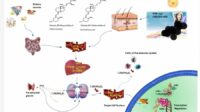
Fatigue in autoimmune disease can feel like walking through a fog bank you never asked for—your legs move, your thoughts try to align, yet the world keeps arriving slightly late. In that haze, vitamin D often appears like a quiet lighthouse: not a cure-all, but a navigational aid that may help certain patients reclaim some steadiness. Could it reduce fatigue? The answer is nuanced, biologically plausible, and—when approached thoughtfully—potentially meaningful for people whose immune systems behave like overzealous sentinels.
Vitamin D: More Than a Sunlight Vitamin
Vitamin D is frequently described as “the sunlight vitamin,” but its role is far more intricate. It behaves like a hormone-like modulator, influencing immune signaling, cellular communication, and even the architecture of inflammation. When vitamin D status is low, the immune system may respond with a kind of static—signals arriving distorted, pathways firing too readily. That static can translate into bodily exhaustion, muscle weariness, and cognitive sluggishness.
Think of vitamin D as a conductor’s baton. The orchestra may still play without it, yet the performance can become discordant—too loud in the wrong sections, too soft in others. For autoimmune patients, immune “discord” can be exhausting. If vitamin D helps tune immune rhythms, fatigue may lessen as a downstream effect.
Why Autoimmune Conditions Are Especially Linked to Vitamin D
Autoimmune diseases do not arise from a single cause; they emerge from a complex interplay of genetics, environmental triggers, and immune dysregulation. Vitamin D intersects with several of these processes. It participates in regulating both innate and adaptive immunity, shaping how inflammatory cells behave and how inflammatory cytokines are produced.
In many autoimmune conditions, immune overactivity can lead to a persistent inflammatory milieu. Chronic inflammation is not merely uncomfortable—it can drain energy at a cellular level. Mitochondria, the “power plants” of cells, may function less efficiently in the presence of inflammatory stress. Vitamin D’s immunoregulatory effects could, in certain contexts, reduce that stress and contribute to improved stamina.
Fatigue Itself: The Hidden Symptom With Many Doors
Fatigue is not a single uniform experience. It can be physical (muscle heaviness), mental (slowed processing), or emotional (low resilience). It can intensify during flare-ups and sometimes persist even when disease activity appears controlled. This is why the fatigue story is so compelling: it acts like a multifaceted echo of immune activity.
Vitamin D may influence fatigue indirectly by calming inflammation, improving immune balance, and supporting musculoskeletal health. But it may also intersect with other fatigue drivers common in autoimmune populations, such as sleep disturbance, anemia, thyroid dysfunction, and pain syndromes. The result: vitamin D might not be the only key, yet it could be a key that unlocks part of the door.
The Inflammation–Energy Connection
Inflammation is often described with broad strokes, but the body experiences it in specific ways: altered stress signaling, shifts in metabolic pathways, and disruptions to normal recovery cycles. When inflammatory cytokines circulate, they can promote “sickness behavior”—a term researchers use to describe lethargy and reduced motivation, resembling what many people feel during illness.
By supporting immune regulation, vitamin D may help reduce inflammatory signaling intensity. Less inflammatory “noise” can mean fewer interruptions to normal energy production. Shorter recovery time. More stable focus. A body that feels less like it’s running on emergency power.
Muscle Strength, Bone Health, and the Fatigue Feedback Loop
Fatigue is frequently experienced in muscles first. Low vitamin D status is associated with impaired muscle function in the general population, and autoimmune patients can be more vulnerable due to reduced outdoor activity, dietary limitations, or medication effects. If muscles become weaker or less efficient, daily tasks require more effort—fatigue accelerates.
Vitamin D also supports calcium absorption and bone mineralization. In conditions where pain and mobility changes occur, preserving musculoskeletal integrity can have a stabilizing effect. It’s a feedback loop: weaker muscles create more strain; more strain amplifies fatigue sensations; increased fatigue reduces activity; reduced activity deepens deconditioning. Vitamin D, in a supportive role, may help interrupt that cycle.
Evidence and What It Means for Real Life
Studies exploring vitamin D and fatigue in autoimmune illness often show correlations between low vitamin D levels and worse symptoms. Some analyses suggest that correcting deficiency may improve fatigue in certain patients, though results vary by condition, baseline vitamin D status, dose, and study design. In other words, vitamin D is not a universal lever pulled the same way for everyone.
This variability is not discouraging—it’s clarifying. It points to a principle: vitamin D’s greatest potential impact may occur when deficiency is present. If the “fuel” is already plentiful, there’s less room for improvement. If it’s scarce, restoring adequacy may allow the body to operate with fewer metabolic and immune constraints.
Checking Levels: The Practical Path
If vitamin D is considered, the most grounded approach is measurement rather than guesswork. A clinician can order a 25-hydroxyvitamin D test, which estimates vitamin D status in the body. From there, a tailored plan can be discussed—particularly important for autoimmune patients who may already be managing multiple lab values and treatments.
Some individuals may require repletion (raising low levels) while others may only need maintenance. This difference matters. Too low can leave the immune system under-tuned; too much without monitoring may pose risks. A measured plan helps keep vitamin D in a beneficial range.
Dosing Considerations and Safety
Vitamin D supplementation is commonly used, but dosing should align with the patient’s levels, health profile, and coexisting conditions. Certain medications and conditions can affect vitamin D metabolism and calcium balance. Kidney disease, for example, can complicate dosing decisions. Similarly, sarcoidosis and other granulomatous diseases may increase the risk of excessive calcium levels.
The goal is steadiness, not intensity. Short bursts of aggressive dosing may not match how the body adapts. A thoughtful regimen—often combined with follow-up testing—helps ensure vitamin D is supporting resilience rather than creating new variables.
How Fast Would Fatigue Change?
Fatigue is stubborn. Even when a helpful factor is introduced, improvements may take time. Immune modulation is not instant, and musculoskeletal recovery is rarely overnight. Some people notice changes within weeks, especially if deficiency is corrected and if fatigue is tightly linked to inflammation or muscle inefficiency. Others may take longer, particularly when fatigue is multifactorial.
It helps to track fatigue patterns rather than expecting immediate reversal. A diary, a symptom scale, or a simple “energy weather report” can reveal trends. Long sentences aren’t necessary here—consistency is.
Pairing Vitamin D With a Fatigue Strategy
Vitamin D should rarely be a solo act. Autoimmune fatigue often responds best to a layered strategy: optimized sleep, gentle strength training, balanced nutrition, pain management, stress reduction, and careful disease control with medical therapy. Vitamin D can be one strand in a broader tapestry.
Imagine fatigue as a tangled knot of threads. Vitamin D may help loosen one knot—immune modulation and musculoskeletal support—but releasing the whole tangle typically requires multiple tools. When those tools align, energy can feel less like a rare visitor and more like a regular resident.
Unique Appeal: A Quiet Intervention in a Noisy Body
The unique appeal of vitamin D lies in its subtlety. It doesn’t “shout” like an immediate sedative or a dramatic intervention. Instead, it offers a regulatory presence—an adjustment to the body’s internal settings. For autoimmune patients, who already live with continual vigilance, a supportive, physiology-forward approach can be especially attractive.
In winter light or indoors-heavy months, low vitamin D status becomes more plausible. The idea that supplementation can help recreate a missing signal is both comforting and practical. Not a fantasy of transformation—more like restoring a baseline so the immune system can behave with less friction.
Ultimately, the question “Can vitamin D reduce fatigue?” may be best answered with a careful optimism: it can help some people, particularly those who are deficient, and it may contribute to a broader fatigue-reduction plan.

Closing Thoughts: Asking the Right Question
Fatigue in autoimmune disease is not a moral failing and not simply “in your head.” It is a bodily experience shaped by inflammation, metabolism, sleep, pain, and immune signaling. Vitamin D sits at an intersection where immune regulation and musculoskeletal function overlap.
If vitamin D deficiency is present, supplementation may reduce fatigue for some patients—especially when integrated into a comprehensive care plan. The most empowering approach is not blind supplementation. It is measurement, clinician guidance, and steady adjustment. In that calm, the fog may thin—not instantly, but noticeably enough to matter.