Vitamin D is one of those nutrients that seems to slip into every conversation—sometimes as a daily ritual, sometimes as a dramatic “fix,” and sometimes as a puzzle people keep trying to solve. The numbers—600 IU and 2000 IU—sound almost like competing philosophies. Yet the real story is less about rivalry and more about fit: fit with your physiology, your sun exposure, your diet, your baseline status, and even how your body metabolizes and conserves this fat-soluble vitamin. Below, we’ll untangle why the same vitamin can feel different at different dosages, and which dose is more likely to be a pragmatic companion for your life.
Why the IU numbers feel confusing in the first place
It’s common to see “600 IU” labeled as a modest, maintenance-style amount, while “2000 IU” appears more assertive—almost like a vitamin with momentum. But IU dosing can create an illusion: that vitamin D is a one-size object you either wear lightly or stack heavily. In practice, vitamin D behaves more like a slow-moving conductor. It doesn’t act instantly, and its impact is strongly tied to your starting level of 25(OH)D—the circulating marker used to estimate vitamin D status.
Also, people often compare doses without comparing context. Two individuals can both take “2000 IU,” yet one might absorb it well, while the other might not. One might have limited sunlight due to indoor work or climate, while the other has a lifestyle that quietly supplies vitamin D through regular sun exposure. The fascination with dosage, then, isn’t just curiosity—it’s people sensing that the “right number” should exist. They’re half-right. The trick is that the right number is not universal; it’s individualized.
What 600 IU typically represents: a maintenance mindset
600 IU is widely associated with a baseline intake level—often used to support general health when people have some sun exposure and a reasonable dietary intake. Think of 600 IU as a steady background hum, not a rapid correction. For many adults, it can help prevent insufficiency, especially when combined with sensible lifestyle habits.
However, maintaining adequacy is not the same as conquering deficiency. If your vitamin D status is already low, 600 IU may behave like trying to refill a tank with a teaspoon of water. It can still help over time, but the pace may be too slow to restore optimal levels quickly.
In some cases, 600 IU may be quite appropriate—particularly for people with consistently adequate sun exposure, minimal risk factors, or those who simply want a gentle supplement while monitoring health.
What 2000 IU suggests: a more intensive, “repletion-leaning” approach
2000 IU often signals an intent to correct or move levels upward more noticeably. Many clinicians use higher doses as part of repletion strategies—especially when lab results reveal insufficiency or deficiency. The idea is not that 2000 IU is inherently superior, but that it may be more effective for people whose bodies need a stronger nudge.
Vitamin D is fat-soluble, so it can accumulate and exert effects beyond the immediate day-to-day. That’s one reason higher doses can appear “more powerful.” Yet the same property also means dosage should be chosen thoughtfully, and ideally guided by periodic testing.
Another subtle reason for the allure of 2000 IU is psychological: it seems action-oriented. When someone has symptoms or lab-confirmed low vitamin D, a higher dose can feel like taking the steering wheel. But the deeper truth remains: the right dose depends on what your blood levels are telling you.
Common observation: “I took 2000 IU, and it worked—so everyone should”
This is a frequent narrative—someone’s fatigue improved, their labs improved, and the internet becomes a chorus of certainty. But improvement doesn’t always mean the dose was the correct universal key. Sometimes results are influenced by other changes: more sun, improved sleep, better nutrition, reduced stress, or simply the natural variability of life catching up with timing.
There’s also the concept of baseline effect. If you start low, you may experience a clearer response when levels rise. If you start adequate, the same dose may offer diminishing returns. In other words, 2000 IU might be a powerful tool for the person who needed it; for the person who didn’t, it could be unnecessary or offer only marginal benefit.
So the deeper fascination here is understandable. People want a rule. But vitamin D is less like a universal medication and more like a tailored thermostat.
Absorption and lifestyle: why two bodies can split the same dose differently
Vitamin D’s journey isn’t just “pill to blood.” It’s influenced by body composition, dietary fat intake, gut health, and even the form of vitamin D (D3 being commonly preferred in supplements). If you take vitamin D without dietary fat, absorption may be less efficient. If you have higher body fat percentages, vitamin D can become more sequestered in adipose tissue, effectively lowering its circulating availability.
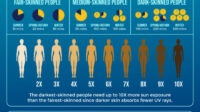
Then there’s sun exposure. People underestimate how variable sunlight is—latitude, season, cloud cover, skin pigmentation, sunscreen habits, and time outdoors all matter. In winter months or indoor-heavy lifestyles, 600 IU might not compensate enough. In summer or with regular outdoor exposure, even a modest amount can sustain adequacy.
The dosage question becomes a lifestyle mirror: your supplement is only one component of your vitamin D ecosystem.
Dietary sources: when food quietly reduces the need for higher dosing
Vitamin D can come from fatty fish (like salmon and sardines), fortified dairy or plant milks, fortified cereals, and egg yolks. If your diet already includes some of these sources, your supplement may act as a complement rather than a primary driver.
In that scenario, 600 IU may align well with your overall intake. If your diet is sparse in vitamin D and sunlight is limited, 2000 IU may be more consistent with your needs—again, ideally confirmed by lab testing.
Diet isn’t always enough, but it changes the arithmetic. That’s why two people on the same supplement can end up with different blood levels.
Health goals: prevention vs correction changes the “right” dose
The phrase “right for you” depends on your goal. Are you aiming for prevention—maintaining healthy status? Or are you aiming for correction—raising levels from insufficiency or deficiency? A prevention strategy often aligns with lower or maintenance dosing, like 600 IU.
A correction strategy frequently uses a higher dose, such as 2000 IU, at least for a defined period, before adjusting to a maintenance plan. This is where deeper reasoning helps: vitamin D therapy is often staged. First, restore. Then, maintain.
Without that staging, people sometimes over- or under-shoot. The “optimal” number is less an endpoint than a process.
Testing and safety: the most sensible way to choose
Because vitamin D status can’t be reliably inferred from symptoms alone, the most grounded approach is to check 25(OH)D through a blood test. That single measurement can clarify whether 600 IU is enough or whether 2000 IU is warranted.
Safety also matters. Vitamin D is fat-soluble, so excessive long-term dosing can be risky. Most guidelines discuss upper intake limits, and individual recommendations vary based on age and health conditions. If you consider higher dosing, it’s wise to do so with informed medical context—especially if you have kidney issues, a history of kidney stones, hypercalcemia, or conditions affecting calcium metabolism.
In short: dosage isn’t a guessing game when labs exist.
Who might lean toward 600 IU?
600 IU may be a reasonable starting point for adults who have:
• Moderate sun exposure most of the year
• Limited risk factors for deficiency
• Diets that include fortified foods or vitamin D-rich items
• A preference for conservative supplementation with periodic reassessment
It may also fit people who are maintaining after a prior correction phase—once blood levels have normalized, lower dosing can help hold the gains.
Who might lean toward 2000 IU?
2000 IU may be more appropriate for individuals who have:
• Confirmed insufficiency or deficiency on lab tests
• Minimal sun exposure (indoor work, high latitude winters, covered clothing habits, or lifestyle constraints)
• Higher likelihood of lower status due to body composition or malabsorption risk
• A clinician-directed plan to replete and then transition to maintenance
Even then, “more” is not automatically “better.” It’s more like turning the volume up on a track you need to hear more clearly—until the level is right, then turning it back down.
How to take vitamin D for best results
Timing and pairing can matter. Many people take vitamin D with a meal containing fat to improve absorption. Consistency beats occasional spikes. If you’re using a higher dose, consider using it for a defined period and then reassessing with a blood test—rather than treating the dose as permanent forever.
Vitamin D is also interwoven with calcium and magnesium. While supplement needs vary, some people benefit from ensuring they aren’t unintentionally neglecting these nutrients, particularly if they have dietary gaps.

The bottom line: choose the dose that matches your status
The real distinction between 600 IU and 2000 IU isn’t bravery versus caution. It’s maintenance versus correction, prevention versus repletion, and guessing versus measuring. If your vitamin D level is adequate, a modest dose may be all you need. If you’re low, a higher dose may help you move toward healthy territory more efficiently—ideally under a sensible plan with periodic testing.
Ultimately, the most satisfying answer is not a universal number. It’s a personal one: a dosage that aligns with your baseline, your lifestyle, and your health goals—so vitamin D becomes less of a mystery and more of a well-calibrated ally.