Some nutrients feel like familiar houseplants—easy to picture, easy to ignore. Vitamin D is different. It behaves more like weather: subtle until the day you notice the sky has changed. The observation many adults share is almost plaintive: “I take the RDA, but I still feel off.” That sense of mismatch is one reason the conversation around 600 IU of Vitamin D has become so magnetizing. It invites curiosity, and even a little wonder—why does the recommended dose sometimes feel too modest for the biology it’s meant to serve?
RDA in Practice: What “600 IU” Means and Why It’s Contested
The RDA (Recommended Dietary Allowance) for vitamin D at 600 IU is designed to cover the basic need for most people under typical conditions. It is a policy target: a balance between public-health feasibility and biological coverage. Yet the human body rarely follows one tidy rule. Vitamin D is not only a dietary vitamin; it is also a secosteroid-like hormone produced in skin after exposure to UVB radiation.
That distinction matters. If sunlight production is inconsistent—because of latitude, seasonality, skin coverage, or lifestyle—then “dietary” vitamin D becomes less of a supplement and more of a safety net. In that setting, 600 IU can be less like a blanket and more like a thin scarf. The fascination comes from this: the RDA is a statistical compromise, while the body is an idiosyncratic machine with its own thresholds and feedback loops.
Why the RDA May Underestimate Real-World Vitamin D Needs
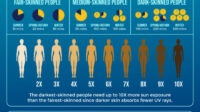
Many adults live in environments that quietly erode vitamin D synthesis. Time indoors. High-rise routines. Morning schedules. Commuter shadows. Even when people “get outside,” they might not receive sufficient UVB. Cloud cover, sunscreen use (helpful for skin cancer prevention), and darker skin pigmentation reduce vitamin D production, though those factors also complicate simplistic interpretations of dose.
Then there’s the seasonality factor. In winter months, UVB availability can drop dramatically depending on geography. The result can be a chronic, low-grade deficit—like a candle burning down in slow motion—where symptoms emerge gradually rather than dramatically.
When intake is aimed at 600 IU, the question becomes less “Is it enough?” and more “Enough for which target?” Serum 25(OH)D is the measured marker, and different clinical guidelines set different “good” ranges. A dose that keeps someone merely above a cutoff may still leave others feeling suboptimal.
Fascination Starts with a Common Observation: “I’m Doing Everything Right”
It’s common to hear a pattern: people follow recommendations, eat reasonably, and take vitamin D supplements—yet their lab values remain low, or their energy, mood, or muscle function seem stubbornly unchanged. This is where curiosity becomes more than idle interest. The mismatch can feel personal, even frustrating.
One deeper reason is that vitamin D needs aren’t uniform across adults. Body mass index (BMI) is frequently implicated. Vitamin D is fat-soluble, meaning higher body fat can sequester it—an elegant but inconvenient chemistry. Similarly, absorption can be affected by gut health, certain medications, or malabsorption syndromes. So the same 600 IU dose can behave like a different amount in different bodies.
Another overlooked piece is baseline status. If someone starts with low vitamin D, a maintenance dose may not be enough to “catch up.” It’s like keeping the temperature steady rather than warming a cold room from the ground up.
Season, Latitude, and Lifestyle: The UVB Variables No One Schedules
Vitamin D synthesis is not simply “sunlight equals vitamin D.” It’s UVB photons arriving at the right angle, for the right duration, at the right time of day. Latitude determines how much UVB is available. Season determines how long your skin can reasonably make vitamin D. Clothing and cultural norms also influence surface exposure.
Even lifestyle rhythms matter. A person who works night shifts might never meet daytime UVB. Another who exercises outdoors may do so with protective clothing or sunscreen. None of this is wrong—these are health-preserving choices. But they can convert vitamin D production from a reliable internal process into a sporadic event.
In that context, 600 IU becomes a guess rather than a guaranteed strategy. The fascination is almost logistical: vitamin D needs are shaped by variables outside the pharmacy shelf.
Fat Solubility, Bioavailability, and the “Distribution” Problem
Because vitamin D is fat-soluble, the body treats it differently than water-soluble vitamins. It travels, stores, and redistributes through lipid compartments. This creates a distribution challenge: if someone has higher adiposity, the same supplement dose may lead to a slower rise in serum levels.
Bioavailability can also vary depending on formulation (for example, whether vitamin D is taken with meals containing fat). A supplement taken on an empty stomach may not be absorbed as effectively. Additionally, liver and kidney metabolism converts vitamin D into active forms. Conditions affecting these systems can change how the body handles the nutrient.
So the deeper reason the RDA may feel low is not that the number is meaningless—it’s that it assumes average absorption, average distribution, and average baseline. Human biology rarely lives in averages alone.
Serum 25(OH)D Targets: “Enough” Depends on the Lens
Vitamin D status is commonly assessed via serum 25-hydroxyvitamin D, expressed in ng/mL or nmol/L. Yet “optimal” levels are argued like climate forecasts—everyone sees a different model. Some guidance focuses on preventing deficiency and associated bone outcomes. Others include broader considerations: immune modulation, muscle function, and potential roles in metabolic health.
When a target range is higher, 600 IU may not reliably achieve it for many adults, especially if their baseline is low or if sunlight is minimal. In practice, people who are “within range” on paper may still not feel fully supported, which fuels the ongoing debate.
The curiosity deepens because vitamin D is tied to multiple physiological pathways. The body’s story is bigger than a single marker.
Potential Consequences of Persistently Low Vitamin D
Vitamin D is often associated with bones, and rightly so. It supports calcium absorption and helps maintain mineralization. Chronic insufficiency can contribute to low bone density and increased fracture risk, particularly in aging populations.
But the narrative extends beyond skeletal outcomes. Vitamin D receptors exist in many tissues, including muscle and immune-related cells. Low status has been associated with muscle weakness, reduced physical performance, and altered inflammatory signaling. Mood and cognition have also been examined, though evidence varies by study design and population.
While correlation does not equal causation, the consistent theme is that low vitamin D can be a silent contributor. It may not be the only villain in a complex plot, but it can still be a meaningful one.
Why 600 IU Feels Like “Too Little” for Many Adults—Without Alarm
When people say the RDA feels too low, it doesn’t automatically mean the nutrient is dangerous or that the number is wrong for everyone. It may mean the RDA was built for deficiency prevention under average conditions, while many adults live in conditions that shift the vitamin D calculus.
It can also be a reminder of how supplementation works. A maintenance dose can keep a steady state, but it may not correct deficiency quickly. Many individuals start with insufficient levels—then take a dose aimed at keeping the future stable, not healing the past.
That nuance is important. The conversation should be thoughtful, individualized, and anchored in lab results rather than internet certainty.
How to Think About Supplementation Responsibly: Testing, Timing, and Context
If vitamin D is a recurring concern, the most grounded approach is to measure serum 25(OH)D and interpret it alongside factors like calcium intake, diet quality, sun exposure patterns, and overall health. Some people may need only a modest maintenance dose. Others may require a temporary, higher strategy to restore baseline.
Timing can matter. Taking vitamin D with a meal that includes dietary fat can improve absorption. Consistency also matters: erratic dosing can lead to a sawtooth pattern in blood levels rather than a stable plateau.
There is also a safety ceiling. Too much vitamin D can raise calcium levels and cause complications. That’s why professional oversight and appropriate dosing matter—especially for adults who are supplementing without recent labs.
A Final Reflection: The Real Fascination Is That Vitamin D Acts Like a Story
Vitamin D is not a simple vitamin in the way vitamins often are. It is a synthesis-and-signaling narrative influenced by geography, seasons, skin exposure, body composition, metabolism, and even meal composition. That is why a single number—600 IU—can feel simultaneously reasonable and inadequate.
The deeper fascination is this: the body’s needs are not static. They respond to conditions, and they remember. When adults notice persistent low status or lingering symptoms, the question becomes less about whether vitamin D “works” and more about how well recommended dosing matches real life.
For many, the RDA may be a baseline floor rather than a target ceiling. And for those whose circumstances push them toward lower synthesis, that difference can be the gap between “technically covered” and genuinely supported.