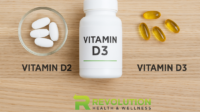
Ever wondered why your body seems to “play favorites” with vitamin D forms? You take a supplement, you eat your fortified foods, you do the sensible things… yet somehow one form tends to show up more efficiently in circulation. Here’s the playful question: why does vitamin D3 feel like the fast-food lane, while D2 takes the scenic route? And now the potential challenge—what if you’ve been buying “vitamin D” for years, assuming D2 and D3 are interchangeable? Let’s untangle the science so the next decision feels less like a gamble and more like choreography.
Vitamin D2 vs D3: Same vitamin, different choreography
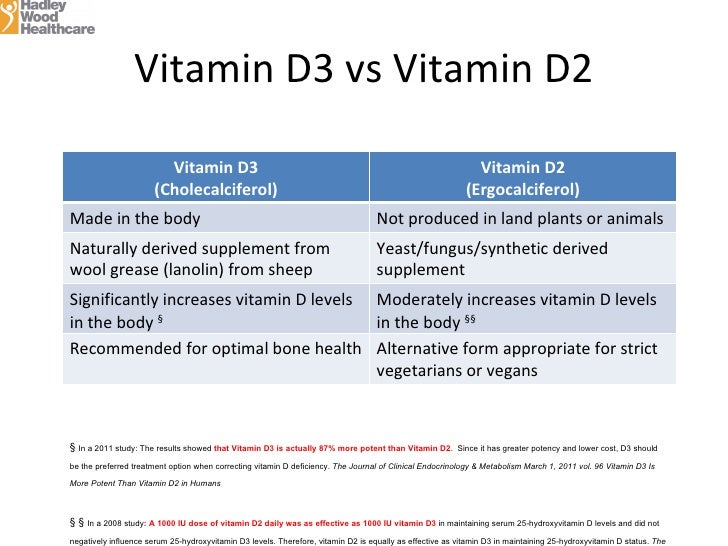
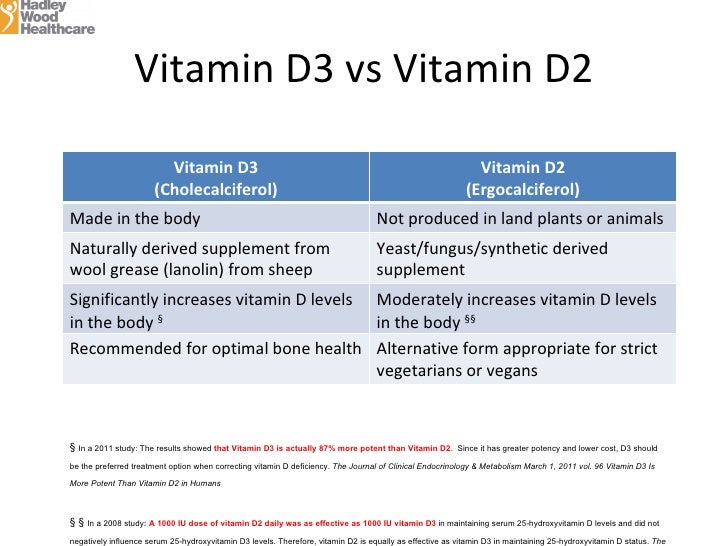
Vitamin D is a family, not a single character. Vitamin D2 (ergocalciferol) and vitamin D3 (cholecalciferol) share the same underlying mission: support calcium homeostasis, bone mineralization, and a broader immune signaling network. But their molecular architecture differs slightly—enough to influence how enzymes handle them and how long they persist in the body.
That structural nuance is often illustrated by the difference in side-chain chemistry. One version is primarily plant-derived (D2), while the other is produced in human skin via ultraviolet exposure and also present in animal sources (D3).
These aren’t just labels. The body’s “biochemical reception desk” reads them differently.
Absorption isn’t a monolith: the journey from gut to bloodstream
To understand why D3 wins, think of absorption as a relay race rather than a single sprint. Vitamin D is fat-soluble. That means your intestinal absorption depends on the presence of dietary lipids, bile flow, and the efficiency of lipid transport pathways.
Once absorbed, vitamin D is packaged and escorted through the circulation, largely via vitamin D–binding protein (DBP). From there, it travels to the liver and undergoes conversion—turning from a “prohormone” into more active forms.
So where does D2 stumble? Sometimes it’s not the initial uptake itself, but how effectively each form is processed and stabilized after absorption. A form that is handled more efficiently tends to reach higher circulating levels, which can feel like “better absorption” even when the initial step was comparable.
Potency in the real world: why blood levels often favor D3
In practice, many people notice a stubborn pattern: D3 tends to raise and maintain serum 25-hydroxyvitamin D more effectively than D2 at equivalent dosing.
Why might this be? One reason lies in the different ways each form is converted and subsequently metabolized. Conversion involves enzymes in the liver and other tissues. If one form is converted more efficiently or produces a more stable result, the measurable outcome in blood will look better.
It’s a bit like brewing coffee. Two beans might both be “coffee,” but one consistently produces a richer extract under the same conditions. D3 often shows that kind of advantage.
Metabolism and half-life: the “staying power” factor
After ingestion, vitamin D doesn’t just sit idly. It is transformed into metabolites that have distinct lifespans and functional roles. D2 and D3 can lead to different profiles of circulating metabolites.
D2 has been observed to be cleared or processed differently in some contexts, which can shorten its effective duration compared with D3. Meanwhile, D3 may generate metabolite patterns that persist more favorably, supporting steadier status over time.
Stated plainly: even if both forms are absorbed, D3 may be absorbed-to-effective-status more efficiently.
This is where “absorption” becomes more nuanced than a single number on a lab slip.
The immunology twist: vitamin D as a regulatory conductor
Vitamin D doesn’t merely bolster bones. It functions like a regulatory conductor in gene transcription and immune modulation. Adequate vitamin D status influences innate and adaptive immune behavior, cellular differentiation, and inflammatory signaling.
If D3 more reliably increases circulating 25(OH)D, it can indirectly enhance the availability of ligands that drive these genomic effects. In that sense, D3 doesn’t just win at “absorption.” It may better support the downstream orchestration that people care about—especially when deficiency is part of the story.
To be fair, both D2 and D3 can contribute. But when the goal is to optimize the biological outcome, the form that reaches functional thresholds more effectively tends to look superior.
Bone health logic: calcium balance requires adequate vitamin D tone
Bone mineralization depends on calcium and phosphate availability, and vitamin D helps coordinate intestinal absorption and utilization. With insufficient vitamin D, the body can struggle to maintain calcium levels, sometimes compensating through bone resorption—subtle at first, then clinically relevant.
When D3 improves or stabilizes vitamin D status better, it can support more reliable calcium handling. The result is a stronger scaffolding for bone remodeling processes.
Here’s the playful analogy: think of your skeleton as architecture. Vitamin D is the contractor who schedules materials delivery. If the contractor is unreliable, beams get replaced more often than intended.
Better vitamin D status generally translates to improved mineralization support.
Bioavailability depends on context: fat with meals, consistency, and baseline status
Before declaring D3 universally triumphant, consider the context. Absorption is influenced by whether you take the supplement with a meal containing fat. Also, baseline vitamin D status matters. Someone severely deficient may respond differently than someone whose levels are mildly low.
There’s also the question of individual variability—differences in gut physiology, bile production, body composition, and metabolic factors can alter how any vitamin D form performs.
Still, the “D3 tends to win” pattern frequently persists across real-life dosing scenarios, especially when measured by serum 25(OH)D response.
So what’s the practical decision? Choosing D3 without overthinking
If your aim is efficient absorption and a more robust rise in vitamin D status, vitamin D3 is typically the preferred option. It aligns with human biology: it is the form produced by skin under ultraviolet light.
However, the best choice also depends on dietary preferences. D2 is often favored in vegan contexts, and many people use it successfully when dosed appropriately. The key is not panic—it’s calibration. If using D2, paying attention to dosing strategy and follow-up lab testing can help ensure it accomplishes the intended effect.
Consider treating vitamin D like a “maintenance system,” not a one-time event. Rechecking levels after a reasonable interval can clarify whether your chosen form and dose are truly meeting the target.
Common myths and the hidden trap: “vitamin D is vitamin D”
Here’s the challenge again: the hidden trap is assuming all vitamin D products are interchangeable. Labels can be misleadingly simple. Two bottles might both say “vitamin D,” but the form—D2 vs D3—can change the biological outcome.
Another misconception: that taking more always compensates for inefficiency. Higher dosing can raise levels, but it also increases the importance of appropriate monitoring and safety. The goal is not maximal dosing; it’s optimal dosing.
Conclusion: D3’s edge is not magic—it’s molecular matchmaking
Vitamin D3 often wins for absorption-related outcomes because it tends to be processed and maintained more favorably in the body, leading to stronger and steadier increases in circulating vitamin D status. That improved biochemical trajectory supports the downstream roles in immune regulation and bone mineralization.
So, the playful question has an evidence-leaning answer: D3 doesn’t merely absorb—it sticks the landing more reliably. And if you’ve been using “vitamin D” as a generic category, this is the moment to make the label precise.